English
 русский
 Español

Do Dental Floss Sticks really work to prevent plaque and tartar buildup?
Content
- 1 What Are Dental Floss Sticks?
- 2 How Dental Floss Sticks Remove Plaque
- 3 Do Dental Floss Sticks Really Prevent Tartar?
- 4 Dental Floss Sticks vs Traditional String Floss
- 5 Proper Technique Matters More Than the Tool
- 6 Benefits for People Who Struggle With Flossing
- 7 Limitations and Common Misconceptions
- 8 Environmental and Hygiene Considerations
- 9 Who Should Use Dental Floss Sticks?
- 10 Final Verdict: Do They Really Work?
Dental plaque is a sticky biofilm composed of bacteria, food debris, and saliva proteins that constantly forms on teeth. When plaque is not disrupted daily, minerals in saliva harden it into tartar (calculus), which adheres firmly to tooth surfaces and can only be removed by professional dental cleaning. Interdental spaces—the narrow gaps between teeth—are especially vulnerable because toothbrush bristles often fail to reach them effectively. This is why interdental cleaning tools, including dental floss sticks, play a critical role in preventing plaque from maturing into tartar.
What Are Dental Floss Sticks?
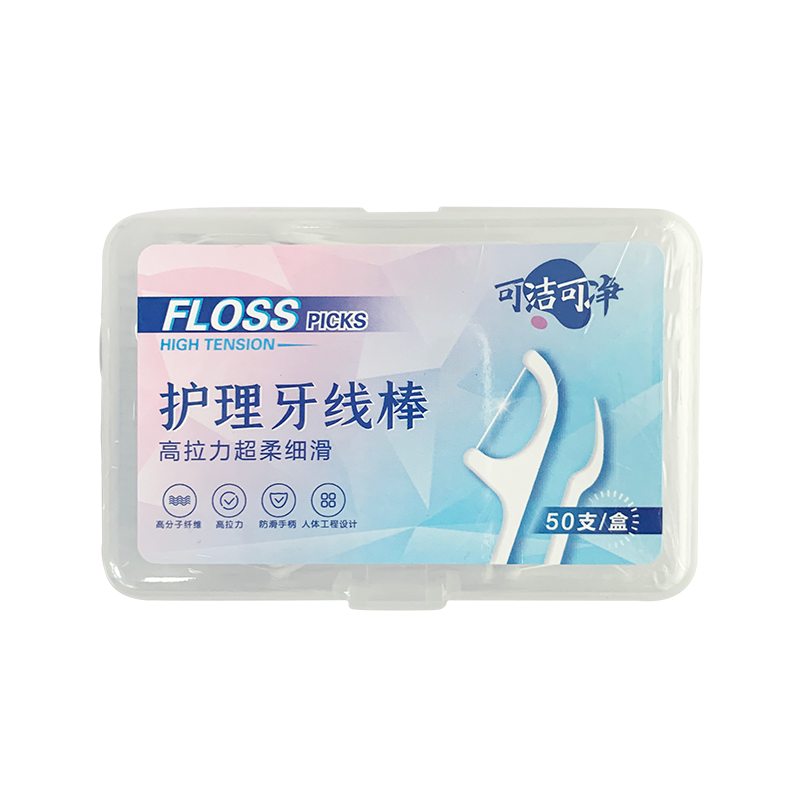
Dental floss sticks, also known as floss picks, are single-use or reusable tools that combine a short strand of floss stretched across a small plastic handle. Many designs include a pointed end for plaque scraping or food dislodging. Their core purpose is to simplify flossing by providing a ready-to-use, easy-grip format that eliminates the need to wrap floss around fingers.
Common Design Variations
- Standard U-shaped floss sticks with taut floss
- PTFE (Teflon) floss for smoother sliding
- Waxed nylon floss for tighter contacts
- Eco-friendly biodegradable handles
How Dental Floss Sticks Remove Plaque
Dental floss sticks work through mechanical disruption. When the floss is guided below the gumline and wrapped around the tooth surface in a gentle “C-shape,” it scrapes away plaque before it mineralizes. The handle provides leverage and stability, which can help users maintain consistent pressure and reach posterior teeth more easily.
Key Cleaning Mechanisms
- Breaks up bacterial biofilm between teeth
- Removes trapped food particles that feed bacteria
- Reduces inflammation by cleaning just under the gum margin
Do Dental Floss Sticks Really Prevent Tartar?
Dental floss sticks do not remove tartar once it has formed; no at-home flossing tool can. However, when used correctly and consistently, they are effective at preventing tartar formation by removing plaque early. The key determinant is technique and frequency rather than the specific floss format.
Dental Floss Sticks vs Traditional String Floss
A common concern is whether floss sticks are as effective as traditional string floss. Clinical outcomes largely depend on user compliance. Many people floss more often when using floss sticks due to convenience, which can translate into better plaque control overall.
| Aspect | Floss Sticks | String Floss |
| Ease of Use | Very easy, one-handed | Requires technique |
| Reach to Back Teeth | Good for many users | Can be difficult |
| Plaque Removal Potential | High with proper technique | High with proper technique |
Proper Technique Matters More Than the Tool
Incorrect use is the main reason floss sticks appear ineffective. Simply snapping the floss between teeth cleans only the contact point, leaving plaque behind along the tooth surface and under the gumline.
Correct Way to Use Dental Floss Sticks
- Gently slide the floss between teeth without forcing
- Curve the floss into a C-shape against one tooth
- Move up and down along the tooth surface
- Repeat on the adjacent tooth before removing
Benefits for People Who Struggle With Flossing
Dental floss sticks are particularly beneficial for individuals with limited dexterity, orthodontic appliances, or a history of poor flossing habits. Their ergonomic handles reduce finger strain and make flossing less intimidating, which increases daily compliance.
Limitations and Common Misconceptions
Despite their advantages, dental floss sticks have limitations. The short floss segment cannot be refreshed between every tooth, potentially spreading bacteria if not rinsed. Additionally, some designs make it harder to achieve the ideal floss angle on tight contacts.
Common Myths
- “Floss sticks are inferior to string floss in all cases”
- “They remove existing tartar”
- “Quick snapping motions are enough”
Environmental and Hygiene Considerations
Many floss sticks are single-use plastic, raising environmental concerns. Reusable handles with replaceable floss or biodegradable options address this issue. From a hygiene standpoint, using a new stick daily or rinsing during use is important to prevent bacterial transfer.
Who Should Use Dental Floss Sticks?
Dental floss sticks are ideal for people who value convenience and consistency. They are especially useful for travelers, office use, teens, seniors, and anyone who finds traditional floss awkward. For patients with advanced gum disease or very tight interdental spaces, a dentist may recommend supplemental tools such as interdental brushes.
Final Verdict: Do They Really Work?
Yes, dental floss sticks do work to prevent plaque buildup and, by extension, tartar formation—when used correctly and regularly. While they do not replace professional cleanings or compensate for poor technique, they are an effective, practical interdental cleaning tool. For many users, the increased likelihood of daily use makes dental floss sticks a valuable ally in long-term oral health maintenance.

We will provide a professional and reasonable quotation
as soon as possible for any customer inquiries.