English
 русский
 Español

Why Do Dentists Recommend Soft-Bristle Electric Toothbrushes for Gum Health?
Content
Every week, dentists hear the same question in their clinics: "If brushing is supposed to clean my teeth, why does the brush you recommend feel so soft?" The answer has very little to do with cleaning power and almost everything to do with what gum tissue can tolerate. Dentists recommend soft-bristle brushes, and increasingly soft-bristle electric toothbrushes, because they remove plaque effectively while keeping mechanical stress on the gums below the level that causes damage. It is a clinical standard based on how gums respond to abrasion, pressure, and brushing technique. Understanding the reasoning also explains what to look for in a brush, and what to specify when you are designing one.
Soft Bristles Protect the Gums From the Damage That Leads to Recession
The gum tissue that surrounds each tooth is thin, highly vascularized, and attached to the tooth more delicately than most people realize. It is not built to withstand repeated friction from stiff plastic filaments. When a hard or medium bristle presses into the gumline during normal scrubbing, the filament tips can shear the surface tissue, trigger inflammation, and gradually push the gum margin downward. The clinical result is gingival recession, in which the root surface becomes exposed. Patients then feel sharp sensitivity to cold air, water, and sweet foods, and the unprotected root has a much higher risk of decay.
The clinical evidence behind the soft-bristle recommendation is consistent. A 2021 clinical evaluation of ultra-soft toothbrushes concluded that ultra-soft bristles are recommended for patients with gingival recession, dentinal hypersensitivity, and those who have undergone periodontal surgery. The same study found that ultra-soft brushes performed effectively on plaque and bleeding indices. That is the key point for anyone confused by the recommendation: softer bristles do not mean weaker cleaning. They clean by bending and gliding along the gumline instead of stabbing into it. The bristle absorbs part of the brushing force, so the gum tissue does not have to.
An Electric Motor Changes the Role of the Bristle
With a manual toothbrush, the user produces all the motion. With an electric toothbrush, the handle produces it, oscillating, rotating, or vibrating the brush head thousands of times per minute. That difference changes why bristle firmness matters. When the motor creates the cleaning strokes, the user only needs to guide the brush head along the teeth and gumline. The correct pressure is light, because the brush is already doing the work.
If a person presses hard with an electric brush, the motor multiplies the force that reaches the gum tissue. If the brush head uses hard bristles, the combination of motor power and hand pressure can easily cause abrasion and recession. This is why dentists who recommend electric brushes usually specify a soft or extra-soft head. The soft bristles flex away from the gumline when contact pressure rises, while the motor continues to disrupt plaque. In effect, the bristle becomes a built-in pressure limiter.
Clinical comparisons have repeatedly found that powered brushes with soft bristles reduce plaque and gingival bleeding more effectively than manual brushes with the same bristle softness, especially along the gumline and in posterior areas of the mouth. The reason is not that the bristles are firmer; it is that the motor delivers far more cleaning strokes per minute. Soft bristles make that increased stroke speed safe for the gums.
What "Soft" Actually Means at the Bristle Level
The word "soft" on a toothbrush package covers a wide range of engineering decisions. For gum health, four specifications matter most: filament diameter, tip finish, bristle density, and filament shape.
Filament Diameter and Tip Finish
Filament diameter determines how easily a bristle bends. True soft bristles usually measure between 0.18 and 0.22 millimeters in diameter, and ultra-soft goes lower. Tip finish matters just as much because every filament must be rounded and polished. Unrounded tips can create microscopic cuts in gum tissue even when the bristle is classified as soft. This is why a cheap soft brush can still irritate gums, while a well-manufactured soft brush feels smooth along the gumline.
Bristle Density and Filament Shape
Bristle density distributes pressure across the brushing surface. A dense head spreads the same brushing force over more filaments, which lowers the pressure at every individual contact point. Filament shape adds another variable: tapered and variable-diameter filaments provide a soft contact surface with a stronger base, and rubber filaments offer yet another flex profile for tender gums.
| Bristle Type | Typical Diameter | Best Use Case | Main Risk |
|---|---|---|---|
| Extra-soft / Ultra-soft | 0.12 to 0.18 mm | Sensitive gums, recession, post-surgical care | Feels insufficient if technique is poor |
| Soft | 0.18 to 0.22 mm | Daily gumline cleaning for most patients | Minimal risk with correct technique |
| Medium | 0.22 to 0.28 mm | Occasionally chosen by patients | Gum abrasion and enamel wear over time |
| Hard | Above 0.28 mm | Not recommended for routine home use | Recession, root abrasion, sensitivity |
These engineering details separate a genuinely gum-friendly brush from one that is merely labeled soft. For example, the soft-bristle high-density carbon filament toothbrush in our oral care range uses fine carbon filaments packed tightly enough to sweep plaque away without concentrating pressure at the gumline. The design logic is the same one dentists apply when they recommend a soft-bristle electric brush: disrupt plaque efficiently, but stay gentle on tissue.
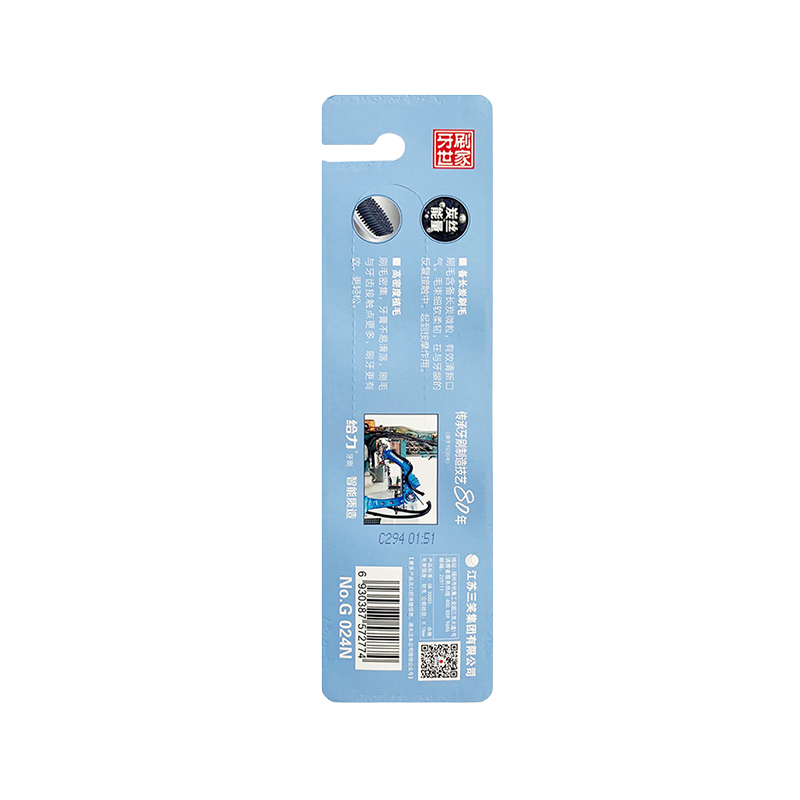 Custom Soft Bristles High Density Carbon Filament Toothbrush Suppliers, OEM/ODMJiangsu Sanxiao Group Co., Ltd. is China Custom OEM/ODM Soft Bristles High Density Carbon Filament Toothbrush Suppliers and Factory, The ...View Product →
What Buyers Should Verify Before Sourcing a Gum-Health Brush
The same clinical logic that guides a dentist's recommendation should guide a product specification sheet. For private-label and OEM buyers, a gum-health claim depends on facts that can be verified before any contract is signed.
First, review the bristle specification. The supplier should document filament material, diameter range, end-rounding process, and packing density. Second, check the factory quality system. Producing brushes with consistent bristle performance requires a certified manufacturing facility with controlled processes and repeatable output. Third, evaluate production consistency. Bristle retention, tufting stability, and head dimensions should not drift between batches, because clinical performance depends on predictable units.
For brands building a sensitive-gum line, product choice should follow the same clinical logic. The soft rubber bristle toothbrush with a slim brush head offers a genuinely gentler alternative to conventional nylon, with a different flex profile against inflamed tissue.
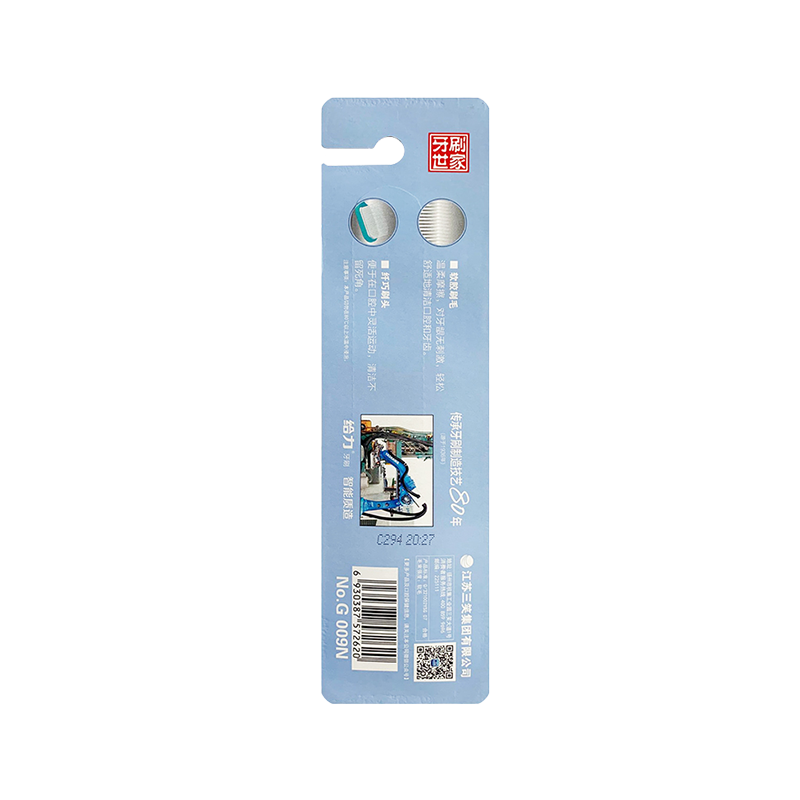 Custom Soft Rubber Bristlesslim Brush Headnano Toothbrush Suppliers, OEM/ODM FaJiangsu Sanxiao Group Co., Ltd. is China Custom OEM/ODM Soft Rubber Bristlesslim Brush Headnano Toothbrush Suppliers and Factory, The Sof...View Product →
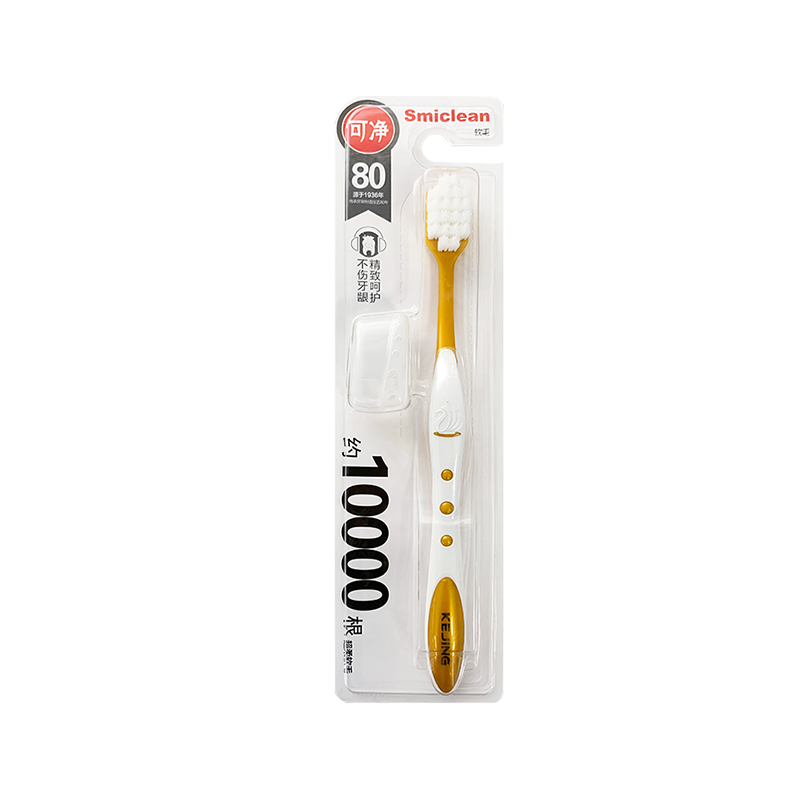
For brands competing on cleaning comfort, the architecture of the brush head matters as much as bristle firmness. The 10,000-bristle magnetic toothbrush distributes contact force across a very large number of fine filaments, which supports both softness and a strong perceived cleaning effect.
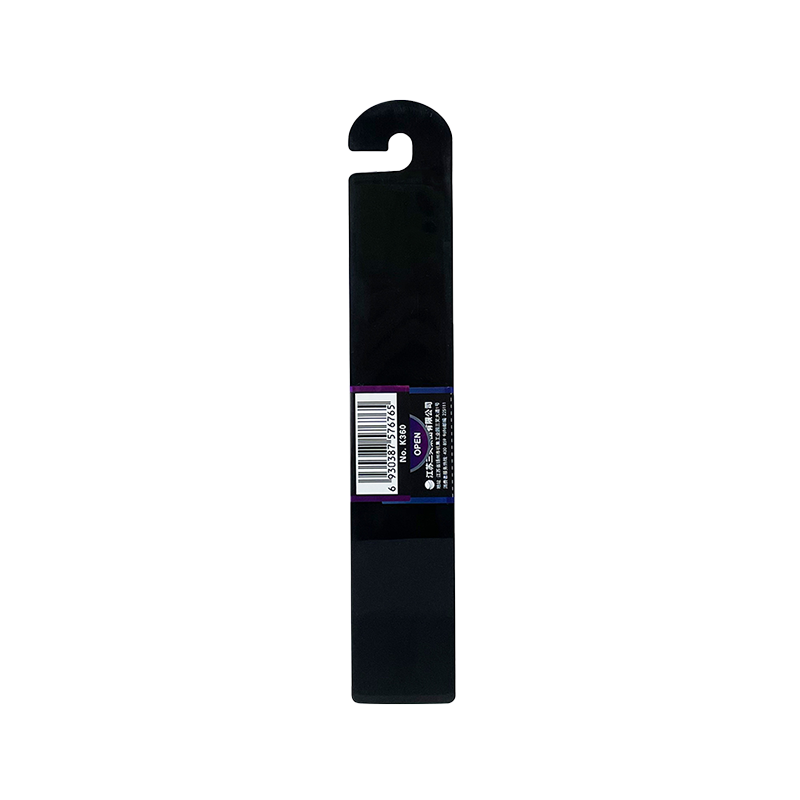 Custom About 10,000 Bristles Clean Magnetic Toothbrush Suppliers, OEM/ODM FactoJiangsu Sanxiao Group Co., Ltd. is China Custom OEM/ODM About 10,000 Bristles Clean Magnetic Toothbrush Suppliers and Factory, The about ...View Product →
Once these specifications are defined, the path to production is straightforward. Buyers can adapt an existing brush platform from the catalog, or use Sanxiao Group's custom oral care manufacturing services to develop a dedicated gum-health product with specific materials, head geometry, handle design, and packaging. Either way, the clinical recommendation stays at the center of the product, which is exactly the position a gum-health brand should occupy.
The Takeaway
The recommendation to use a soft-bristle electric toothbrush is not a conservative preference. It is a practical response to the way gums react to mechanical force. Electric motion removes plaque with high efficiency, and soft bristles ensure that the gumline is not damaged in the process. For patients, this means choosing a brush with thin, well-rounded, soft filaments and letting the motor do the work. For manufacturers and brands, it means engineering the bristle specification with the same care a dentist uses when making the recommendation. When the bristle technology is right, the clinical rationale and the product finally match.
We will provide a professional and reasonable quotation
as soon as possible for any customer inquiries.