English
 русский
 Español

What Are Toothbrushes Made Of? Handle, Bristle Materials & Manufacturing
Content
- 1 The Simple Answer: Most Toothbrushes Are Made of Plastic and Nylon
- 2 Toothbrush Handles: Polypropylene Leads, but Material Choice Depends on Use
- 3 Toothbrush Bristles: Nylon Is the Industry Standard
- 4 How Toothbrush Materials Affect Safety, Comfort, and Lifespan
- 5 Manufacturing Process: From Plastic Pellets to Finished Brush
- 6 What Buyers Should Consider Before Specifying Toothbrush Materials
The Simple Answer: Most Toothbrushes Are Made of Plastic and Nylon
Pick up any standard toothbrush and look at it closely. The handle is almost certainly molded plastic; the bristles are almost certainly nylon. That is the direct answer to "what are toothbrushes made of?" It is also an incomplete answer. The materials you choose affect brushing performance, gum health, product lifespan, environmental footprint, and production consistency.
For buyers, product managers, and private-label teams, understanding toothbrush materials is a practical requirement. It shapes the specification sheet, the bill of materials, the regulatory submission, and the consumer's experience in their bathroom. This guide covers the materials used in handles and bristles, how they are manufactured, and the factors to review before sourcing.
Toothbrush Handles: Polypropylene Leads, but Material Choice Depends on Use
Most manual toothbrush handles are made from polypropylene (PP) because it is strong, lightweight, moisture-resistant, and easy to mold at scale. Some handles use polyethylene (PE) for a softer feel, while premium lines use ABS or copolyester to create a smooth, glossy finish. For grip areas, manufacturers co-mold thermoplastic elastomers (TPE) so the brush is easier to hold with wet hands.
| Material | Key Properties | Typical Applications | Sustainability Profile |
|---|---|---|---|
| Polypropylene (PP) | Lightweight, strong, moisture resistant, low cost | Most standard manual toothbrush handles | Recyclable in principle; depends on local sorting |
| Polyethylene (PE) | Flexible, soft-touch potential, durable | Some handles and grip sections | Recyclable in some waste streams |
| ABS / copolyester | Rigid, glossy, scratch resistant | Premium handles with colored or translucent designs | Less commonly recycled |
| TPE / rubber | Soft, elastic, cushions grip | Grip inserts and flexible neck sections | Often co-molded; harder to separate |
| Bamboo | Renewable, lightweight, natural look | Eco-positioned toothbrushes | Biodegradable if bristles are removed |
Although bamboo handles appear in eco-conscious ranges, most high-volume production still relies on synthetic polymers. Bamboo requires more careful finishing to avoid splitting and often needs a protective coating, which complicates the recycling story. From a manufacturing standpoint, synthetic resins offer predictable dimensional accuracy and batch-to-batch consistency.
Toothbrush Bristles: Nylon Is the Industry Standard
Toothbrush bristles are overwhelmingly made from nylon, a synthetic polyamide. Nylon is prized for its resilience, flexibility, quick drying time, and ability to be produced at a precise filament diameter. That diameter, combined with the polymer grade and tuft density, determines whether a brush feels soft, medium, or hard.
Standard nylon continues to dominate. Some brushes replace part of the nylon with additives, such as carbon for extra density or silver ions for antibacterial claims. PBT (polybutylene terephthalate) is also used because its smooth surface and lower water absorption help bristles stay clean. In smaller natural lines, boar bristles and plant fibers still exist, but their inconsistency, water absorption, and rough feel make them less suitable for everyday mass production.
| Bristle Material | Advantages | Limitations | Common Use |
|---|---|---|---|
| Nylon (polyamide) | Strong, resilient, moisture resistant, precise stiffness control | Not biodegradable; can wear and fray | Soft, medium, and hard bristles in most toothbrushes |
| PBT filaments | Smooth surface, good polish, lower moisture absorption | Less elastic than nylon | Some higher-end and children's brushes |
| Carbon-filled nylon | High bristle density, stiffness, deep cleaning feel | Still synthetic; performance depends on additive dispersion | Dense-filament and deep-cleaning brushes |
| Silver-ion nylon | Antibacterial function to reduce bacterial growth on bristles | Does not change cleaning action directly | Antibacterial and travel toothbrushes |
| Soft rubber bristles | Very gentle on gums, comfortable for sensitive teeth | May provide less plaque removal on uneven surfaces | Nano dental care and children's brushes |
| Boar or hog bristles | Natural, biodegradable | Harsh, absorb water, may harbor bacteria, animal-derived | Historical brushes; niche natural products |
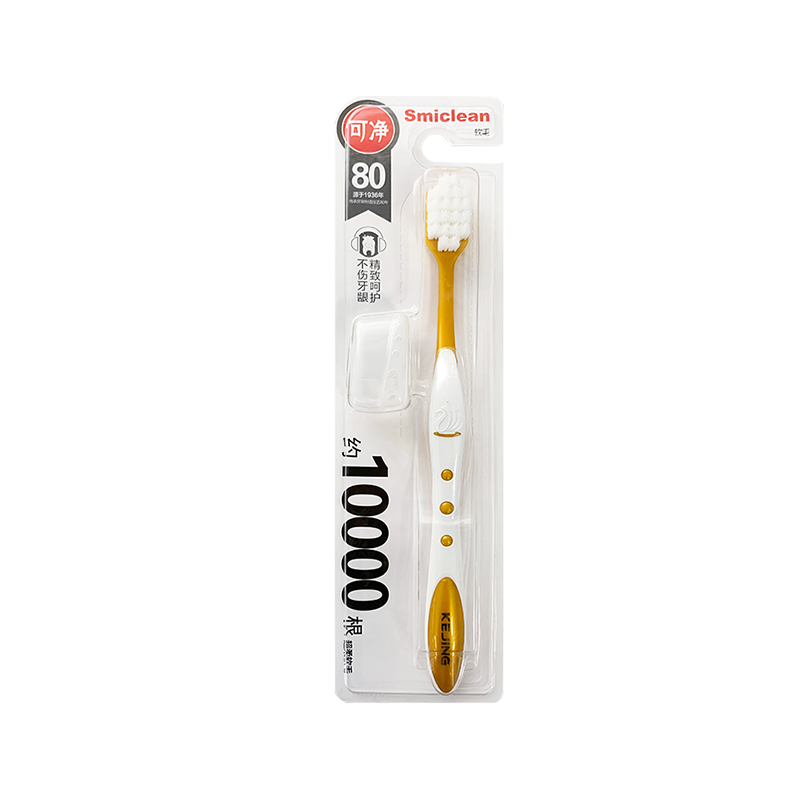
In practical terms, a soft brush might use nylon filaments around 0.15 to 0.18 mm in diameter, a medium brush around 0.20 mm, and a firm brush closer to 0.25 mm. The end-rounding process is as important as the material itself; a sharp or jagged bristle tip can scratch enamel or irritate gums, no matter how soft the polymer is. At scale, manufacturers monitor tip-rounding ratios because they are a key quality indicator in safety testing. One example is our high-density carbon filament toothbrush, which combines fine nylon filaments with a dense planting pattern for adults who want a more complete clean.
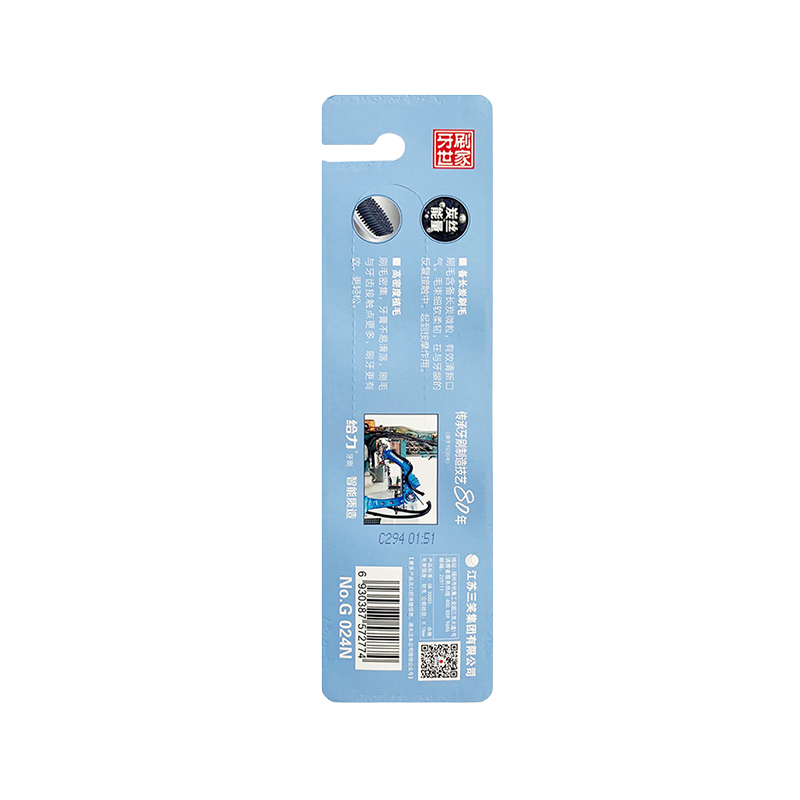 Custom Soft Bristles High Density Carbon Filament Toothbrush Suppliers, OEM/ODMJiangsu Sanxiao Group Co., Ltd. is China Custom OEM/ODM Soft Bristles High Density Carbon Filament Toothbrush Suppliers and Factory, The ...View Product →
How Toothbrush Materials Affect Safety, Comfort, and Lifespan
Material selection affects the user's comfort and the brush's durability. Soft bristles are generally recommended for daily use, especially for people with receding gums or tooth sensitivity. Medium and firm brushes remove surface stain more aggressively but can cause gum trauma if the user presses too hard. For this reason, many manufacturers now label their brushes and document filament diameter and stiffness in the product file.
A second safety point is bristle tip rounding. In many quality systems, the proportion of rounded tips must meet a minimum threshold, commonly above 70% or 80%, depending on the target market. This prevents micro-scratches on enamel and gingival irritation over months of use.
There is also the question of hygiene. Nylon dries quickly and does not absorb water like natural bristles, so it is less hospitable to bacteria. Some brushes add silver ions to the bristle polymer as a protective measure. Our small-brush-head silver-ion antibacterial toothbrush is one example of combining material innovation with a compact head for better access to the back teeth.
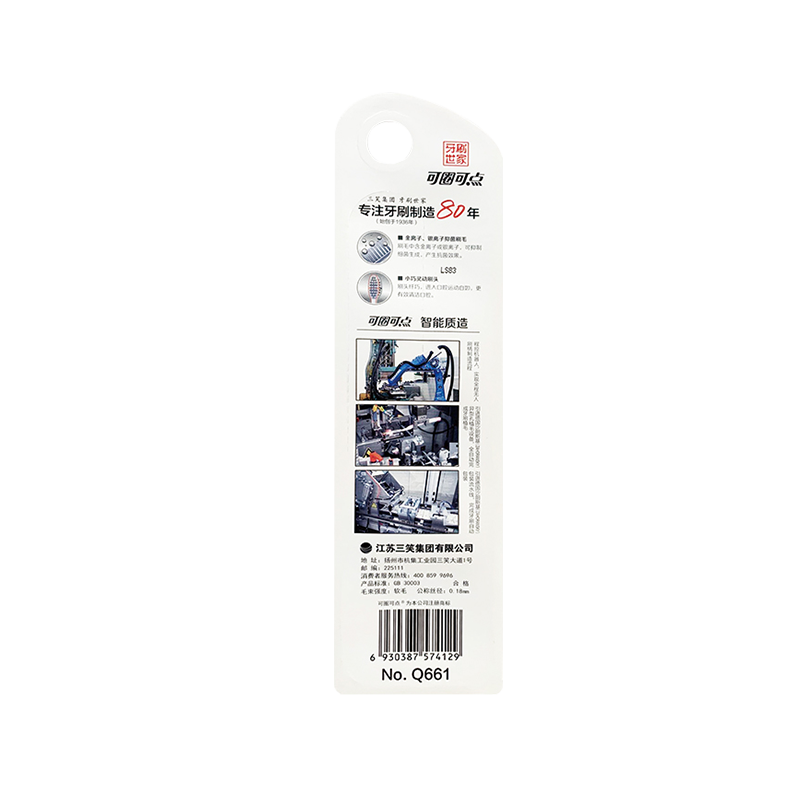 Custom Small Brush Head Design Silver Ions Antibacterial Toothbrush Suppliers, Jiangsu Sanxiao Group Co., Ltd. is China Custom OEM/ODM Small Brush Head Design Silver Ions Antibacterial Toothbrush Suppliers and Factor...View Product →
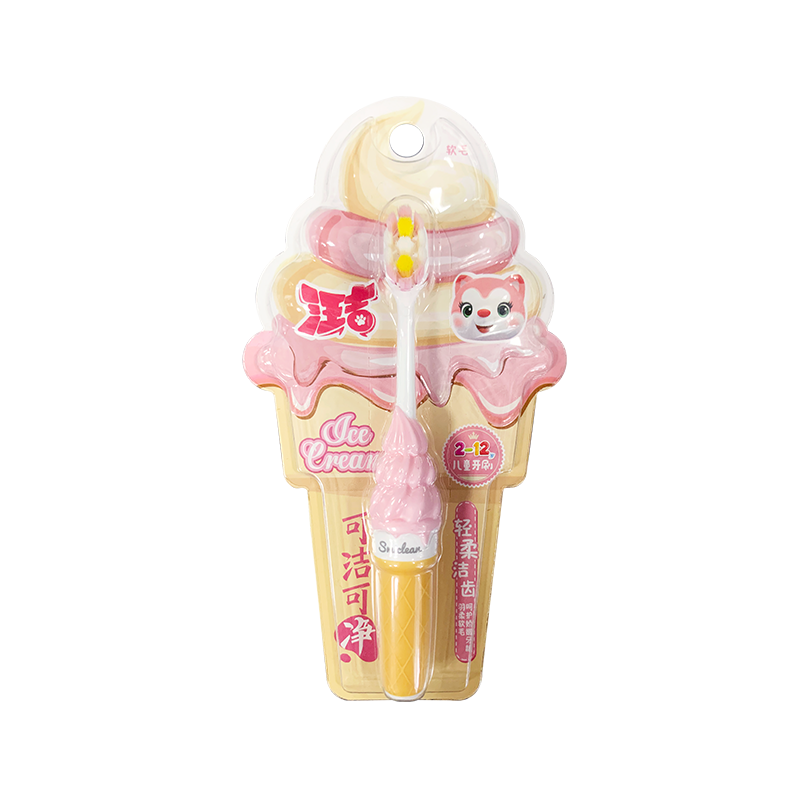
Children's brushes often need extra-soft bristles and simplified ergonomics. A good example is our ice-cream-shaped children's toothbrush, which combines fine nylon bristles with a playful handle designed for small hands.
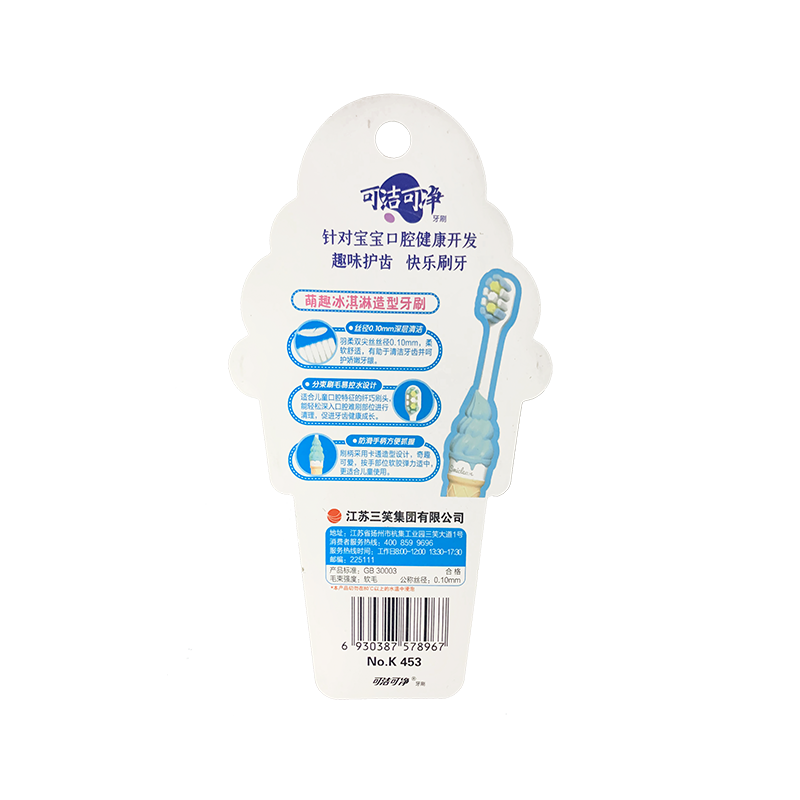 Custom 2-12 Years Old Ice Cream Shape Teeth Cleaning Children Toothbrush SupplieJiangsu Sanxiao Group Co., Ltd. is China Custom OEM/ODM 2-12 Years Old Ice Cream Shape Teeth Cleaning Children Toothbrush Suppliers and F...View Product →
Durability also matters. A worn toothbrush removes less plaque and can harbor debris. Most dental professionals recommend replacing a toothbrush every three months, which is why high-quality but cost-effective materials are so important for regular replacement. You can read more about how often you should change your toothbrush in our earlier article.
Manufacturing Process: From Plastic Pellets to Finished Brush
Understanding what a toothbrush is made of also means understanding how materials behave on a production line. It starts with injection molding: plastic pellets are heated and injected into a steel mold to form the handle. After cooling, the handle moves to the tufting station, where bristle filaments are cut to length and inserted into holes in the head. Toothbrushes may use small metal staples to lock the tufts, or an anchor-free hot-melt system that fuses the filaments into place and removes any exposed metal.
Next comes trimming and rounding. A rotating cutter shapes the bristle profile; then the brush head passes through an abrasive process that rounds each filament tip. The completed brushes are washed, dried, and packed. Alongside these steps, quality control tracks pull-out force, tuft retention, overall bristle coverage, and tip-rounding ratios.
For a buyer, these process details matter because they separate a professional manufacturer from a simple assembler. At our factory, the production lines rely on precision manufacturing equipment, and all output is manufactured under ISO and GMP certified factory conditions. That means material consistency, hygienic assembly, and traceability are documented rather than assumed.
What Buyers Should Consider Before Specifying Toothbrush Materials
When a brand chooses materials, the starting point should be the target consumer and the regulations in the destination market. The European Union and many other jurisdictions require the plastic materials in contact with the mouth to comply with food-contact safety requirements. The United States FDA also provides guidance for materials used in toothbrushes. Request the material supplier's documentation, including polymer type, additive list, colorant safety, and any restriction of hazardous substances declarations.
Next, evaluate the user experience. Soft bristles, dense tufting, and a comfortable grip generally deliver better compliance than a hard brush with an awkward handle. But "soft" is not a regulation; it is a physical property that needs a specification. A responsible supplier should state the filament diameter, stiffness, and end-rounding ratio.
Finally, think about sustainability. Recyclable polypropylene handles, bio-based nylon options, and refillable electric toothbrush heads are becoming more common. Material selection is a trade-off between cost, performance, and environmental claims. That trade-off should be visible in the product specification and testing records. Key documents to request include:
- Material safety data sheets for handle resin and bristle polymer
- Test reports for bristle tip-rounding ratio and tuft retention
- Compliance declarations such as REACH, RoHS, or FDA food-contact status
If you are developing a private label line, an experienced contract manufacturer can help you translate those decisions into a manufacturable product. Our OEM/ODM customization services cover material selection, handle design, bristle specification, packaging, and compliance documentation. You do not need to become a materials scientist; you need a supplier that provides transparent specifications and reliable production.
The short answer to what toothbrushes are made of remains "plastic and nylon" for most mainstream products. The longer answer is that every material in a toothbrush has a job to do: the handle must be safe, durable, and comfortable; the bristles must be cleanable, resilient, and gentle on oral tissue. When buyers understand these materials, they can specify better products and build consumer trust.
We will provide a professional and reasonable quotation
as soon as possible for any customer inquiries.