English
 русский
 Español

What Is a Flat Hole Toothbrush and Why Is It Changing the Way People Brush?
Content
- 1 What Makes a Flat Hole Toothbrush Different from Conventional Designs
- 2 The Engineering Behind the Flat Platform and Hole Configuration
- 3 Oral Health Benefits Supported by the Flat Bristle Design
- 4 Who Benefits Most from Using a Flat Hole Toothbrush
- 5 How to Compare Flat Hole Toothbrush Options Before Buying
- 6 Correct Brushing Technique for a Flat Hole Toothbrush
- 7 When to Replace a Flat Hole Toothbrush
The flat hole toothbrush is a relatively recent innovation in oral care that has attracted growing attention from dentists, hygienists, and everyday consumers alike. Unlike conventional toothbrushes where bristles are simply tufted into a solid plastic head, the flat hole toothbrush features a head with precision-cut holes or channels running through a flat platform, allowing bristles to be anchored and distributed in a way that improves contact with tooth surfaces and gum margins. Understanding exactly what sets this design apart — and how to use it effectively — can make a meaningful difference in your daily brushing routine and long-term dental health.
What Makes a Flat Hole Toothbrush Different from Conventional Designs
A standard toothbrush head is manufactured by drilling small holes into a molded plastic block and inserting folded bristle tufts into each hole using a metal staple anchor. While this method has been used for decades, it creates a number of structural limitations: the staples can corrode over time, the base of each tuft is difficult to clean, and the rounded or contoured head geometry limits how closely bristles can reach along the gumline.
The flat hole toothbrush addresses these issues through a fundamentally different construction approach. The brush head is engineered as a flat, even platform with a series of precisely spaced holes or perforations through which individual bristles or bristle clusters are threaded and secured without metal anchors. This staple-free or anchor-free design eliminates the corrosion risk, reduces bacterial harborage at the bristle base, and allows the overall head to be thinner and flatter than traditional counterparts. The result is a brush that sits more uniformly against the tooth surface and can reach into areas that a thicker, rounded head cannot access as efficiently.
The Engineering Behind the Flat Platform and Hole Configuration
The geometry of the flat hole toothbrush head is not accidental — it reflects deliberate engineering decisions about bristle density, hole placement, and head thickness that directly affect cleaning performance.
Hole Pattern and Bristle Distribution
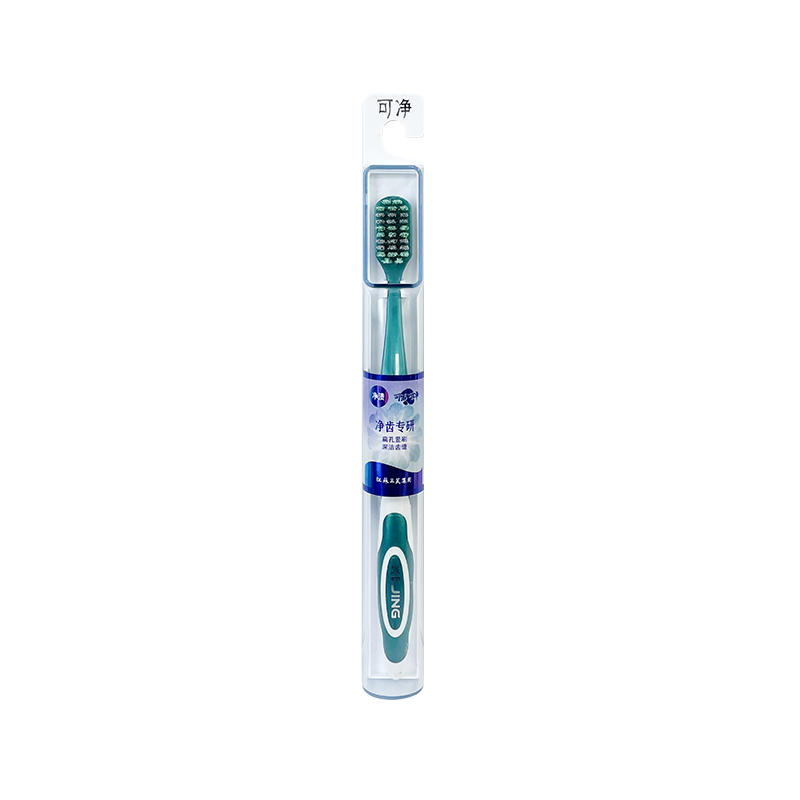
The holes in a flat hole toothbrush head are typically arranged in a grid or staggered matrix pattern that maximizes bristle coverage across the cleaning surface. Because the platform is flat rather than domed, all bristle tips lie in approximately the same horizontal plane when the brush is new. This uniform tip alignment ensures that every bristle makes contact with the tooth surface simultaneously during a stroke, rather than the outer bristles bearing the majority of the cleaning force while inner bristles barely contact the enamel — a common problem with domed or rounded head profiles.
Staple-Free Bristle Anchoring
In anchor-free flat hole designs, bristles are looped through holes in the platform and fused or bonded at the underside using heat or adhesive processes. This eliminates the small gap that forms around a stapled tuft — a gap that, in conventional brushes, traps toothpaste residue, water, and bacteria between uses. The smooth underside of a staple-free head is easier to rinse clean and dries more quickly, contributing to a more hygienic brush between uses.
Head Thickness and Gumline Access
Because the flat hole construction does not require the structural bulk needed to retain metal staple anchors, the head can be manufactured significantly thinner than conventional designs. A thinner head is easier to angle into the posterior regions of the mouth — around the second and third molars — where inadequate brushing is one of the most common contributors to interproximal decay and periodontal disease. For users with a strong gag reflex or a smaller mouth, the reduced head size and lower profile of flat hole brushes represent a practical ergonomic advantage.
Oral Health Benefits Supported by the Flat Bristle Design
The structural differences described above translate into several concrete oral health benefits that make flat hole toothbrushes a compelling choice for a wide range of users, from those seeking general plaque control to individuals managing specific periodontal conditions.
- More Even Plaque Removal: The flat, level bristle field contacts all tooth surfaces within the brushing zone simultaneously, distributing cleaning force evenly rather than concentrating it at the center of the head. Clinical studies on flat-trim bristle configurations have consistently demonstrated superior plaque removal compared to multi-level or scalloped bristle profiles for users who apply consistent technique.
- Improved Gumline Coverage: The thin, flat head can be positioned at the correct 45-degree angle to the gumline with greater ease and precision, facilitating effective sulcular brushing — the technique recommended for disrupting subgingival plaque accumulation at the base of the gum pocket.
- Reduced Risk of Enamel Abrasion: Because the flat design distributes bristle pressure across a larger, even surface area, the force per unit area applied to each tooth is lower than with a rounded head where pressure concentrates on fewer bristles. This makes flat hole toothbrushes a gentler option for users with enamel sensitivity or recession-prone gums.
- Hygienic Between-Use Drying: The open hole structure of the head allows air circulation through and around the bristle bases, promoting faster drying and reducing the moist microenvironment in which bacteria proliferate between brushing sessions.
- Longer Effective Bristle Life: Staple-free bristle anchoring reduces the uneven splaying that often begins at the tuft base in conventionally anchored brushes. More consistent bristle geometry over the life of the brush means performance degrades more gradually and predictably.
Who Benefits Most from Using a Flat Hole Toothbrush
While flat hole toothbrushes offer advantages for most users, certain groups derive particularly significant benefit from the design characteristics described above. Understanding whether your personal oral health profile aligns with the strengths of this brush type helps ensure you get the maximum return from the investment.
Users with Periodontal Sensitivity
People who have been diagnosed with gingivitis, early periodontitis, or gum recession benefit from the gentle, distributed pressure of a flat bristle field and the easier gumline access provided by the thin head profile. Consistent sulcular cleaning is critical for managing these conditions, and the flat hole design facilitates the correct brushing angle more naturally than a bulkier conventional head.
Children and Adolescents
Children's flat hole toothbrushes are sized appropriately for smaller mouths and offer a forgiving flat bristle field that removes plaque effectively even when brushing technique is imperfect — as is typically the case with younger users. The absence of metal staples is also a safety consideration for parents concerned about corrosion or bristle detachment.
Orthodontic Patients
Patients wearing fixed orthodontic appliances (braces) face particular challenges in cleaning around brackets and wires. Flat hole toothbrushes with a V-shaped or channeled bristle configuration — a variant of the flat design — straddle orthodontic brackets effectively, cleaning the tooth surface both above and below the wire in a single stroke. This makes them significantly more efficient for orthodontic hygiene than standard rounded heads.
Users with Dental Implants or Crowns
The margin between a dental crown or implant restoration and the surrounding gum tissue requires careful, consistent cleaning to prevent peri-implant mucositis and crown margin decay. The flat, precise bristle alignment of a flat hole toothbrush enables targeted cleaning at these critical margins without the excessive lateral pressure that can cause gum irritation around sensitive restorations.
How to Compare Flat Hole Toothbrush Options Before Buying
The market for flat hole toothbrushes has grown substantially, and the range of available products varies considerably in quality, bristle specification, and handle design. Using the comparison framework below helps you evaluate options systematically rather than relying on packaging claims alone.
| Feature | What to Look For | Why It Matters |
| Bristle Firmness | Soft or Extra-Soft for most users | Reduces enamel and gum abrasion risk |
| Bristle Tip Type | Rounded or tapered ends | Prevents gum laceration during brushing |
| Head Size | Compact or medium for most adults | Improves posterior access and maneuverability |
| Anchoring Method | Staple-free / anchor-free preferred | Eliminates corrosion and bacterial harborage |
| Handle Grip | Non-slip rubber or textured grip | Maintains control when hands or brush are wet |
| Bristle Material | Nylon 6.12 or DuPont Tynex | Superior durability and moisture resistance |
| Certification | ADA Seal or equivalent regional certification | Confirms safety and efficacy testing |
Correct Brushing Technique for a Flat Hole Toothbrush
The flat hole toothbrush is most effective when paired with proper brushing technique. The flat bristle field amplifies the benefits of correct form, but it will not compensate for fundamentally poor habits such as scrubbing with excessive horizontal force.
- Angle the brush correctly: Position the flat head at a 45-degree angle to the gumline so that bristle tips point slightly beneath the gum margin. This is the foundation of the Bass technique, the method most widely recommended by periodontists for sulcular plaque removal.
- Use short, gentle strokes: Move the brush in small back-and-forth vibrating motions or small circular strokes covering two to three teeth at a time. Avoid long horizontal scrubbing strokes, which abrade enamel and cause gum recession over time.
- Apply light pressure: The flat bristle field is designed to clean through gentle surface contact, not aggressive compression. Pressing hard flattens bristles prematurely and reduces cleaning effectiveness. A grip light enough that the brush could theoretically fall from your fingers provides approximately the right pressure.
- Cover all surfaces systematically: Brush the outer surfaces, inner surfaces, and chewing surfaces of all teeth in a consistent sequence so no quadrant is neglected. Two minutes total — 30 seconds per quadrant — is the minimum recommended duration for a complete brushing session.
- Tilt the brush vertically for front teeth: To clean the inner surfaces of the upper and lower front teeth effectively with a flat head, tilt the brush to a near-vertical angle and use the front portion of the bristle field in short up-and-down strokes along the gumline.
When to Replace a Flat Hole Toothbrush
Like any toothbrush, a flat hole toothbrush has a finite effective lifespan. The American Dental Association recommends replacing any toothbrush every three to four months, or sooner if bristle splaying is visible. With flat hole designs, the replacement indicators are slightly different from conventional brushes because the bristle matrix wears more evenly across the full head rather than fraying outward from the center.
Check your flat hole toothbrush regularly for the following signs that indicate it is time for a replacement: visible bending or loss of spring in individual bristle filaments, any darkening or discoloration at the bristle base that does not rinse away, a noticeable reduction in the clean feeling after brushing despite correct technique, and any structural deformation of the flat head platform itself. Most manufacturers include a color-indicator bristle — typically a dye-impregnated filament that fades with use — to provide a visual reminder to replace the brush before cleaning efficiency declines significantly.
Always replace your toothbrush after recovering from a respiratory illness or oral infection, regardless of how recently you purchased it. Bristles can harbor viral and bacterial residue that poses a reinfection risk, and the hygienic advantage of a flat hole design does not extend to pathogen retention in recently used bristles.

We will provide a professional and reasonable quotation
as soon as possible for any customer inquiries.