English
 русский
 Español

The Complete History of Toothbrushes: From Chew Sticks to Modern Oral Care
Content
Every toothbrush you hold today is a small historical artifact. Its handle, bristle layout, and choice of filament all descend from a line of inventions that starts with a frayed twig in 3500 BC and passes through Chinese hog-hair brushes, European craft workshops, and the 1938 shift to nylon. By the end of this article, you will see why so many modern models advertise dense bristle counts, carbon filaments, and antibacterial heads, and what that history means if you are sourcing oral care products in bulk.
The story matters beyond curiosity. For private-label buyers, design decisions made over centuries now appear in production specifications: bristle diameter, tuft count, head size, handle hardness, and how consistently filaments are rounded. Knowing where those parameters come from makes it easier to evaluate factories, compare samples, and explain product features to end customers.
Before the Toothbrush: Chew Sticks and Ancient Cleaning Tools
The earliest known oral cleaning tool is the chew stick, a twig whose end was frayed by chewing until it formed a rough brush. Babylonian chew sticks date back to around 3500 BC, which makes them the oldest oral hygiene artifacts on record. Ancient Egyptians used twigs from the arak tree for the same purpose, and Romans relied on toothpicks and abrasive powders made from crushed bone, oyster shells, and eggshells.
The practice of cleaning teeth with powders continued through the Middle Ages, when recipes based on salt, sage, and other herbs were common. Yet none of these approaches offered a reliable mechanical way to scrub plaque from the surfaces and gaps between teeth. There were no bristles, no handle geometry, and no comfortable way to reach the back of the mouth. The idea that a cleaning tool should combine a handle with separate fibers would not appear until many centuries later.
China's Contribution: The First Bristle Toothbrush
Tang Dynasty Origins
The first bristle toothbrush resembling the modern tool appeared in China. Some sources date it to the Tang Dynasty (619-907 AD), when makers attached coarse hog hairs to handles of bone or bamboo. Another widely cited date is 1498, and it is this version that later spread to Europe. Because the bristles came from hogs raised in the cold regions of Siberia and Northern China, the hairs were stiff enough to remove plaque effectively while still being gentle on the gums.
The Toothbrush Reaches Europe
European travelers and merchants carried the design westward, where craftsmen adapted it with horsehair bristles sewn into bone, silver, or wooden handles. By the eighteenth century, toothbrushes were being produced in England and France, although they remained relatively expensive and nowhere near universal.
The famous Addis story, in which an Englishman reportedly made a brush from bone and bristles while in prison in the 1780s and later built a business around it, marks one of the first attempts at commercial toothbrush manufacturing. Even then, the product was still handmade, and quality varied considerably from one brush to the next.
The 1938 Turning Point: Nylon and the Modern Brush
The toothbrush as we know it today was not invented until 1938, when the first mass-produced nylon-bristle toothbrush went on sale. Nylon was a genuine breakthrough because natural bristles absorbed water, dried slowly, often harbored bacteria, and softened quickly in the warmth of the mouth. Nylon filaments, by contrast, dried rapidly and could be manufactured with a consistent diameter and stiffness from batch to batch.
Electric toothbrushes followed within a couple of decades, reaching the consumer market around the 1950s and gradually improving with rechargeable batteries, oscillating heads, and pressure sensors.
The period after 1938 is largely a history of refinements rather than reinvention. Manufacturers learned to taper the ends of filaments to protect gum tissue, angle tufts for better access to molars, and blend nylon with other polymers such as PBT to fine-tune stiffness. Toward the end of the twentieth century, handle design also changed, with thumb rests and non-slip rubber zones appearing on mass-market brushes because comfort directly affects how long people are willing to brush.
What History Teaches Us About Brush Design Today
If you compare a chew stick, a hog-hair brush, and a modern engineered brush, three variables define the design of every toothbrush on the market: the material and diameter of the bristles, the density and arrangement of the tufts, and the ergonomics of the handle.
| Era and tool | Bristle material | Handle material | Cleaning coverage | Main limitation |
|---|---|---|---|---|
| Chew stick (from about 3500 BC) | Frayed wood fibers | Wood | Single chewing surface | No real bristles; poor access to molars |
| Early bristle brush (1498-1800s) | Hog or horsehair | Bone, bamboo, wood, ivory | Two to three rows of tufts | Natural bristles absorb moisture and soften quickly |
| First nylon brush (1938) | Nylon | Early molded plastics | Denser synthetic tufts | Rigid nylon could irritate gums |
| Modern engineered brush | Nylon, PBT, carbon filament, silver-ion treated | Molded PP with TPE grip zones | Up to 10,000 or more bristles with tapered ends | Requires precision machinery and strict quality control |
The pattern is clear: every major advance solved a specific shortcoming, whether it was moisture retention, stiffness control, cleaning coverage, or gum safety. This is also why children's brushes became a distinct category only in the twentieth century, once manufacturers understood that a child's jaw size and grip strength are not the same as an adult's. The same logic continues to drive adult product development, where softer filaments, smaller heads, and antimicrobial materials are now standard options.
From History to Factory: What Buyers Should Look For
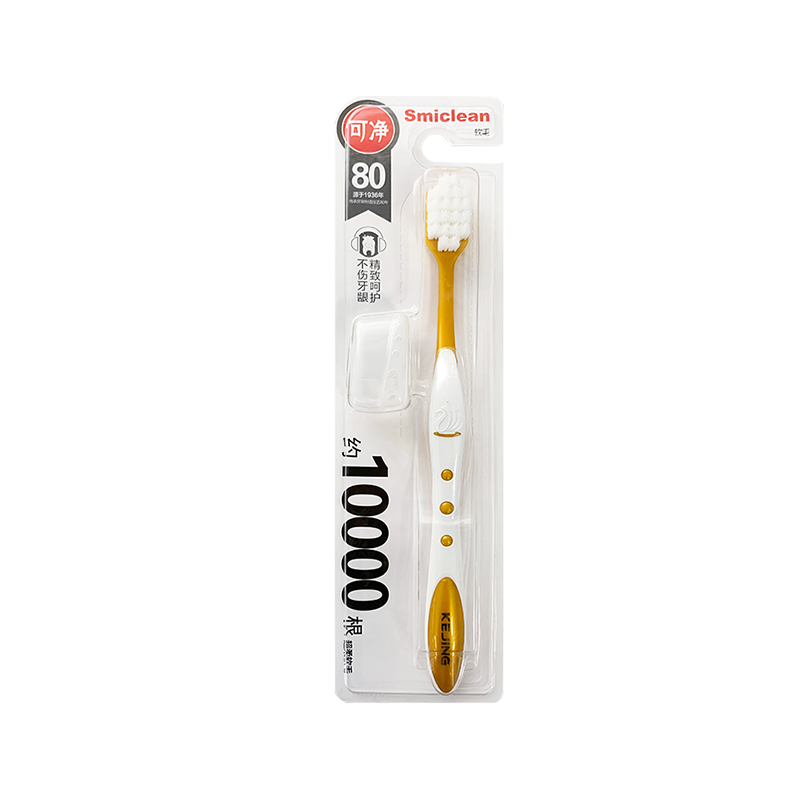
For importers and brand owners, these historical lessons translate into concrete production questions. Bristle count, for example, is not just a marketing number. Dense brushes require advanced tufting machinery and careful quality control to keep filaments even across the whole head, and a density claim of about 10,000 bristles can only be delivered with high-speed precision equipment. That is the direction our dense-packing lines have taken with the 10,000-bristle magnetic toothbrush.
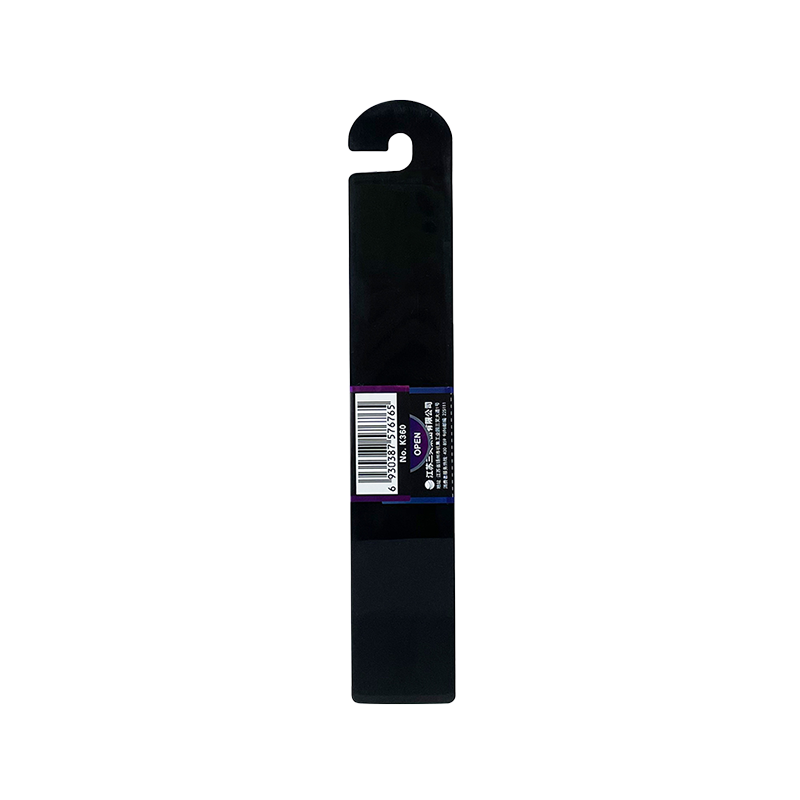 Custom About 10,000 Bristles Clean Magnetic Toothbrush Suppliers, OEM/ODM FactoJiangsu Sanxiao Group Co., Ltd. is China Custom OEM/ODM About 10,000 Bristles Clean Magnetic Toothbrush Suppliers and Factory, The about ...View Product →
Filament material follows the same logic. The historical move from hog hair toward engineered polymers is now reflected in products such as carbon-filament brushes, which combine the soft feel of nylon with firmer cleaning performance. A soft-bristle high-density carbon filament toothbrush shows how material science has replaced natural fibers while solving their durability problems.
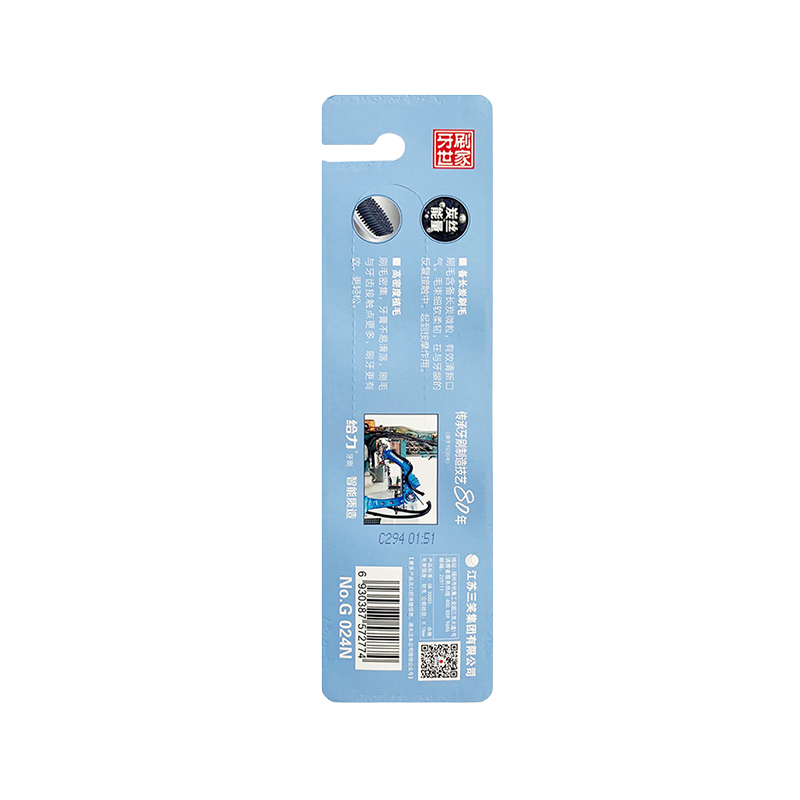 Custom Soft Bristles High Density Carbon Filament Toothbrush Suppliers, OEM/ODMJiangsu Sanxiao Group Co., Ltd. is China Custom OEM/ODM Soft Bristles High Density Carbon Filament Toothbrush Suppliers and Factory, The ...View Product →
Gum safety, a lesson learned from the harsh early nylon brushes, is built into modern designs through softer filaments, smaller head sizes, and antimicrobial treatments. The silver-ion antibacterial toothbrush with a small brush head addresses both concerns at once: reduced irritation for delicate gum tissue and long-term hygiene for the brush itself.
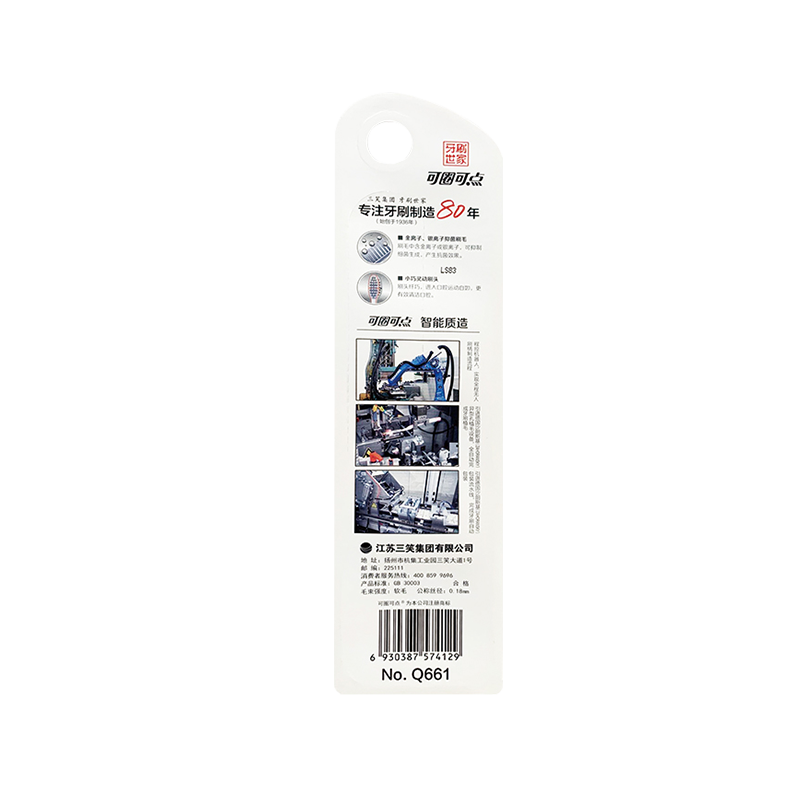 Custom Small Brush Head Design Silver Ions Antibacterial Toothbrush Suppliers, Jiangsu Sanxiao Group Co., Ltd. is China Custom OEM/ODM Small Brush Head Design Silver Ions Antibacterial Toothbrush Suppliers and Factor...View Product →
Knowing this history gives you a useful vocabulary for sourcing. You can ask suppliers specific questions: what bristle diameter and filament material do you recommend for sensitive gums? What end-rounding tolerance does your factory hold? How do you control tuft density when heads are packed this tightly? These are the questions our product customization service hears from brands that want to turn historical advantages into their own private-label lines.
Certifications and equipment matter just as much during supplier evaluation. A factory that can demonstrate verified manufacturing certifications and operate modern production equipment is far more likely to reproduce the same product quality consistently across large orders, from the first sample to the final shipment.
From a frayed Babylonian twig to a head packed with 10,000 engineered filaments, the toothbrush has followed a clear path: each generation solved the weakness of the one before it. For today's brand owners and procurement teams, the same logic applies. Choose manufacturing partners that can turn those lessons into consistent, measurable quality, and your own products will carry that history forward.
We will provide a professional and reasonable quotation
as soon as possible for any customer inquiries.