English
 русский
 Español

Manual vs. Electric Toothbrushes for Kids: A Practical Guide
Content
- 1 How Manual Toothbrushes Work for Children and What They Do Well
- 2 Choosing the Right Manual Toothbrush for Each Age Stage
- 3 Bristle Type and Softness: Why This Matters More Than Most Parents Realize
- 4 When Electric Toothbrushes Make Sense for Children
- 5 Manual vs. Electric Toothbrush: Side-by-Side Comparison for Children
- 6 Teaching Correct Brushing Technique with a Manual Toothbrush
- 7 Replacing Toothbrushes: Timing and Signs of Wear
- 8 Practical Advice for Parents Deciding Between Manual and Electric
Choosing the right toothbrush for a child is one of the most practical decisions a parent makes in their child's dental care routine, and it matters more than many people realize. Tooth decay remains the most common chronic childhood disease globally, and the quality and consistency of daily brushing is one of the most direct factors determining whether a child develops cavities, gum problems, or healthy teeth through to adulthood. The debate between manual and electric toothbrushes for kids is one that dentists are asked about constantly, and the answer is more nuanced than "electric is always better" or "technique matters more than the tool." Both types have genuine advantages and real limitations depending on the child's age, dexterity, motivation, and specific dental needs. This guide works through the practical details so parents can make an informed decision rather than guessing at the shelf.
How Manual Toothbrushes Work for Children and What They Do Well
A manual toothbrush is deceptively simple — a handle, a neck, and a head with bristles — but the effectiveness of a good manual toothbrush used with proper technique is well established by decades of clinical evidence. For children who learn to brush correctly, a manual toothbrush cleans teeth just as effectively as an electric one. The American Dental Association (ADA) and most national dental bodies consistently confirm that a soft-bristled manual toothbrush used with the modified Bass or circular Fones technique for two minutes, twice daily, achieves plaque removal equivalent to a powered toothbrush in compliant patients.
For very young children — typically from the eruption of the first tooth at around six months up to age three — a manual toothbrush is almost universally the recommended starting point. The soft, small-headed brushes designed for infants and toddlers allow a parent or caregiver to gently clean the erupting teeth and gum pads with full tactile control and without the vibration or noise that can startle or upset a young child who is still adapting to having their mouth cleaned. The absence of any mechanical component also means there is nothing to break, no battery to charge, and no parts to replace — a practical advantage when the brushing session may last only 30 seconds before the child protests.
Choosing the Right Manual Toothbrush for Each Age Stage
Manual toothbrushes for children are not one-size-fits-all, and selecting the appropriately sized and configured brush for each developmental stage makes a measurable difference in cleaning effectiveness and comfort.
Infants and Toddlers (0–2 Years)
For the very youngest children, toothbrushes in this category have a head no longer than about 15–20 mm and extremely soft bristles — often labeled "extra soft" or "infant soft." The handle is typically wide and chunky to give a parent a secure grip during what can be a wriggly brushing session. Some infant brushes include a finger guard — a flared ring around the neck of the brush — to prevent a child from pushing the brush too far back into their mouth. At this stage, the parent does all the brushing; the child's role is simply to cooperate, which is itself an achievement worth celebrating.
Preschool and Early School Age (3–6 Years)
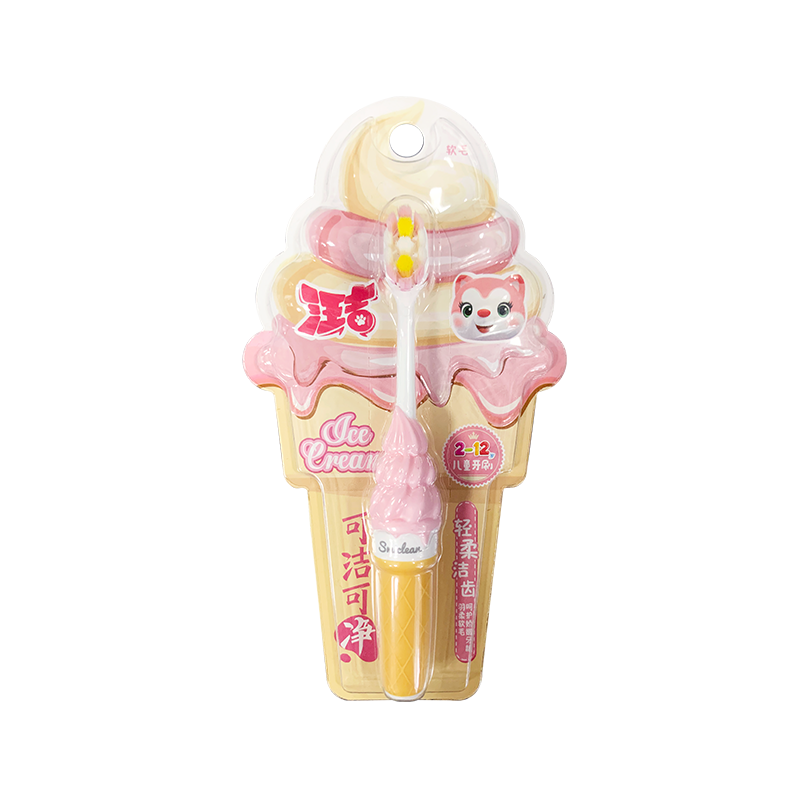
From around age three, children can begin to attempt brushing themselves, though parents should always follow up with a supervised second clean until at least age six or seven — the age at which most children develop the manual dexterity to brush effectively on their own. Toothbrushes for this age group have a slightly larger head (approximately 20–25 mm), soft bristles, and handles designed to be held by small hands, typically with a non-slip grip and a shape that encourages a palm-hold rather than a pencil grip. Characters, colors, and fun designs are not just marketing — they genuinely increase a child's willingness to brush at an age when resistance to the routine is common.
Older Children (7–12 Years)
By school age, children can transition to a brush that is closer in size to an adult brush but still with a smaller head — approximately 25–30 mm — to allow access to the back molars, which are often poorly cleaned even by diligent older children. Soft or medium bristles are appropriate for most children in this age range; medium bristles should only be used if the child has an established gentle brushing technique, as more vigorous brushing with medium bristles can cause enamel abrasion and gum recession over time. Children with orthodontic appliances need a specific interdental or orthodontic brush head design that can clean around brackets and wires.
Bristle Type and Softness: Why This Matters More Than Most Parents Realize
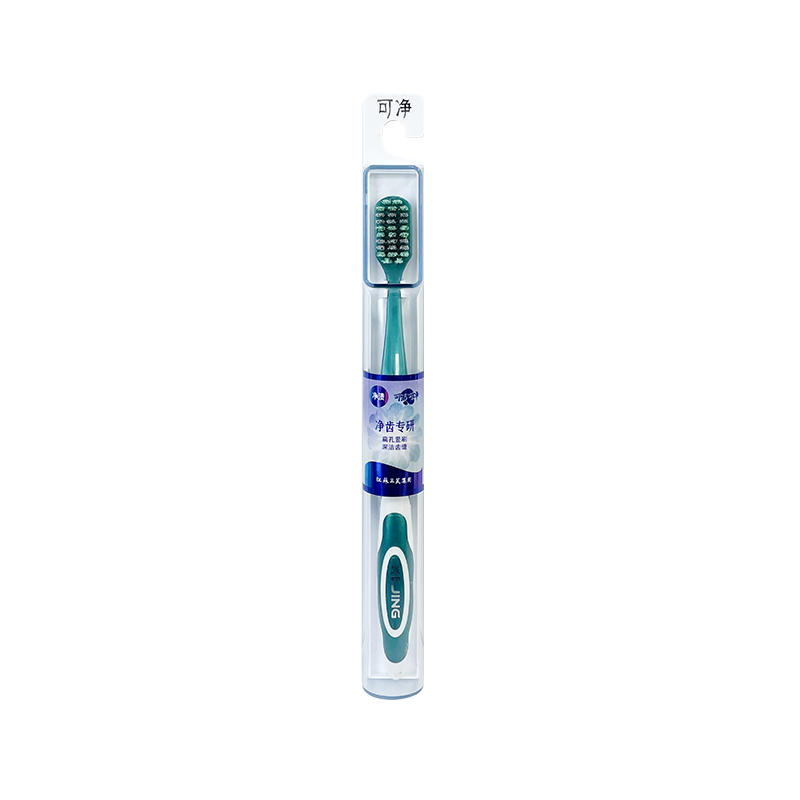
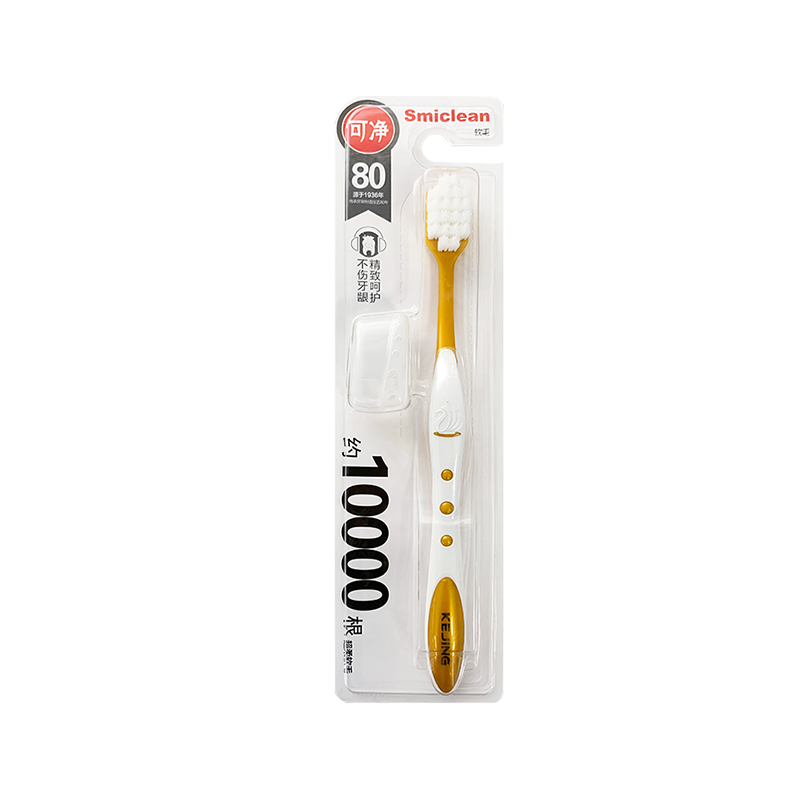
The most common mistake parents make when choosing a manual toothbrush — for children and adults alike — is selecting a medium or hard bristle brush in the belief that firmer bristles clean more effectively. They do not. Clinical evidence consistently shows that soft bristles remove plaque as effectively as harder bristles when correct technique is used, while the harder bristle grades cause significantly more abrasion to both enamel and gingival tissue (gums) with vigorous brushing. For children, who are still developing brushing habits and may not yet have the fine motor control to brush gently, soft bristles are the appropriate and recommended choice at all ages.
Bristle end-rounding is a manufacturing quality factor that is worth understanding. Mass-produced toothbrushes cut their bristles to length during manufacturing, which leaves sharp edges at the cut ends that can irritate gum tissue. Higher-quality brushes — including most branded children's brushes from established oral care companies — include an end-rounding step that creates a smooth, rounded tip on each bristle filament. End-rounding quality can be verified with a simple magnifying glass: rounded tips appear smooth and dome-shaped, while poorly finished bristles appear flat-cut or frayed. For young children with sensitive gum tissue, this quality difference is particularly relevant.
When Electric Toothbrushes Make Sense for Children
Electric toothbrushes — specifically oscillating-rotating powered brushes such as those produced by Oral-B, and sonic toothbrushes such as those produced by Philips Sonicare — do offer a measurable advantage in plaque removal over manual brushing in real-world use. The key phrase is "real-world use": in controlled clinical trials where participants are trained and monitored, the difference between manual and electric is modest. But in everyday home use, where children may rush their brushing, miss sections, or use a scrubbing motion rather than the correct technique, electric toothbrushes compensate for these technique deficiencies through their higher stroke frequency and consistent motion.
A Cochrane Review — the gold standard of medical evidence synthesis — covering 56 studies concluded that electric toothbrushes reduced plaque by 21% and gingivitis by 11% more than manual toothbrushes after three months of use. For a child who brushes reluctantly, rushes through the two minutes, or consistently misses the same areas, switching to an electric brush with a built-in two-minute timer can meaningfully improve actual cleaning outcomes even if their technique remains imperfect.
Manual vs. Electric Toothbrush: Side-by-Side Comparison for Children
| Factor | Manual Toothbrush | Electric Toothbrush |
| Suitable from age | Birth / first tooth | Typically 3+ years |
| Plaque removal (real-world) | Good with correct technique | Consistently better in studies |
| Technique dependence | High — results vary with user | Lower — compensates for poor technique |
| Built-in timer | No (external timer needed) | Yes (most models) |
| Cost | Low (replace every 3 months) | Higher upfront; replacement heads ongoing |
| Child engagement | Varies; fun designs help | Often higher — novelty factor |
| Travel friendliness | Excellent | Good (battery models) |
| Gum safety | Safe with soft bristles | Safe; pressure sensors in premium models |
Teaching Correct Brushing Technique with a Manual Toothbrush
For parents committed to manual brushing — or using it as the foundation before introducing an electric brush later — teaching technique correctly from the start builds habits that serve children for life. The most recommended technique for children is the Fones or circular method: the brush is held at a slight angle to the gum line and moved in small circular motions, covering two or three teeth at a time before moving to the next section. This technique is easier for young children to master than the modified Bass technique used for adult brushing, and it is effective at disrupting plaque at the gum margin where decay and gum disease initiate.
The two-minute duration recommendation is not arbitrary — it is based on the time required to brush all surfaces of all teeth (outer, inner, and chewing surfaces) with adequate thoroughness. Most children, left to their own assessment, brush for approximately 45 seconds and consider the job complete. Using a visual timer, a two-minute brushing song, or a brushing app that guides children through the mouth in quadrants is a practical strategy for building the duration habit. Parents should physically assist with or supervise brushing until at least age seven, at which point a "parent checks after" routine can begin to transition responsibility to the child while maintaining quality assurance.
Replacing Toothbrushes: Timing and Signs of Wear
A worn toothbrush — with splayed, flattened, or frayed bristles — is significantly less effective at plaque removal than a fresh brush and can irritate gum tissue with its misaligned filaments. Children's toothbrushes typically need replacement more frequently than adult brushes because children often brush more vigorously and with less technique control, accelerating bristle wear. As a general guideline, children's manual toothbrushes should be replaced every two to three months, or sooner if visible bristle splaying occurs before the three-month mark.
Toothbrushes should also always be replaced after a child has been ill with a bacterial infection — particularly streptococcal throat infections — as bacteria can persist on bristles and potentially cause reinfection. Toothbrushes should never be shared between children, and family members' brushes should be stored separately to prevent cross-contamination. In multi-child households, color-coding brushes by child eliminates the accidental sharing that commonly occurs when all brushes are stored in the same cup.
Practical Advice for Parents Deciding Between Manual and Electric
The most honest answer to the manual versus electric question for children is that the best toothbrush is the one that gets used consistently, correctly, and for the full two minutes — every morning and evening without exception. A manual brush used with good technique and enthusiasm will outperform an electric brush used grudgingly for 45 seconds. With that said, the following practical guidance helps narrow the choice:
- Start with manual for infants and toddlers. The tactile control, gentleness, and simplicity of a manual brush make it the right tool for the earliest years when a parent is doing all the brushing and building the child's familiarity with the routine.
- Consider electric if motivation is a persistent problem. For children aged three and above who consistently resist brushing or rush through it, the novelty and engagement of an electric brush — particularly models with characters, apps, or music timers — can transform the routine from a battle to something the child initiates willingly.
- Use electric for children with specific dental needs. Children with a high cavity risk, orthodontic appliances, or documented areas of persistent plaque accumulation benefit most from the consistent mechanical action of an electric brush that compensates for technique gaps.
- Keep manual brushes as backups. Even families that primarily use electric toothbrushes benefit from keeping manual brushes for travel, power outages, or days when the electric brush is unavailable. Children comfortable with both tools maintain their brushing habit regardless of circumstances.
- Ask your dentist for personalized advice. A child's dentist can assess plaque patterns from clinical examination, identify whether specific areas are being missed consistently, and recommend whether a change in brush type or technique would address the issue more effectively than other interventions.

We will provide a professional and reasonable quotation
as soon as possible for any customer inquiries.