English
 русский
 Español
 简体中文


How Do Sonic Toothbrushes Work? A Simple Guide to Sonic Cleaning Action
Content
- 1 What Makes a Toothbrush Sonic?
- 2 Inside the Handle: Where the Vibration Comes From
- 3 The Part Most People Overlook: Fluid Dynamics
- 4 Sonic, Oscillating-Rotating, or Manual?
- 5 What the Research Actually Shows
- 6 How to Brush With a Sonic Toothbrush
- 7 What to Look For When You Buy
- 8 A Note From the Factory Floor
If you have ever picked up a sonic toothbrush and wondered what all that buzzing is really doing, you are not alone. The question of how do sonic toothbrushes work comes up in almost every conversation we have with people who are switching from a manual brush, and the honest answer is more interesting than most product pages suggest.
The short version: a small motor inside the handle vibrates the brush head tens of thousands of times a minute. The bristles sweep the surfaces of your teeth, and the vibration also stirs saliva and toothpaste into a fast-moving fluid that reaches into spaces the bristles never touch. Two cleaning actions, one handle.
We have spent decades on the manufacturing side of oral care, building toothbrushes for brands around the world, so we tend to look at a brush from the inside out. Here is what is actually happening in your hand.
What Makes a Toothbrush Sonic?
The word "sonic" describes the speed of the movement, not the noise. Sonic brushes vibrate within the audible frequency range, roughly 20,000 to 60,000 brush movements per minute. That works out to somewhere between 250 and 600 cycles every second, which is why you hear a hum and sometimes feel a faint tickle against your lips.
Ultrasonic brushes belong to a different category. They vibrate above the range of human hearing, at frequencies measured in the millions of movements per minute, and they rely far more on fluid action than on bristle contact. A few premium handles combine both systems. For everyday brushing, the sonic range is what most people mean.
Inside the Handle: Where the Vibration Comes From
The drive system
Open up a sonic handle and you will not find gears or belts. Most designs use an electromagnetic drive: a coil of wire is energised in rapid alternation, which pushes and pulls a small magnet attached to a shaft. The shaft rocks back and forth, and because the brush head sits on the end of that shaft, the head rocks with it. Very few moving parts, very little friction, and a steady motion that does not stall when you press harder.
What you feel at the bristle tips
The travel is tiny, usually only a millimetre or two at the tips of the bristles, but it happens hundreds of times a second. That pairing of small amplitude and high frequency is what separates a sonic brush from scrubbing with your hand. Your wrist cannot match it, and it is not supposed to try.
The Part Most People Overlook: Fluid Dynamics
Bristles clean what they touch. The narrow gaps between teeth, the crevices along the gumline and the margins around crowns are largely out of reach, no matter how carefully you angle the head.
This is where the vibration earns its keep. As the bristles move, they agitate the mixture of saliva, water and toothpaste around them, creating rapid pressure changes in that fluid. The moving fluid, often described as a hydrodynamic effect, is driven into spaces the bristles never contact, where it helps break up the sticky bacterial film that forms on teeth. The same gentle agitation appears to massage the gums, and many people notice extra saliva flow while brushing, which helps rinse the mouth as they go.
It is worth being straight about the limits. Fluid action is a useful supplement to mechanical cleaning, not a replacement for it. Tight contacts and the area just under the gumline still need a physical tool, which is why we still suggest flossing or an interdental brush once a day.
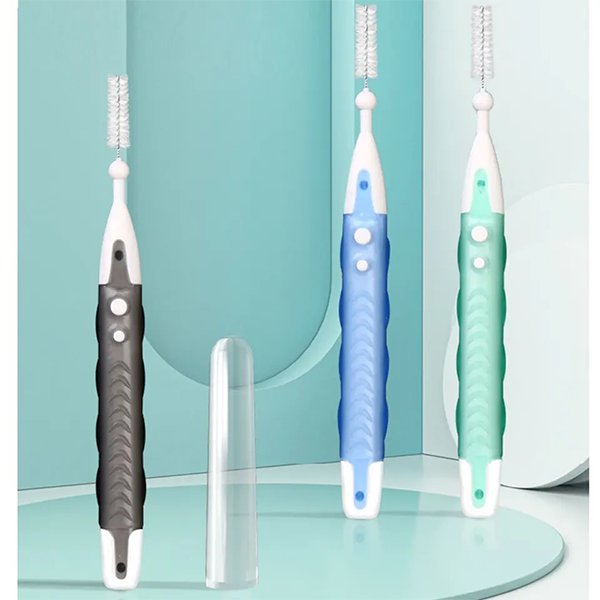 Dupont Nylon Flexible Interdental Brush for Tight SpacesA durable, flexible brush with soft yet firm DuPont nylon bristles for cleaning between teeth and along the gumline where physical tools are still needed.View Product →
Sonic, Oscillating-Rotating, or Manual?
Powered brushes are not all built the same way, and the differences show up in how they feel and where they clean best.
| Brush type | How the head moves | Typical speed | Often chosen for |
|---|---|---|---|
| Manual | Driven by your hand | A few hundred strokes a minute at best | Simplicity, travel, low cost |
| Sonic | Side-to-side vibration plus fluid agitation | 20,000 to 60,000 movements a minute | Sensitive gums, gumline cleaning, easy technique |
| Oscillating-rotating | Small round head turning back and forth | 2,500 to 8,800 rotations a minute | Tooth-by-tooth surface cleaning |
| Ultrasonic | Vibration above the audible range, fluid-led | Above 20,000 cycles a second | Specialist designs, sometimes paired with sonic |
The practical point is that all three powered approaches clean well. What changes is the feel in your mouth and how much technique they demand from you.
What the Research Actually Shows
Reviews that compare powered and manual brushing generally find that powered brushing removes a little more plaque and reduces gum inflammation somewhat more effectively. The advantage is modest but fairly consistent across studies. Sonic and oscillating-rotating designs tend to perform similarly in head-to-head trials, which suggests that the quality of an individual model, and how you use it, matters more than the category badge on the box.
Where sonic brushes do stand out is comfort. Because the head moves rather than scrubs, people with receding gums, sensitive teeth or a naturally heavy hand often find them easier to use without causing irritation. Anyone with limited dexterity, whether from arthritis, a tremor or an old injury, tends to manage better too, since the brush does the work and you simply guide it along.
One thing no powered brush changes: it is not a substitute for a professional cleaning, and it will not remove tartar once that has hardened on the teeth.
How to Brush With a Sonic Toothbrush
- Charge the handle and wet the brush head. Use a pea-sized amount of fluoride toothpaste; the vibration spreads it well, so more is not better.
- Hold the bristles at roughly 45 degrees to the gumline, so the tips touch both the tooth and the gum.
- Switch on and glide slowly from tooth to tooth. Let the vibration do the work, because pressing harder only wears the bristles and irritates the gums.
- Give each quadrant about 30 seconds. Most sonic handles pause every 30 seconds and switch off after two minutes.
- Spit out the foam, and skip the big rinse of water straight away if you want the fluoride to stay on the enamel a little longer.
- Clean between the teeth once a day, then rinse the head, shake it out and store the handle upright so it can dry.
- Replace the brush head every three months, or sooner if the bristles have started to splay.
For that between-teeth step, a floss pick is the easiest option for most adults, especially on the days when you are tired and want a routine you will actually finish.
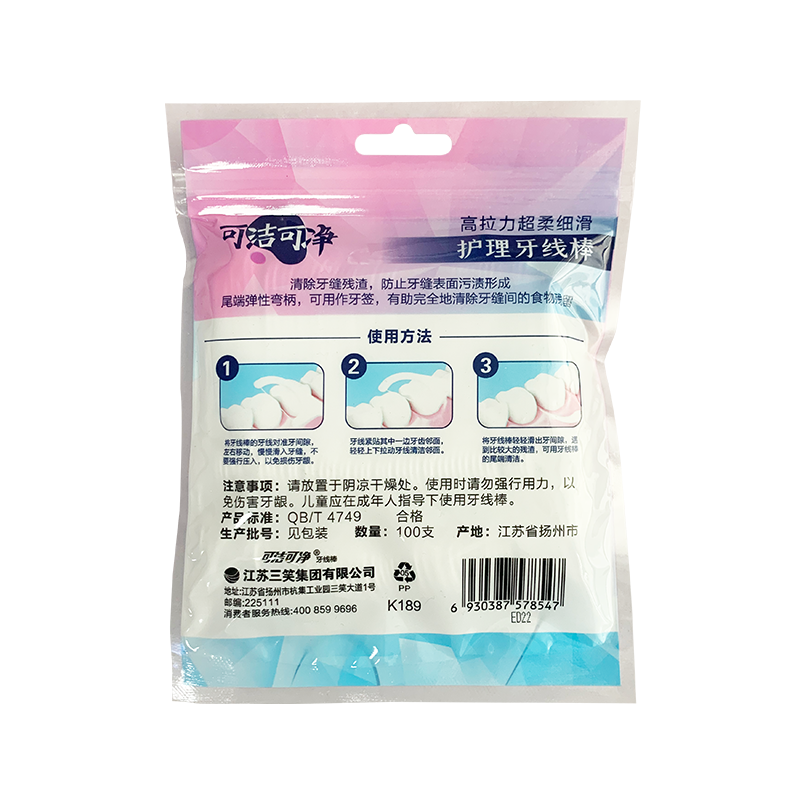 Soft, Smooth Dental Floss Sticks with Non-Slip HandlesConvenient floss picks with ultra-soft, shred-resistant floss and ergonomic non-slip handles, suited to sensitive gums and easy daily between-teeth cleaning.View Product →
What to Look For When You Buy
- Vibration speed: around 30,000 movements a minute is plenty. A higher number is not automatically better if the amplitude is very small.
- A pressure sensor: this is the single most useful feature, because pressing too hard is the most common mistake people make with a powered brush.
- Timers and pacers: a two-minute timer with 30-second quadrant prompts keeps you honest.
- Head size and bristle softness: a compact head reaches the back teeth, while soft, end-rounded filaments are kinder to gums.
- Running cost: check the price and availability of replacement heads before you commit.
- Water resistance: look for a handle that can be rinsed under the tap without worry.
A Note From the Factory Floor
We manufacture toothbrushes, interdental brushes, floss picks and toothpaste for oral care brands around the world, and that work has taught us how much of a brush's performance lives in details people never see: filament diameter, tufting density, the radius on the end of each bristle and how the head is polished after moulding. Those details matter just as much on a sonic brush head as on a manual one.
If you are developing an oral care line and need a manufacturing partner, our OEM and ODM services cover brush design, bristle selection, tooling, packaging and formulation support, all delivered from a certified production base that handles both oral care and personal care products at scale.
For anyone reading this at home, the takeaway is simple. A sonic toothbrush works because it pairs bristle contact with fluid movement, and used gently twice a day for two minutes, that combination does a genuinely good job.
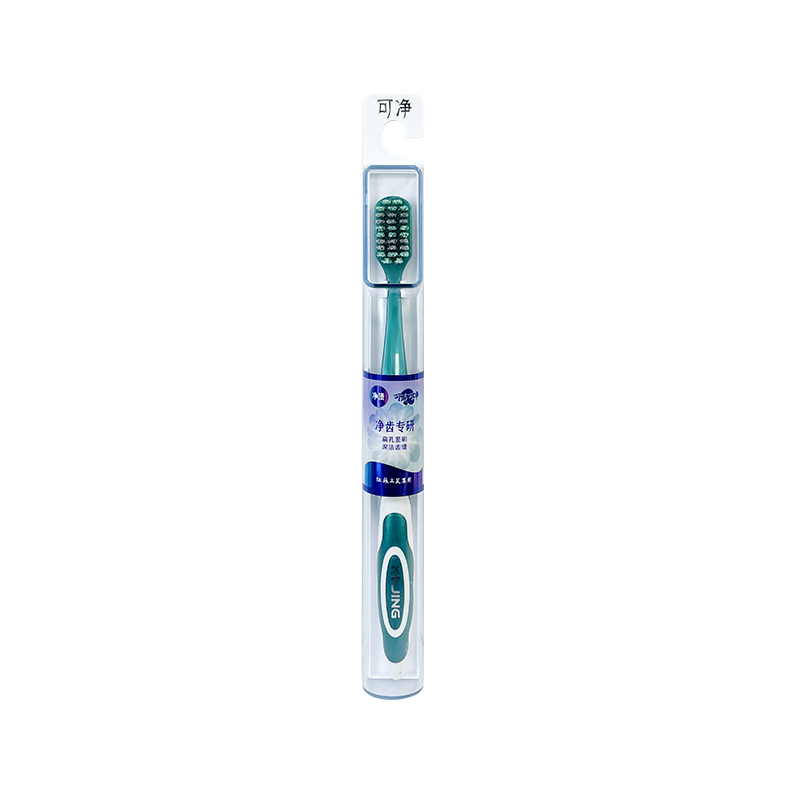
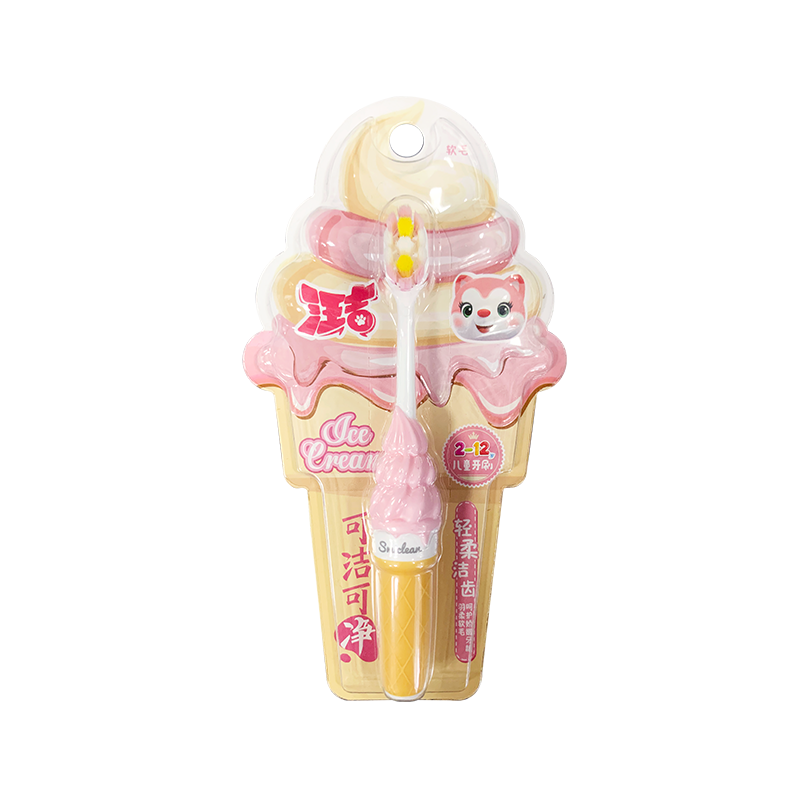
We will provide a professional and reasonable quotation
as soon as possible for any customer inquiries.