English
 русский
 Español
 简体中文


Are Soft Toothbrushes Better? A Practical Guide to Bristle Choice for You
Content
- 1 The Short Answer, and Why It Is Not the Whole Story
- 2 What Actually Makes a Toothbrush Soft?
- 3 Where Soft Bristles Earn Their Reputation
- 4 Soft, Medium or Firm: A Quick Comparison
- 5 The Myth That Harder Bristles Clean Better
- 6 How to Get the Most From a Soft Brush
- 7 What We Look at When We Build a Soft Brush
- 8 A Note for Brand Teams and Buyers
- 9 The Bottom Line
We hear the question in dental chairs and in product meetings alike: are soft toothbrushes better? After decades of making toothbrushes, our answer is short — for the great majority of people, yes. But the longer answer matters more. "Soft" is not a magic word on a package. What counts is how the bristles are made, how the brush is used, and whether the firmness suits the mouth in front of it.
The Short Answer, and Why It Is Not the Whole Story
Dental professionals have recommended soft bristles as the default for adults and children for decades, and the reasoning is straightforward. Most everyday tooth damage from brushing is not caused by bristles being too gentle — it is caused by bristles being too firm combined with too much pressure. Over years, that combination can wear enamel at the gum line, irritate gum tissue and contribute to recession.
A soft brush reduces the margin for that kind of harm. It still removes plaque effectively when used with reasonable technique, because plaque is a soft, sticky biofilm, not a hard deposit that needs scraping. So the soft brush wins on safety without giving up much on cleaning.
What "soft" does not guarantee is quality. Two brushes labelled soft can behave very differently depending on filament diameter, how the tips are rounded, how densely the tufts are packed and how the head is shaped. That is why the details below are worth a few minutes of your time.
What Actually Makes a Toothbrush Soft?
Bristle softness is mostly a question of filament diameter. As a rough industry convention, soft tufts are built from filaments around 0.10 to 0.18 mm in diameter, medium from roughly 0.20 to 0.25 mm, and firm above that. A thinner filament bends more easily under pressure, which is exactly what protects gum tissue.
Three other details shape how a brush feels in use:
- Tip rounding — polished, rounded filament ends glide over gums instead of scratching them.
- Tuft density — high-density heads spread pressure across more contact points, so each tip presses less.
- Filament material and shape — nylon and PBT filaments behave differently, and tapered or conical tips reach into the sulcus with a lighter touch.
This is why a well-made soft brush can feel more effective than a cheap medium one, and why the word on the label is only a starting point.
Where Soft Bristles Earn Their Reputation
Sensitive gums and early recession
If brushing produces pink foam or a twinge here and there, firm bristles are rarely the answer. A soft brush lets the gum margin recover while still clearing plaque from the area.
Enamel wear and tooth sensitivity
Abrasion is a partnership between an abrasive toothpaste and a stiff brush pressed hard. Softening the brush removes one half of that partnership, which is especially useful for people noticing sensitivity near the gum line.
Braces, aligners and dental work
Brackets, wires, crowns and implants all create edges where firm bristles can catch. Soft bristles flex around these shapes, which is why orthodontic and post-treatment brushes are usually soft.
Children and older adults
Young children are still learning pressure control, and older adults often have exposed roots and thinner enamel. Both groups benefit from a gentle default.
Better habits overall
There is a behavioural benefit too. When a brush feels harsh, people tend to shorten their brushing. A soft brush makes a full two minutes more comfortable, and comfort is what keeps a routine going.
Soft, Medium or Firm: A Quick Comparison
| Firmness | Typical filament diameter | Usually best for | Watch out for |
|---|---|---|---|
| Soft | 0.10 – 0.18 mm | Most adults, children, sensitive gums, braces, exposed roots | Very light pressure needed; worn bristles reduce cleaning |
| Medium | 0.20 – 0.25 mm | Occasional use for heavy staining, with professional advice | Higher abrasion risk when combined with force |
| Firm | Above 0.25 mm | Narrow, specific cases such as cleaning dentures | Not recommended for natural teeth by most clinicians |
The Myth That Harder Bristles Clean Better
The idea persists that a firmer brush scrubs teeth cleaner. In practice, plaque removal depends far more on coverage and time than on force. A soft brush that reaches the back molars, the gum margin and the spaces around the last tooth will outperform a firm brush used in a hurry.
There is one honest caveat. People with heavy staining from coffee, tea or tobacco sometimes feel a soft brush is not enough. The better route is usually a professional cleaning plus a whitening toothpaste used with a soft brush, rather than moving up to firmer bristles. Medium brushes do have a place, but that place is narrower than most people assume.
How to Get the Most From a Soft Brush
- Hold the brush at a 45-degree angle to the gum line so the tips enter the sulcus gently.
- Use small circular motions rather than long horizontal scrubbing strokes.
- Apply light pressure — roughly the weight of a small coin against the teeth.
- Work methodically: outer surfaces, inner surfaces, chewing surfaces, then the tongue.
- Brush for two minutes, twice a day, and clean between teeth once a day.
- Replace the brush every three months, or sooner once the bristles splay.
If your soft brush is flattened after a few weeks, that is a pressure signal, not a brush failure — the same will happen with any firmness.
What We Look at When We Build a Soft Brush
Because we manufacture these products, we tend to judge a soft brush by details consumers rarely see. Filament diameter is checked batch by batch, tip rounding is verified under magnification, and tuft density is balanced against head size so the brush still feels agile in the mouth.
Three examples from our oral care range show how those variables play out in practice. The
 Soft Bristles Stain Removal Flat Hole ToothbrushA manual toothbrush with flat-hole tufting and tapered spiral bristles for gentle stain removal and interdental cleaning in daily oral care.View Product →
pairs gentle filaments with a flat-hole tuft layout for everyday cleaning. For a denser feel, the
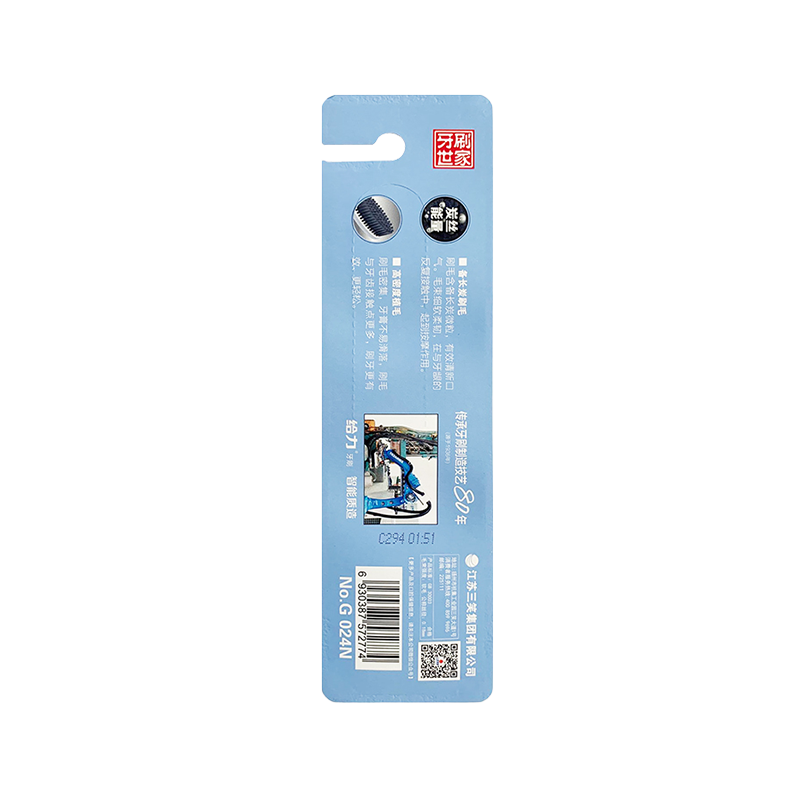 Soft Bristles High Density Carbon Filament ToothbrushUltra-soft high-density carbon filament bristles spread pressure across many tips for gentle plaque removal along teeth and gum line.View Product →
spreads pressure across a much larger number of tips. And the
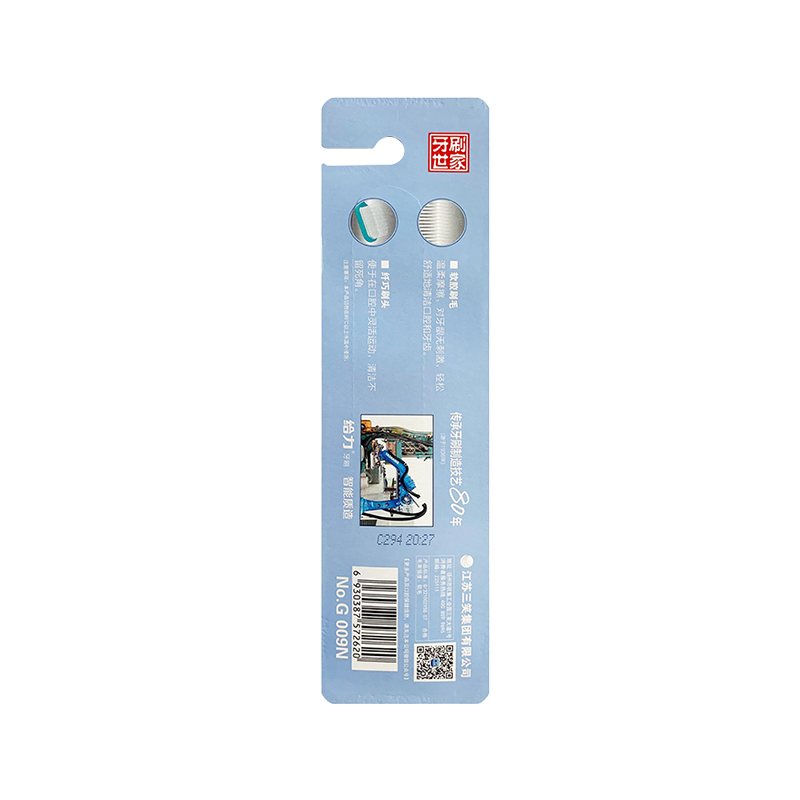 Soft Rubber Bristle Slim Head Nano ToothbrushUses soft rubber bristles and a slim head for lighter, controlled cleaning, offering a gentler option for sensitive mouths and hard-to-reach areas.View Product →
takes a different route, using soft rubber elements and a slim head for a lighter, more controlled clean.
Different designs suit different mouths. What we try to keep constant is that "soft" means genuinely gentle, not merely labelled that way.
A Note for Brand Teams and Buyers
If you are developing a toothbrush line rather than buying one, bristle specification is one of the first decisions worth locking down. Filament diameter, tip treatment, tuft pattern and handle geometry all interact, and small changes show up clearly in consumer feedback.
Our OEM and ODM services are built around that reality: more than 100 people in product development, a manufacturing base of roughly 550,000 square metres of production space, and a factory operating under ISO and GMP certification. We work with brands that need a soft-bristle range they can defend to their customers, not just a lower price per unit.
The Bottom Line
For most people, soft toothbrushes are better — better for gums, better for enamel, and easier to use consistently well. Medium bristles remain an occasional tool rather than a daily default, and firm bristles belong to dentures far more than to natural teeth. Choose a soft brush made with rounded, well-graded filaments, use it lightly, and replace it as soon as it starts to splay. That routine will do more for your teeth than any amount of extra scrubbing force.
We will provide a professional and reasonable quotation
as soon as possible for any customer inquiries.