English
 русский
 Español
 简体中文


Electric Toothbrushes With Pressure Sensors: A Buyer's Guide for Brands
Content
- 1 What a Pressure Sensor Actually Does
- 2 How the Feedback Reaches the Brusher
- 3 Calibration Is Where Most Projects Are Won or Lost
- 4 Brush Heads, Filaments and the Gentleness People Feel
- 5 What to Put in the Specification Before Tooling
- 6 Mistakes We See Again and Again
- 7 Pressure Sensing for Younger Brushers
- 8 Manual Brushes Still Earn Their Place
- 9 Choosing a Partner Who Has Done This Before
Ask a group of shoppers what they want from an electric toothbrush and most will talk about cleaner teeth or a brighter smile. Ask a dental professional and the answer often sounds different: they want people to stop pressing so hard. That gap between what buyers ask for and what gums actually need is exactly where the pressure sensor has earned its place, moving from a premium curiosity to an expected feature on mid-range handles.
We have spent decades building toothbrushes at Sanxiao Group, first as a brush factory, then through a joint venture, and since 2010 as an independent manufacturer again. Pressure sensing is one of the topics brand teams raise with us most often, usually with the same handful of questions behind it. Here is what we have learned on the production floor, written for the people specifying the next model.
What a Pressure Sensor Actually Does
A pressure sensor is a small load-sensing element, usually mounted in the neck or the upper part of the handle, that measures how much force the bristles are receiving. Firmware compares that reading against a threshold you define, and when the brusher pushes past it, the handle responds. The sensing itself is simple. Deciding what the handle should do about it is the harder part.
The reason it matters is mechanical. Tooth enamel is hard but not indestructible, and gum tissue is softer still. Years of heavy-handed scrubbing can wear a wedge-shaped notch into the tooth at the gum line and pull the gum margin back, exposing the root surface. Once that happens it does not grow back. A sensor that nudges someone to lighten up, gently and repeatedly, is worth more than almost any other smart feature on the handle.
What a sensor cannot do is compensate for a stiff brush head. Firm filaments pressed hard against a gum margin will still irritate it, even if the light blinks. Feedback and filament softness have to be designed together.
How the Feedback Reaches the Brusher
There is no single correct way to warn someone. Each channel has its own strengths and its own design consequences, and many successful handles combine two of them so that the message survives a noisy bathroom or a distracted morning.
| Feedback channel | What the brusher notices | What to plan for in the design |
|---|---|---|
| Handle vibration | A short buzz or stutter in the motor | Motor control and housing rigidity; the pulse should feel distinct from the two-minute timer |
| Light ring or LED | A colour change on the handle or a ring that glows | Power budget and light bleed; it must be visible at arm's length in a mirror |
| Audible tone | A soft chime or double beep | Speaker sealing and volume limits; shared bathrooms make loud alerts unpopular |
| Automatic speed reduction | The brush quiets down and slows until pressure eases | Firmware logic and mode interaction; it must not be confused with a low-battery warning |
| App prompt | A message on the phone screen after the session | Bluetooth reliability; treat it as a supporting channel, never the only one |
Calibration Is Where Most Projects Are Won or Lost
Two handles can use identical electronics and feel completely different, purely because of how they were tuned. The threshold is the obvious variable, but it is rarely the one that causes trouble. Response time matters just as much: an alert that arrives half a second after the pressure eases is worse than no alert at all, because it teaches the brusher to distrust the brush.
Hysteresis deserves early attention. If the warning switches on at one force and off at almost the same force, it will flicker during normal brushing and quickly become noise. A deliberate gap between the on and off points keeps the feedback calm. We also test for drift, because sensor readings shift with temperature, battery voltage and the weight of the fitted head. A heavier replacement head should not trigger the warning by itself.
Our engineers build a simple force rig for each project and cycle prototypes on it for hours, logging where the alert fires and where it releases. It is unglamorous work, and it is the difference between a feature that reviewers describe as reassuring and one they describe as nagging.
Brush Heads, Filaments and the Gentleness People Feel
Whatever the electronics do, the part touching the gums is the head. Tapered filaments with rounded tips glide over a gum margin differently from blunt, thick ones. Soft rubber elements help cushion the transition where the head meets the gum line, and a slim head reaches the back molars without forcing the brusher to press harder to compensate for poor access.
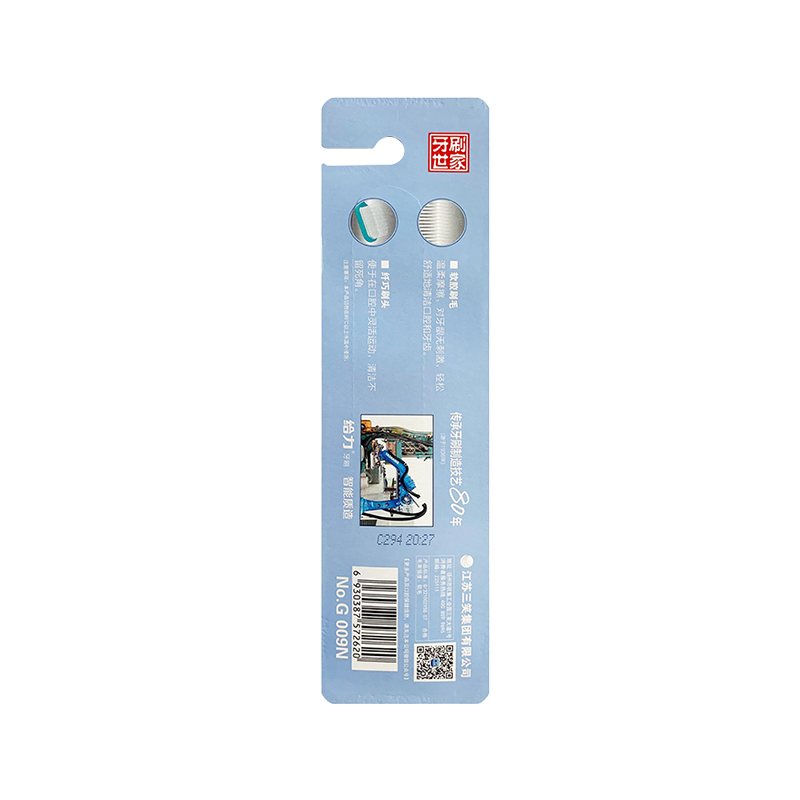 Soft Rubber Bristles Slim Nano Brush HeadSoft rubber bristles and a slim nano brush head support gentle cleaning for sensitive gums and hard-to-reach areas.View Product →
When a brand team briefs us on an electric model, we usually ask them to choose the head geometry and filament specification first, then let the sensor threshold be tuned against that head. Doing it in the opposite order produces a warning that fires at the wrong moment for the brush it is attached to.
What to Put in the Specification Before Tooling
A clear written specification saves months. These are the points we ask every partner to settle before moulds are cut:
- Which feedback channel or channels the handle will use, and how they differ from the quadrant timer.
- The force range at which the alert should begin, expressed in grams, plus the release point.
- Permitted response delay, measured from the moment force crosses the threshold.
- Ingress protection target and the sealing method around the sensing element.
- How much battery life the sensing and feedback are allowed to consume in each mode.
- Whether the brusher can disable the feature, and how that setting is remembered.
- The test documentation the brand needs for retail and regulatory submissions.
Documentation is not paperwork for its own sake. Buyers increasingly ask for evidence of factory audits and quality systems before they will list a product, which is why we keep our certification records ready to share with partners at any stage of a project.
You can review our certification and factory compliance documentation to see the standards we work to.
Mistakes We See Again and Again
- A threshold set so high that only genuinely painful pressure triggers it, which teaches users the feature is irrelevant.
- Feedback that looks identical to the two-minute timer, leaving the brusher unsure which message they just received.
- Sensing elements sealed with a single O-ring, then failing a drop test in the field.
- No way to switch the alert off, which some users find so distracting they stop using the brush altogether.
- Heads sourced separately from the handle, with weight variation that shifts the trigger point.
Pressure Sensing for Younger Brushers
Children are not simply small adults. They grip a handle differently, they chew on it, and they often brush with an enthusiasm that translates into force. A softer feedback threshold, plus a handle that is easy to hold at a young angle, does more good than an app full of charts. The same principle applies to our manual children's designs, where shape and grip carry most of the message.
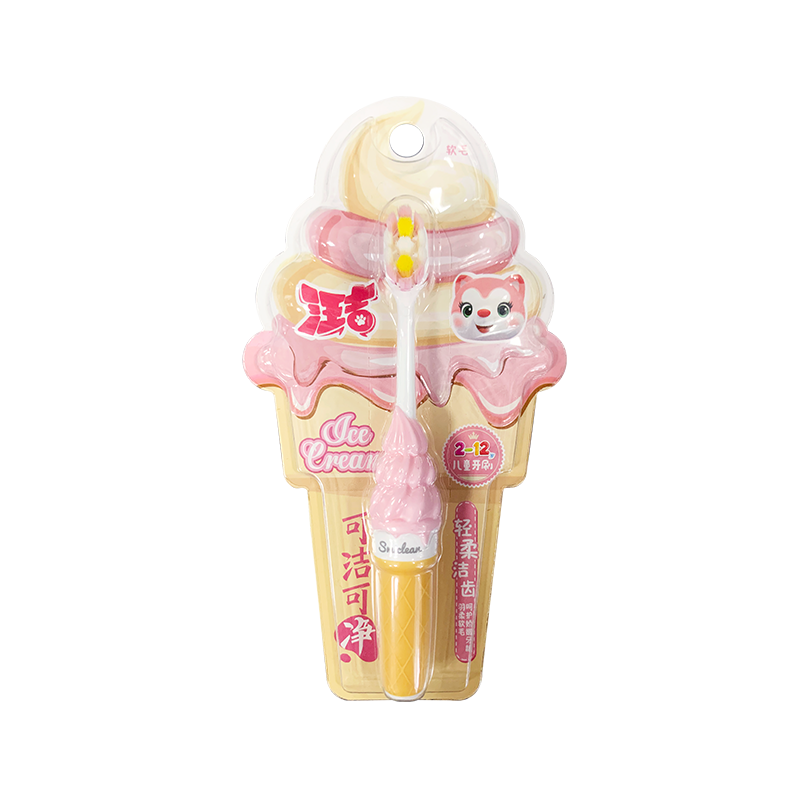
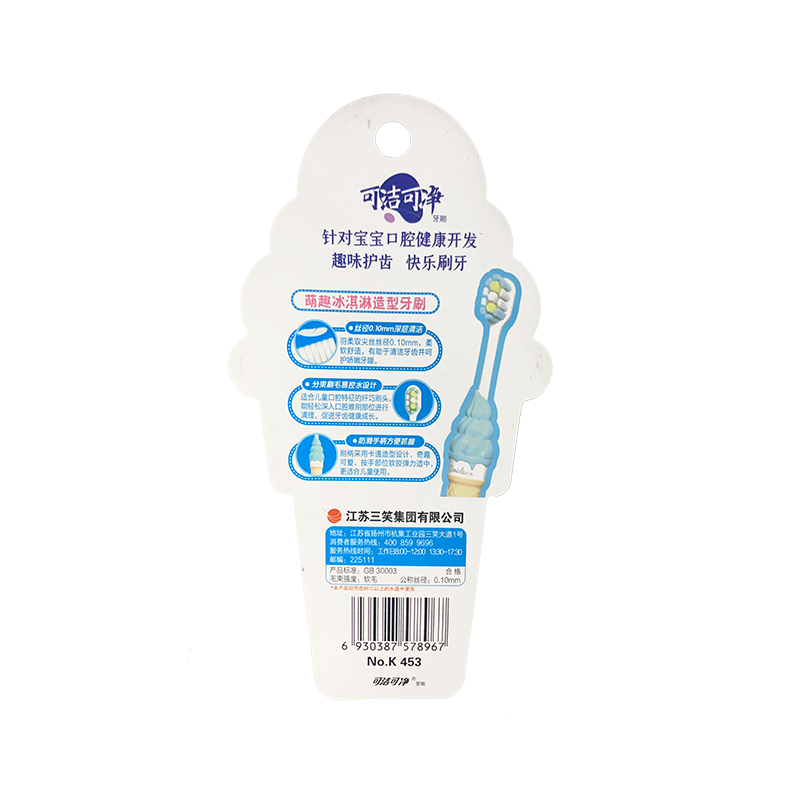 Ice Cream Shape Children’s Toothbrush for Ages 2-12Ultra-soft 0.10mm bristles and a non-slip ice-cream handle support gentle cleaning and an easy grip for young children.View Product →
For a kids' electric model we generally recommend the vibration channel rather than a light ring, because the handle is closer to the hand than the mirror, and a buzzing sensation is understood instantly.
Manual Brushes Still Earn Their Place
Not every brushing moment happens next to a charging stand. Travel, office drawers, hospital stays and emergency kits all still call for a manual brush, and many brands run both lines side by side. A compact head with a soft outer edge is a sensible companion to a powered handle, particularly for anyone whose gums are already sensitive while they relearn a lighter grip.
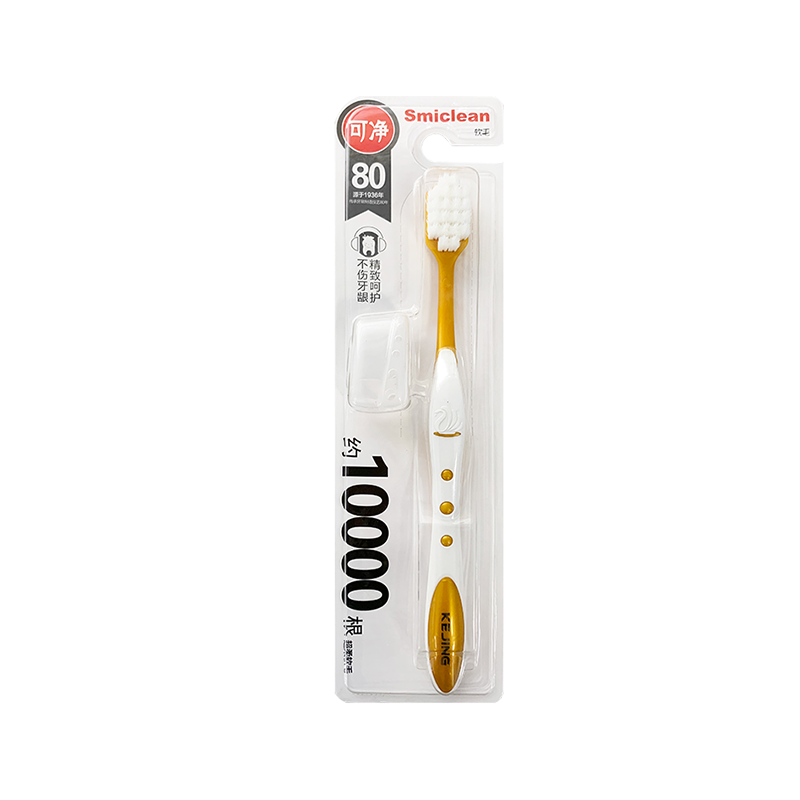
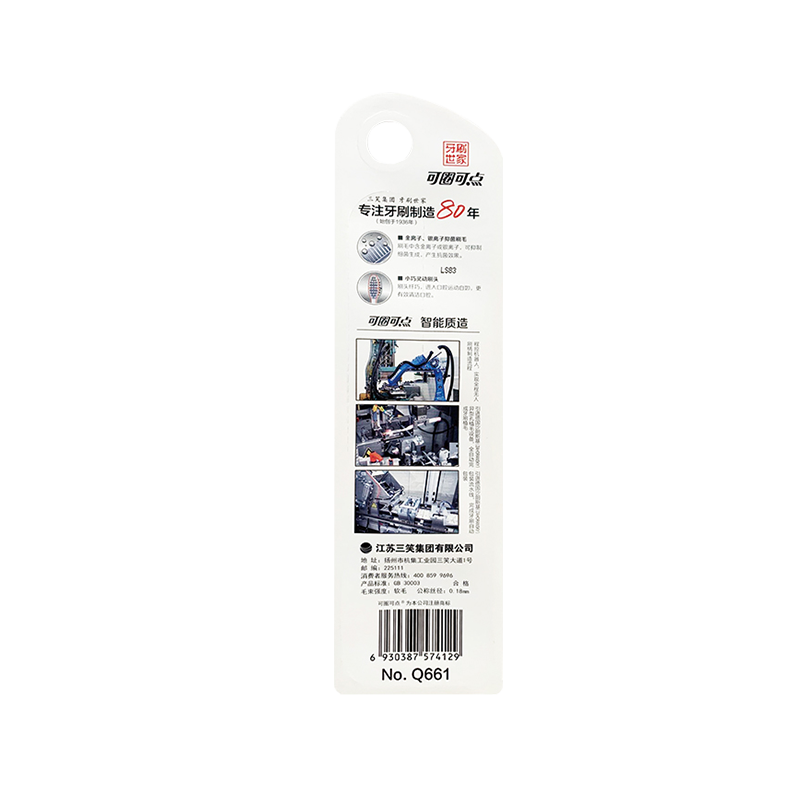 Small Head Silver-Ion Antibacterial Manual ToothbrushA compact head with Ag+ bacteriostatic bristles and dense tapered filaments supports precise, gentle cleaning, including between teeth and along sensitive gum lines.View Product →
If your range includes both categories, our OEM and ODM service can cover manual brushes, powered brush heads and packaging within one programme, so the two lines share filaments, materials and quality standards.
Choosing a Partner Who Has Done This Before
Sanxiao Group has been manufacturing oral care products since 1996, with a factory footprint of roughly 450,000 square metres and a product development team of more than one hundred people. That history includes a joint venture with a global partner and a later return to independent brush manufacturing, which means our teams have seen both the strictest audit regimes and the fastest retail cycles.
For a pressure-sensing project, that experience shows up in ordinary places: knowing which filament blends survive a head that flexes under load, knowing how much sealing room a sensing element really needs, and knowing how to keep a firmware threshold stable from the first prototype to the ten-thousandth unit. If you are planning a powered brush with gum protection built in, our engineers are glad to talk through the specification with you before anything is tooled.
A pressure sensor is not the feature that sells a brush in the first ten seconds of a product page. It is the feature that keeps someone brushing comfortably for years, and that quietly earns the repeat purchase. Get the head, the filament and the threshold aligned, and the rest of the handle has a much easier job.
We will provide a professional and reasonable quotation
as soon as possible for any customer inquiries.