English
 русский
 Español


Can Electric Toothbrushes Really Damage Gums? An Honest Look at the Evidence
Content
- 1 Can Electric Toothbrushes Really Damage Your Gums?
- 2 The Pressure Problem Is the Real Issue
- 3 What Else Makes Gums More Vulnerable
- 4 Electric vs Manual: A Side-by-Side Look
- 5 How to Brush Safely with an Electric Toothbrush
- 6 What Makes a Brush Head Gentle on Gums
- 7 A Word from the Manufacturing Floor
- 8 When to Stop Brushing and See a Dentist
Have you ever finished brushing and felt a dull ache along your gumline? Or glanced in the mirror and noticed your gums seem to be pulling back a little more each year? If so, it is only natural to look at the electric toothbrush in your hand and wonder whether it is the one doing the damage. We have been making toothbrushes for decades, supplying oral care brands around the world, and this is one of the questions we hear most often. So let us talk about it honestly.
Here is the short version: an electric toothbrush does not automatically harm your gums. The damage, when it happens, usually comes from the pressure you apply, the condition of the brush head, and the way you move the bristles across your teeth. The tool itself is neutral. How you use it is what matters.
Can Electric Toothbrushes Really Damage Your Gums?
The answer depends on how the brush is used. Electric toothbrushes deliver thousands of bristle movements per minute, far more than most people can sustain by hand. When those bristles sweep across the gumline at that speed and are pressed firmly against the tissue, something has to give.
Research is generally kind to electric brushes. Several systematic reviews have found that powered brushes, particularly oscillating-rotating models, tend to outperform manual brushes at reducing plaque and gingivitis. But being better at removing plaque is not the same as being incapable of irritating the gums. If too much force is applied, harm can still follow.
The catch is that the harm tends to happen quietly. Gum tissue is far more delicate than tooth enamel. It does not take much to provoke it, and once provoked, it heals slowly.
The Pressure Problem Is the Real Issue
Nearly every dental professional we have worked with says the same thing: pressure is the culprit. The harder you push the brush against your teeth, the more the bristles press into the gumline. Over months and years, that pressure can push the marginal gum away from the tooth surface, which is how recession begins.
Over-brushing, meaning brushing for too long or too many times a day, makes matters worse. Gums respond to gentle contact, not to vigorous scrubbing.
One small habit helps a great deal. Hold the brush with your fingertips rather than a closed fist, as though you were holding a pen. If the bristles splay faster than they should, your hand is working too hard. A soft brush head should last roughly three months, not a few weeks.
What Else Makes Gums More Vulnerable
Pressure is the biggest factor, but it is not the only one. A few other conditions shape how your gums respond.
Worn or Overly Stiff Bristles
Bristles stiffen and fray over time, and frayed bristles scrape like fine sandpaper. A hard-bristled head, or one whose filaments have already splayed outward, is unkind to tender gums. If you are unsure how often to replace a head, that decision matters more than most people realize. A deformed brush stops being a cleaning tool and starts being an irritant.
Brushing Technique and Timing
Small circles and a sawing motion are not the same thing. A back-and-forth scrubbing motion combined with a powered motor is rough on gum tissue. So is brushing for too long. Two minutes is plenty; going longer only adds irritation without adding cleanliness.
Existing Recession or Sensitivity
If you already have some gum recession or a history of gum disease, any brush can feel like a challenge. Once the gum has moved down, the exposed root surface is sensitive, and the margin where gum meets tooth becomes more fragile. Under those circumstances, the amount of force and the angle of the head matter enormously.
Electric vs Manual: A Side-by-Side Look
Both styles have their champions. Honestly, the best toothbrush is the one you will actually use consistently. Still, for anyone with sensitive gums, a few differences are worth understanding.
| Factor | Manual Toothbrush | Electric Toothbrush |
|---|---|---|
| Plaque removal | Depends on technique | Often more consistent |
| Pressure control | Entirely up to the user | Pressure sensors on some models |
| Risk of gum irritation | Moderate if you press hard | Higher if you press hard or use stiff bristles |
| Learning curve | Minimal | Short adjustment period |
| Suitability with receding gums | Fine with soft bristles | Fine with soft bristles and a gentle mode |
How to Brush Safely with an Electric Toothbrush
If you already own a powered brush, or are thinking about buying one, these habits will keep your gums happy.
- Start on the lowest setting. If your brush offers several speeds, begin with the sensitive mode and only move up once your gums have adjusted.
- Let the brush head do the work. Rest the bristles lightly against the tooth surface at the gumline and let the motor handle the motion instead of scrubbing.
- Guide, do not press. Move the head slowly along the gumline, pausing briefly on each tooth.
- Keep it to two minutes, then stop. Two minutes is enough to clean thoroughly, and going longer only adds irritation.
- Watch for signs of force. If the bristles look flattened or your hand feels tired from gripping, you are pressing too hard.
- Replace the head on schedule. Splayed bristles clean poorly and irritate the gumline. If you want a more detailed guide on timing, we have written about how often you should change your toothbrush.
What Makes a Brush Head Gentle on Gums
If pressure accounts for half the problem, brush head design accounts for the other half. When we work with brands on new products, a handful of details get the most attention.
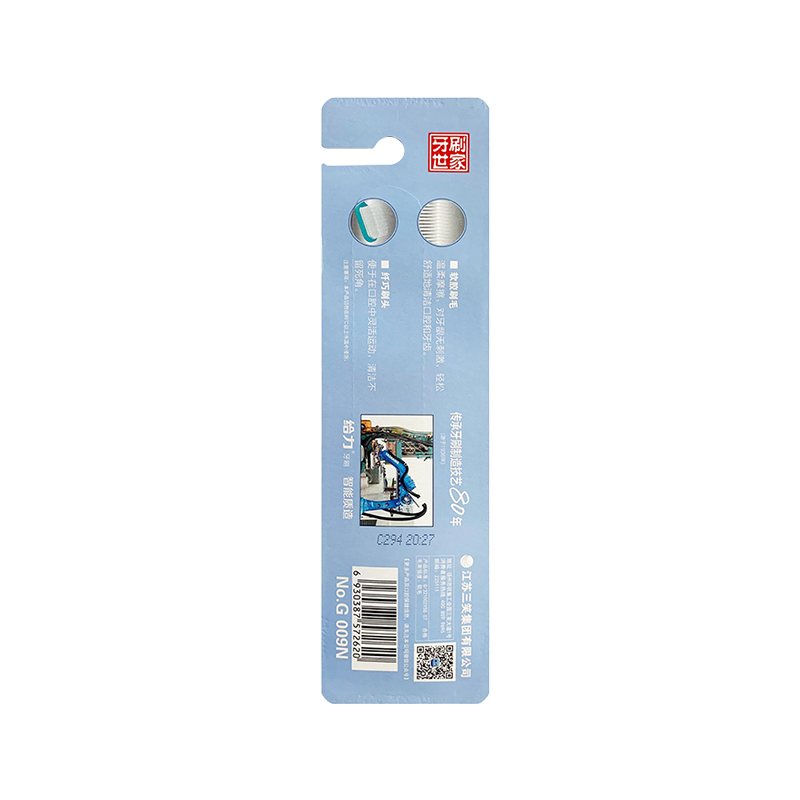
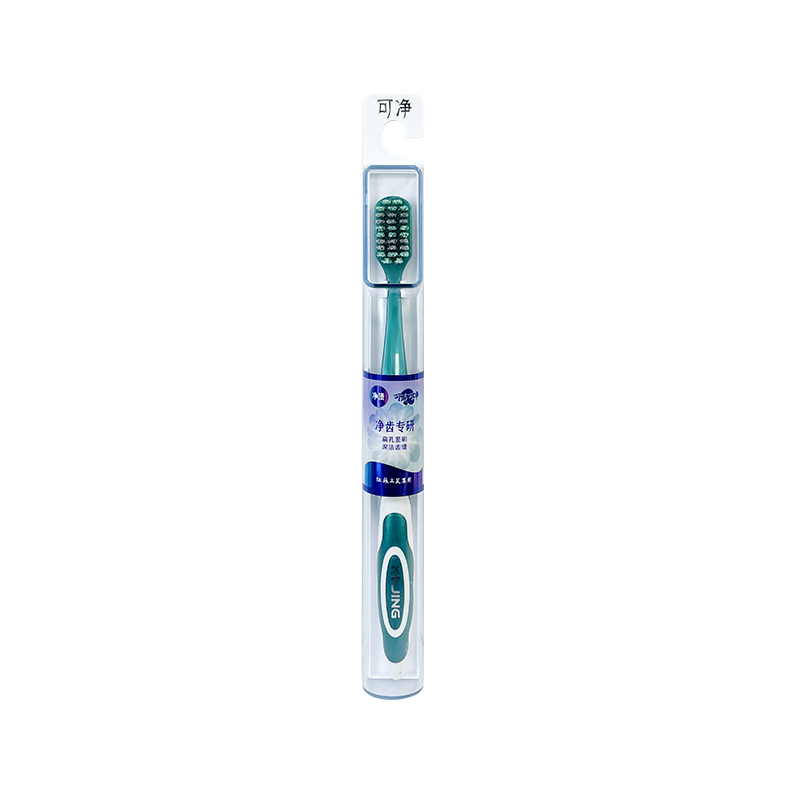
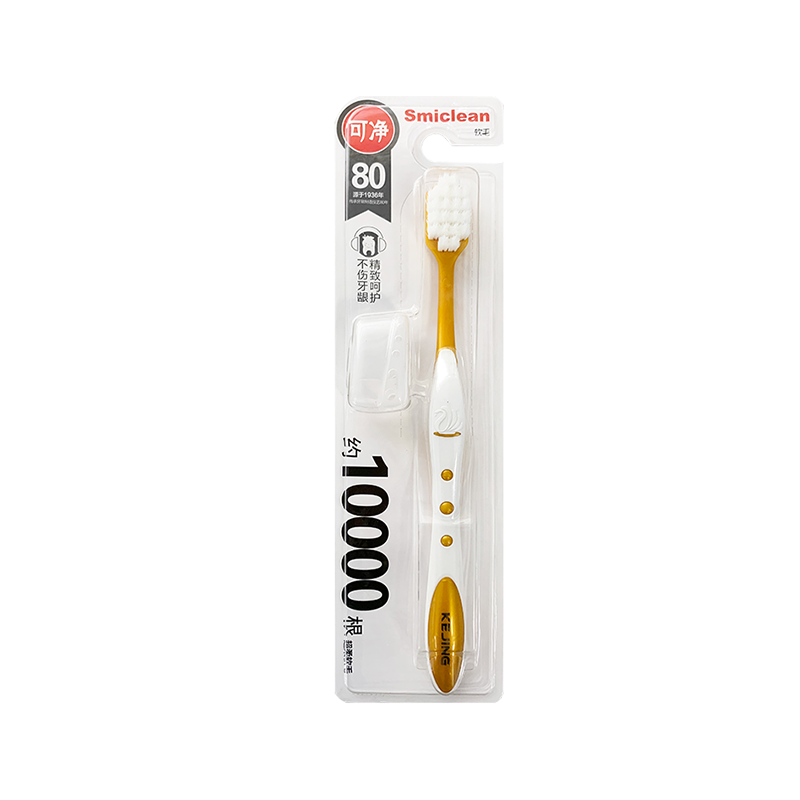
Soft filaments, ideally rounded rather than sharply cut, glide along the gumline without scraping it. A smaller head helps you reach the back teeth without stretching your mouth so wide that the bristles angle awkwardly into the tissue. Dense, well-planted tufts hold their shape longer, so the head stays gentle for its entire life instead of turning harsh after a few weeks. A few of the shapes we produce were built with exactly these ideas in mind.
 Soft Rubber Bristle Slim Nano Toothbrush HeadFeatures soft rubber bristles and a slim nano head for gentle gumline cleaning, reaching back teeth without irritating sensitive mouths.View Product →
Take the soft rubber bristle, slim nano head model. The rubbery filaments flex against the gum margin rather than digging into it, and the narrow head slips into the corners where the gumline curves.
 Small Brush Head Silver Ions Antibacterial ToothbrushCombines Ag+ bacteriostatic bristles with a compact head to support hygiene, while dense tapered bristles clean between teeth and along the gumline.View Product →
A small-brush-head design is another route. It reaches the molars without forcing the jaw open, which keeps the bristles at a gentler angle. Silver-ion treatment in the filaments adds a hygiene benefit on top of that.
 Soft Bristle Stain Removal Flat Hole ToothbrushFlat-hole tufting keeps tufts even while double-tapered spiral bristles clean gaps and help remove surface stains without damaging enamel.View Product →
Then there is the soft bristle, flat-hole construction, where the planting pattern keeps the tufts even so soft filaments distribute pressure across the tooth surface instead of concentrating it in one spot.
A Word from the Manufacturing Floor
At Sanxiao Group, gum-friendly design is not an afterthought. It is decided at the very start of a project. Filament diameter, head geometry, end-rounding, tuft density, and how firmly each tuft is anchored all shape how the finished brush feels against the gumline. When we develop a new powered brush head for a brand partner, we usually work backwards from the gum margin rather than forwards from the motor.
If you are planning an oral care line and want a partner who thinks about tissue contact before spec sheets, we offer custom toothbrush development services that cover everything from filament selection to final tooling.
One thing we have noticed over the years: most gum complaints are not really about the brush. They are about the head that has been in use far too long. We have seen plenty of consumers keep a splayed brush going for months without realizing that the thing pressing against their gums is no longer soft at all.
When to Stop Brushing and See a Dentist
Mild soreness after brushing usually settles within a day or two once you ease up on pressure. But some signals deserve a professional look.
- Gums that bleed regularly or feel tender to the touch
- Teeth that look longer, or gaps that seem wider than before
- Persistent sensitivity to cold drinks or while brushing
- Redness, swelling, or recession that does not improve within a few days
If any of these persist, book an appointment. A dentist can tell whether something deeper is going on, such as periodontal disease, which needs proper treatment rather than a new brush head.
So, can electric toothbrushes damage gums? They can, but almost always because of how they are used rather than what they are. Used well, they remain one of the most effective tools available for keeping a mouth clean. The trick comes down to three things: a light touch, soft filaments, and a head that gets replaced before it wears out.
Those principles sound simple, and they are. But they shape every decision we make when we sit down to design a brush head, and they are worth keeping in mind every time you pick one up.
We will provide a professional and reasonable quotation
as soon as possible for any customer inquiries.