English
 русский
 Español


Best Toothbrushes for Sensitive Teeth: Key Specifications OEM Buyers Must Evaluate
Content
- 1 Why Sensitivity Starts at the Gumline
- 2 Soft Bristles Are the Starting Point
- 3 Smaller Brush Head Reduces Pressure
- 4 Bristle Density Keeps Cleaning Power High
- 5 Comparing Toothbrush Configurations for Sensitive Teeth
- 6 Common Specification Pitfalls to Avoid
- 7 OEM and Custom Manufacturing Considerations
- 8 Final Takeaway
When you evaluate a toothbrush design for sensitive teeth, the first specification that gets questioned is usually bristle hardness. Retail buyers and product managers often receive complaints that a brush feels “too harsh,” while the same product removes plaque efficiently for other users. This tension is not a branding problem; it is a design problem that can be solved with the right combination of bristle softness, brush-head dimensions, and bristle density.
For OEM and private-label teams sourcing a sensitive-teeth toothbrush, the practical conclusion is simple: soft bristles alone are not enough. You also need a compact head geometry and a bristle-dense surface that still cleans well without placing excessive pressure on the gumline. The sections below explain how to evaluate these factors before you commit to a manufacturing partner.
Why Sensitivity Starts at the Gumline
Most tooth sensitivity originates at the gingival margin, where enamel becomes thinner and dentin is exposed. When a brush with stiff or poorly rounded bristles moves across this area, it can cause immediate discomfort and contribute to gingival recession. In severe cases, users may avoid brushing the sensitive spots, which leads to plaque accumulation and worse symptoms.
Therefore, a toothbrush marketed for sensitive teeth must reduce the mechanical stress at the gumline. That means soft bristles with rounded tips, a small brush head that can reach narrow areas without stretching the tissue, and enough bristle flexibility to glide rather than scrape.
Dentin hypersensitivity is often triggered by cold, hot, sweet, or sour stimuli. While toothpaste can help occlude tubules, the toothbrush's mechanical action remains the first line of defense or the first cause of pain.
Soft Bristles Are the Starting Point
Soft bristles are the first filter in any sensitive-teeth lineup. In manufacturing terms, softness is determined by filament diameter and material, not by the label printed on the package. A typical soft toothbrush uses filaments around 0.15 mm to 0.20 mm, while extra-soft models may drop to 0.12 mm. Medium bristles, usually above 0.22 mm, are generally unsuitable for sensitive users.
However, bristle softness alone can reduce cleaning power. To counter this, many sensitive-teeth toothbrush designs use a flat-hole pattern with a specific tuft count, allowing soft filaments to reach interproximal areas without requiring hard scrubbing. This is where the design details separate a truly sensitive-safe brush from one that simply feels soft in the hand.
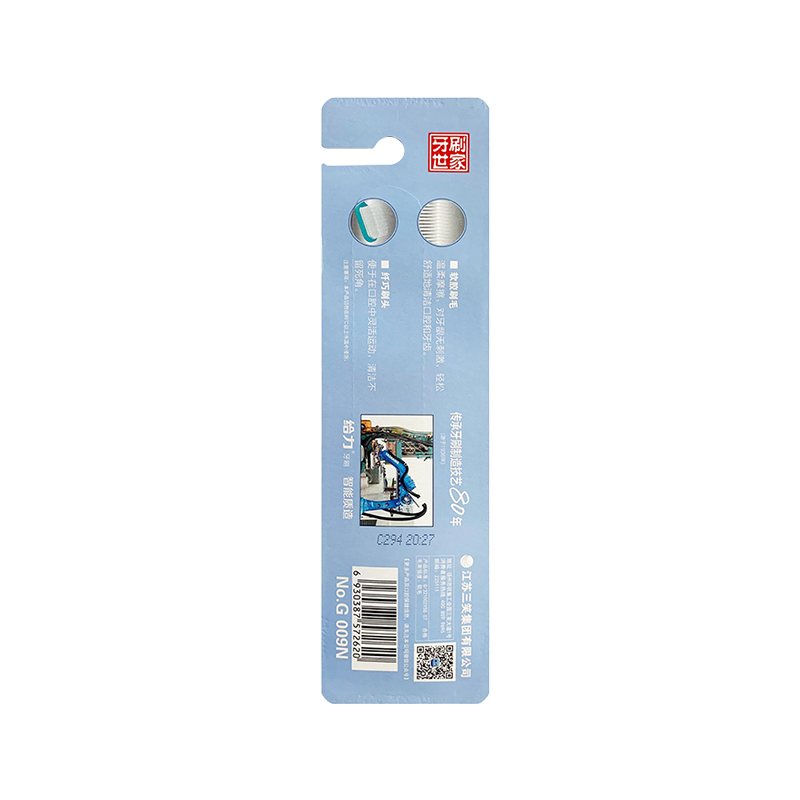
 Soft Bristles Stain Removal Flat Hole Toothbrush for Sensitive TeethThis brush uses flat-hole tufting and tapered bristles to gently clean interproximal areas and remove stains without harsh scrubbing, making it suitable for sensitive gums and diastema cleaning.View Product →
Smaller Brush Head Reduces Pressure
Brush head size matters just as much as bristle hardness. A smaller head allows the user to reach molars and lingual surfaces without bending the bristles against the tissue. It also keeps the contact area smaller, which lowers the total force applied to any single sensitive spot.
If you are specifying a small-head toothbrush for sensitive gums, look for a brush head length between 25 mm and 32 mm and a width around 10 mm to 12 mm. Some designs go further with a slim neck and soft rubber bristles that absorb pressure before it reaches the mucosal tissue.
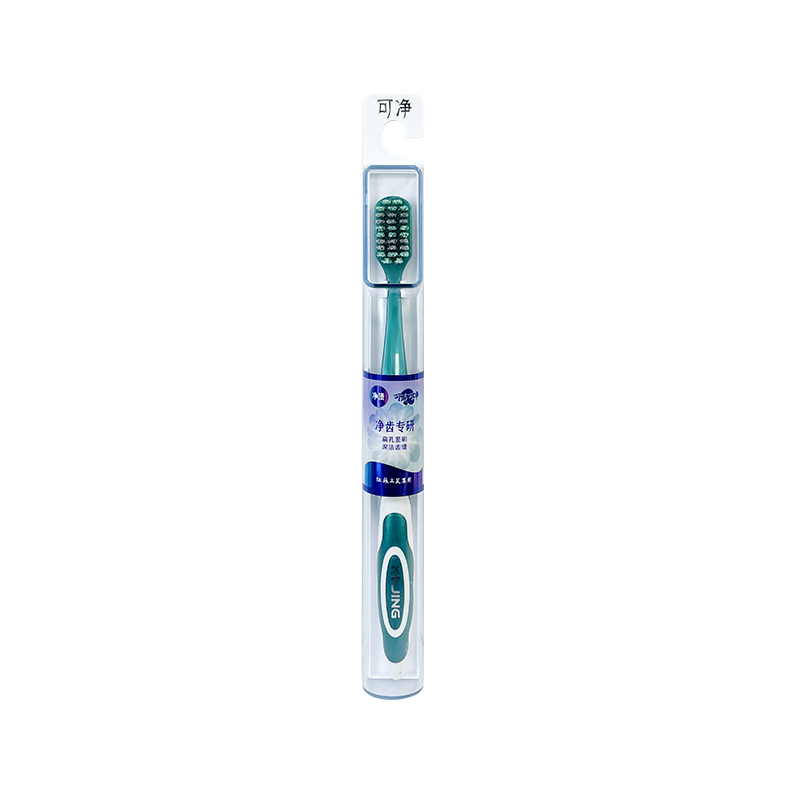
 Slim Brush Head Nano Toothbrush with Soft Rubber BristlesIts slim head and soft rubber bristles provide gentle cleaning for sensitive mouths, reaching molars and lingual surfaces with minimal pressure, ideal for daily use without irritation.View Product →
Bristle Density Keeps Cleaning Power High
Even with soft bristles and a small head, the brush must still remove plaque effectively. This is achieved through bristle density. When thousands of thin, soft filaments are packed tightly into the brush head, they create a larger free surface area that can mechanically lift plaque without needing hard pressure.
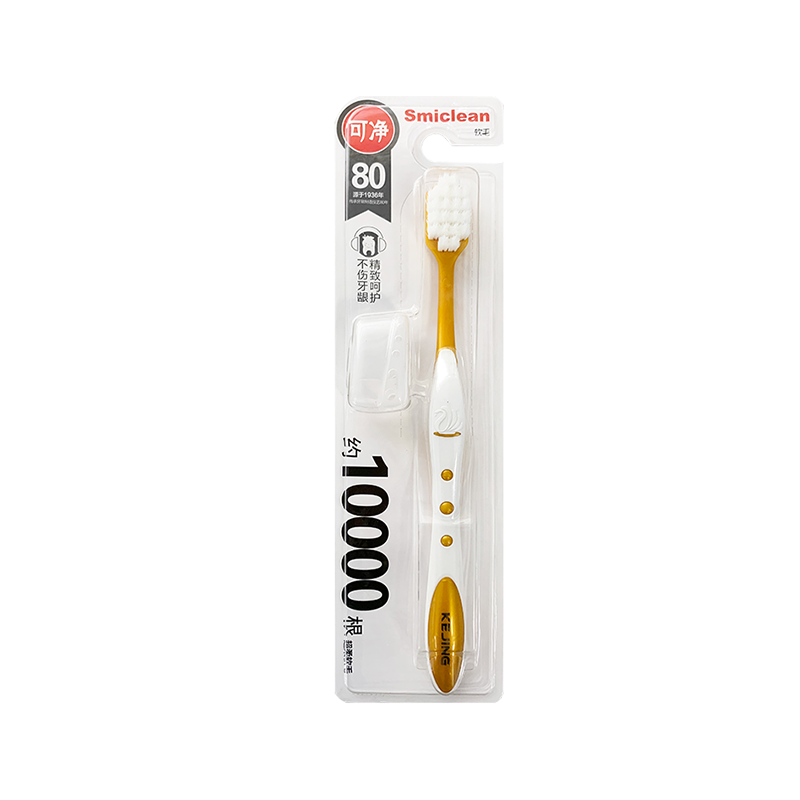
Dense soft-bristle brushes with high-filament counts—often marketed as “10,000 bristle” models—can outperform sparse soft brushes that collapse under pressure. In production, this depends on the hole pattern, tufting method, and the use of premium filament materials such as high-density carbon filaments or durable PBT.
The industry sometimes uses the term “bristle count” as a proxy for density. A brush with 10,000 bristles is not automatically better than one with 5,000 if the tuft pattern is too loose. The key is how many effective contact points the brush creates on the tooth surface.
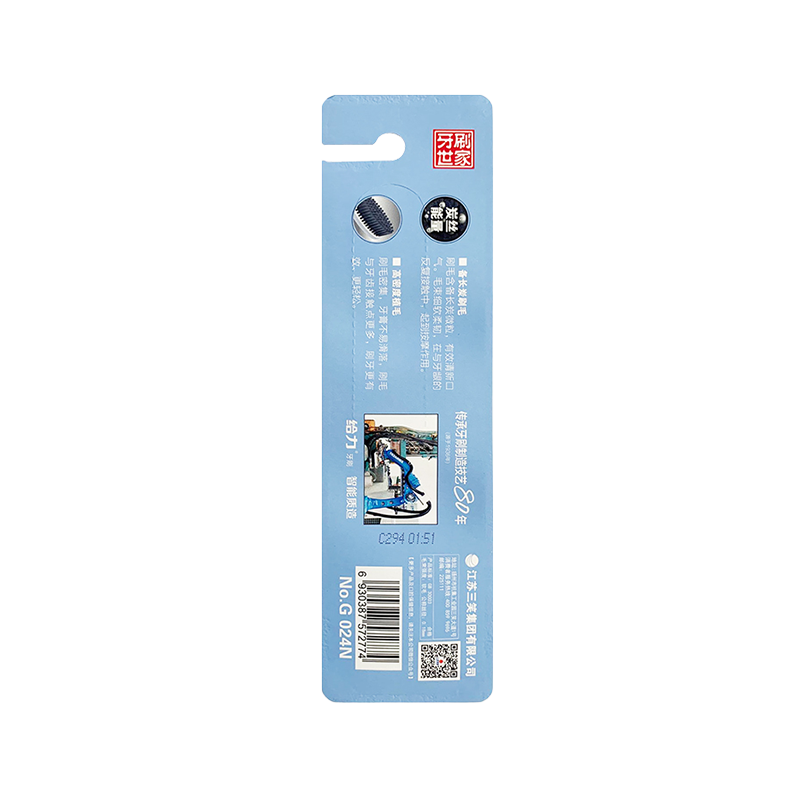 High Density Carbon Filament Toothbrush with Soft BristlesWith densely packed carbon filaments, this brush offers effective plaque removal along the gum line while being gentle on sensitive areas, leveraging natural antibacterial properties for hygiene.View Product →
Comparing Toothbrush Configurations for Sensitive Teeth
The table below summarizes the typical trade-offs among three common bristle and head configurations used in sensitive-teeth toothbrushes.
| Configuration | Bristle Softness | Brush Head Size | Best For | Manufacturing Note |
|---|---|---|---|---|
| Standard soft, flat hole | Soft (0.18 mm) | Standard (30 mm) | Balanced cleaning and gum comfort | Widest compatibility with existing molds |
| Small head, soft rubber bristles | Extra soft (0.12 mm) | Compact (28 mm) | Users with high sensitivity or receding gums | Requires specialized molding for rubber bristles |
| High-density carbon filament | Soft (0.15 mm) | Standard (30 mm) | Plaque removal with minimal pressure | Higher filament count increases tufting complexity |
Common Specification Pitfalls to Avoid
- Choosing extra-soft bristles without enough density. This sacrifices cleaning efficacy and may lead to user dissatisfaction.
- Using a small brush head for all products. A head that is too small can increase brushing time, and some users perceive it as less effective.
- Ignoring tip-rounding quality. Even soft bristles can cause abrasion if the tips are cut flat or sharp.
- Focusing only on bristle diameter while ignoring the bristle material. Nylon and PBT behave differently in terms of water absorption and durability.
OEM and Custom Manufacturing Considerations
If you are commissioning a sensitive-teeth toothbrush through an OEM or private-label program, the factory must have proven capability in filament selection, tufting density, and brush-head geometry. Certifications such as ISO and GMP provide a basic quality baseline, but the real evidence is in the production line settings.
Before you select a partner, ask for a written quality specification that includes bristle diameter, filament type, tip rounding tolerance, and hole-count verification. Also confirm that the factory offers customized service for brand-specific packaging and head dimensions. A trusted manufacturer will also share quality and compliance certificates without delay.
A manufacturer with a strong oral care product line and custom engineering capability can help you translate clinical feedback into specific head geometry. This is especially important when you need multiple SKUs, such as one with soft carbon filaments, one with a small rubber-bristle head, and another with standard soft tufting for mass retail. Having a single factory that can produce all three reduces your development cycle and keeps quality control centralized.
Final Takeaway
A toothbrush designed for sensitive teeth is not just a soft brush. It is a carefully engineered oral-care device that separates comfort from efficacy through bristle softness, brush-head size, and bristle density. When you source with a manufacturer that understands these trade-offs, your brand can offer a product that users trust for daily comfort and reliable plaque removal.
We will provide a professional and reasonable quotation
as soon as possible for any customer inquiries.