English
 русский
 Español
 简体中文


Adult Toothbrushes: A Practical Guide for Brand Buyers and Product Teams
Content
- 1 What Adult Toothbrush Buyers Are Really Solving For
- 2 Bristle Choices: Softness, Density, and End Shape
- 3 Head Size, Shape, and Access to Tight Spots
- 4 Handles, Necks, and the Unseen Parts of Comfort
- 5 Matching Features to Claims: A Buyer's Table
- 6 Quality Checks Before an Adult Toothbrush Ships
- 7 Private Label and Custom Adult Toothbrush Programs
- 8 A Practical Checklist for Your Next Adult Toothbrush Brief
Adult toothbrushes are one of those products that seem almost too familiar to discuss. Everyone has used one, and most shoppers think they know exactly what they want: a brush that feels comfortable and does the job. For a brand team, though, that familiar object is a bundle of decisions. Bristle diameter, tuft pattern, head geometry, neck flexibility, handle material, packaging, and claims all have to work together. At Sanxiao Group, we have produced toothbrushes through a joint venture chapter and, since 2010, through our own dedicated toothbrush factory. That experience has made us practical about one thing: a good adult toothbrush is not simply the softest brush or the densest brush. It is the brush that matches a clear user need and can be made consistently, batch after batch.
What Adult Toothbrush Buyers Are Really Solving For
Most adult toothbrush briefs start with a market position rather than a specification. A brand may want a gentle brush for sensitive gums, a compact head for thorough cleaning, a density story for a premium tier, or an antibacterial angle for travel and family use. Those positions are valid, but they only become useful when they are translated into design choices. A sensitive-gums claim, for example, may point to softer filaments, rounded tips, a smaller head, or a flexible neck. A deep-clean claim may rely on tuft arrangement, filament stiffness, or a shaped head. The earlier the brief connects the claim to a physical feature, the smoother the sampling and validation process becomes.
Bristle Choices: Softness, Density, and End Shape
Bristles do most of the visible work, but they are also where many adult toothbrush projects become overcomplicated. Three variables matter most: filament material, filament diameter, and end rounding. Nylon remains a common choice because it balances flexibility, durability, and cleaning performance. Diameter affects how soft or firm the brush feels in use. End rounding affects how the tips meet the gum line. A brush described as soft should feel soft not only on the first use, but after several weeks of normal wear.
Density, tuft patterns, and cleaning feel
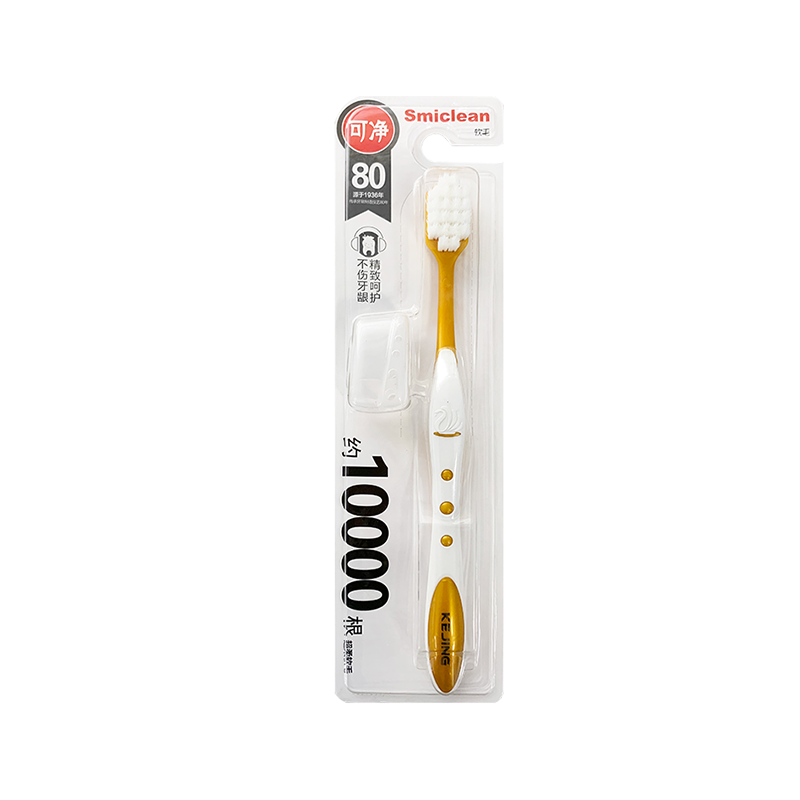
Density is a separate story. A high-density brush can feel fuller in the mouth and can support a premium cleaning message, but density must be balanced with rinsing, drying, and bristle retention. Some buyers ask for very high tuft counts because the number looks impressive on pack. We tend to ask a more useful question: what should the user feel, and what can the factory reproduce reliably across millions of units? A design such as our about 10,000-bristle magnetic toothbrush shows how density can become a product story, but it still has to pass the same retention, fatigue, and cleaning checks as a simpler brush.
 High-Density Magnetic Toothbrush with About 10,000 BristlesShows how a high tuft count can become a product story, while still needing retention, fatigue, and cleaning validation.View Product →
Head Size, Shape, and Access to Tight Spots
Head size is one of the most underrated parts of an adult toothbrush brief. A full-size head can feel efficient and familiar. A compact head can make it easier to reach the back molars and the inside surfaces of the front teeth. Shape matters too. Square, diamond, oval, and asymmetric heads each change how the brush sits against the tooth surface. So do specially shaped holes and angled tuft fields, which can be designed to support gum-line cleaning or a deeper clean feeling.
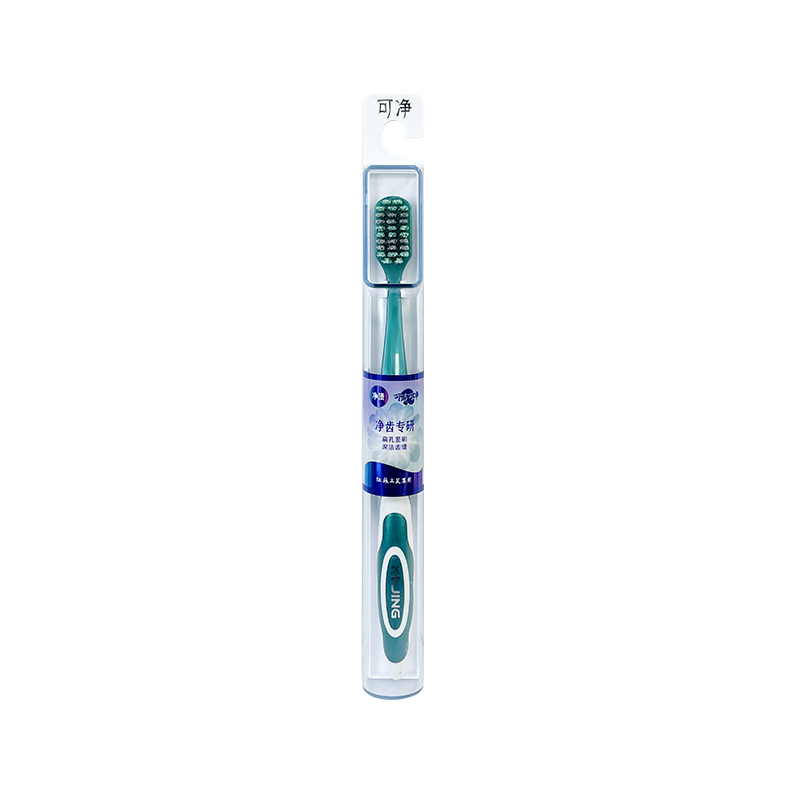
For adult products, we usually recommend testing more than one head size in the first sample round. A brush that looks balanced on a technical drawing can feel bulky in the hand or hard to move around the mouth. The right choice depends on the user, the companion product line, and the price tier. Our medium-bristle deep-cleaning gum brush with a special-shaped hole is one example of how head geometry and tuft layout can be combined around a specific cleaning story, rather than added as decoration.
 Medium Bristle Deep-Cleaning Gum Toothbrush with Special-Shaped HolesCombines profiled holes, tapered bristles, and an ergonomic handle to support a specific deep-cleaning and gum-care story.View Product →
Handles, Necks, and the Unseen Parts of Comfort
The handle is where perceived quality often lives. A well-designed adult toothbrush handle gives the thumb a natural resting point, keeps the brush stable when wet, and communicates the intended user through proportions. Neck flexibility is another quiet variable. A slightly flexible neck can soften the feel of brushing, while a stiffer neck gives a more direct cleaning sensation. Material choice matters as well: polypropylene, thermoplastic elastomers, rubber grips, and two-shot handles each bring different tooling, cost, and recycling implications. If a brand is developing a sustainability message, the conversation should start at the material and disassembly stage, not at the packaging copy. A handle that cannot be separated or recycled in the intended system should not carry a claim that the product cannot support.
Matching Features to Claims: A Buyer's Table
Use the table below as a starting point for aligning a market claim with a design lever and a verification step. It is not a substitute for laboratory testing, but it helps teams ask better questions before a sample is approved.
| Market claim | Design lever to review | What to verify |
|---|---|---|
| Gentle on sensitive gums | Softer filament, rounded tips, compact head, flexible neck | Tip rounding, stiffness consistency, user trial |
| Deep clean feeling | Tuft density, angled tufts, special-shaped head | Bristle retention, access around molars, cleaning test |
| Stain removal support | Filament stiffness, tuft pattern, polishing edge | Wear testing, stain removal protocol, claim wording |
| Antibacterial or freshness angle | Silver-ion filament or handle additive, storage design | Claim substantiation, material safety, market compliance |
Claims should be written after the design and test data are understood, not before. If a supplier offers a silver-ion antibacterial toothbrush, for example, the buyer should confirm where the additive sits, how it is tested, and what the label can legally say in each market. Our small brush head silver-ion antibacterial toothbrush is a useful example for that conversation because the head size, antibacterial angle, and user benefit all need to line up.
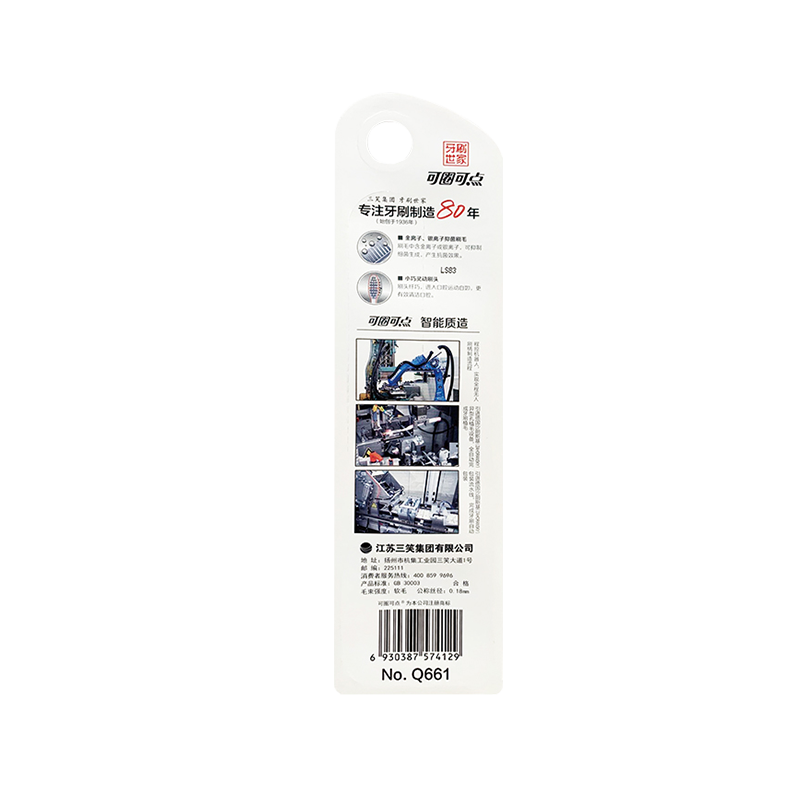 Small-Head Silver-Ion Antibacterial Toothbrush for Precision CleaningPairs a compact head and Ag+ bristles with a hygiene claim that should be checked against test data and market wording.View Product →
Quality Checks Before an Adult Toothbrush Ships
Adult toothbrushes are high-volume products, so small process variations become visible quickly. A reasonable quality plan should cover filament pull strength, tuft retention, bristle end rounding, neck strength, handle appearance, print adhesion, and packaging seal integrity. It should also include dimensional checks against the approved drawing, because a head that is one millimeter wider can change the feel of the brush. For markets with regulatory requirements, the file should include material declarations, test reports, and claim substantiation where needed.
We work within a certified factory environment and maintain a patent tech lab, but paperwork alone is not the point. The point is that the same specification is checked in the same way at the start, middle, and end of a production run. Buyers who want to review our certification and factory information can visit our certificate page.
Private Label and Custom Adult Toothbrush Programs
Brands come to us for different reasons. Some need a proven adult toothbrush platform with custom colors and packaging. Others need a new head shape, a different tuft pattern, or a handle designed around a retail concept. Our customized service is built around that range, from OEM production to ODM development. The practical questions are usually the same: what is the target cost, what is the expected annual volume, which features are fixed, and which are open for tooling? The earlier those answers are clear, the fewer sample rounds a project needs.
We are a manufacturer with more than 1,200 employees, including 115 engineering and technical staff, and a product development team of more than 100 people in the oral care and hygiene lines. Our toothbrush history includes a joint venture period and a return to independent toothbrush production in 2010, which has given us a long view of what brands need from a factory partner. We also know that scale is only useful when communication is clear. A good program manager will tell you when a requested feature will add tooling cost, when a claim needs more test data, and when a simpler design will serve the user better.
A Practical Checklist for Your Next Adult Toothbrush Brief
- Define the user and the one cleaning problem the brush should solve.
- Choose soft, medium, or firm feel by filament diameter and tuft pattern, not by label alone.
- Decide whether head size and shape are part of the brand story or a commodity feature.
- Confirm handle material, grip, and any sustainability or recycling claim.
- Ask for a claim-to-test matrix before approving packaging copy.
- Review packaging and labeling requirements for each target market.
- Agree on sample approval criteria, production checkpoints, and change control.
Adult toothbrushes are everyday objects, but they are not generic. The most successful programs we see are the ones where the brand knows which user need it is serving, the factory knows which design levers control that need, and both sides agree on how quality will be verified. If you are planning an adult toothbrush line, we are happy to talk through bristle options, head shapes, and private-label production in plain language. That conversation usually saves more time than another round of cosmetic samples.
We will provide a professional and reasonable quotation
as soon as possible for any customer inquiries.