English
 русский
 Español

Best Toothbrushes for Gum Disease: Soft Bristles, Small Heads, and More Tips
Content
- 1 What Makes a Toothbrush Suitable for Gum Disease?
- 2 Soft Bristles vs. Medium vs. Hard: Which Should You Choose?
- 3 Why Brush Head Size and Shape Matter for Receding or Swollen Gums
- 4 Electric vs. Manual: Does It Matter for Gum Disease?
- 5 More Than the Brush: Antibacterial Bristles and Interdental Cleaning
- 6 How to Brush Correctly When You Have Gum Disease
- 7 When to See a Dentist
Choosing a toothbrush for gum disease is not about picking the hardest bristles you can find. In fact, the best toothbrushes for gum disease are usually soft-bristled, have small or compact heads, and are designed to remove plaque gently along the gumline. This article explains the specific features that matter, why they help, and how to build a simple oral care routine that protects your gums.
What Makes a Toothbrush Suitable for Gum Disease?
Gum disease, also called periodontal disease, begins when plaque builds up along the gumline and triggers inflammation. The early stage, gingivitis, makes the gums red, swollen, and prone to bleeding. If plaque is not removed, the inflammation can spread deeper and turn into periodontitis, which damages the bone supporting the teeth. A toothbrush for gum disease must therefore do two things: remove plaque thoroughly and avoid further irritating sensitive tissue.
The most important features are soft bristles, a small head, and a handle that feels balanced in your hand. Soft bristles bend as they sweep along the teeth, reaching slightly below the gumline without cutting into the gums. A small head lets you position the brush precisely around each tooth, especially in the back of the mouth. Rounded bristle tips add another layer of safety, because they polish the tooth surface instead of scratching the enamel and gum tissue.
Soft Bristles vs. Medium vs. Hard: Which Should You Choose?
For anyone with gum disease, the answer is almost always soft bristles. Medium and hard bristles can feel more effective in the short term, but they often cause micro-tears in the gums and can make bleeding worse. They may also wear down exposed tooth roots, leading to sensitivity. Soft bristles provide enough stiffness to dislodge plaque while staying gentle enough for inflamed tissue.
| Bristle Type | Effect on Gum Disease | Recommended? |
|---|---|---|
| Hard | Can abrade gum tissue and wear away enamel | No |
| Medium | Still too firm for sensitive or receding gums | Only with dentist approval |
| Soft | Removes plaque gently without trauma | Yes |
| Extra-soft | Ideal for swollen, bleeding, or receding gums | Yes |
If you prefer a manual brush with a dense but gentle feel, a soft-bristle high-density carbon filament toothbrush can provide effective cleaning along the gumline without the harshness of stiff bristles. High-density bristle packing creates more contact points with the tooth surface, which helps remove plaque more efficiently. The carbon filament material also stays firm enough to last through normal brushing, so the bristles do not bend out of shape too quickly.
 Custom Soft Bristles High Density Carbon Filament Toothbrush Suppliers, OEM/ODMJiangsu Sanxiao Group Co., Ltd. is China Custom OEM/ODM Soft Bristles High Density Carbon Filament Toothbrush Suppliers and Factory, The ...View Product →
Why Brush Head Size and Shape Matter for Receding or Swollen Gums
Inflamed gums often feel tender, and a large brush head can make the problem worse by forcing you to open wider and push against the cheeks. A smaller head gives you more control and makes it easier to reach the curved gumline around every tooth. Dental professionals often recommend brushing at a 45-degree angle to the gumline, which targets the sulcus where plaque hides. A compact brush head can get into that area without jabbing the surrounding tissue.
Shape also matters. Some toothbrushes have a slightly pointed or tapered head that fits better behind the molars. Others use special bristle patterns, such as criss-cross or shaped holes, to focus cleaning on the gum margin. A small-head silver-ion antibacterial toothbrush combines a narrow brush head with silver ions in the bristles, which may help slow bacterial growth on the brush. That is a helpful extra for keeping your brush clean, but it does not replace brushing correctly.
 Custom Small Brush Head Design Silver Ions Antibacterial Toothbrush Suppliers, Jiangsu Sanxiao Group Co., Ltd. is China Custom OEM/ODM Small Brush Head Design Silver Ions Antibacterial Toothbrush Suppliers and Factor...View Product →
Electric vs. Manual: Does It Matter for Gum Disease?
Electric toothbrushes have become popular for gum disease because they deliver a consistent brushing motion and many models include a two-minute timer. The vibration or rotation helps remove plaque with less effort, which can be useful if you have limited hand mobility or tend to brush too hard. However, an electric brush is not automatically better than a manual one. What matters most is the bristle softness and how gently you move the brush.
If you choose an electric toothbrush, look for a model with a soft-bristle brush head and pressure sensing, which alerts you when you are pressing too firmly. If you prefer a manual brush, choose one with soft bristles and a compact head, and focus on your technique. Both approaches can be effective as long as you brush for two minutes twice a day and clean along the gumline.
More Than the Brush: Antibacterial Bristles and Interdental Cleaning
No toothbrush can reach the tight spaces between your teeth, and those spaces are often where gum disease starts. Even a perfect brushing routine leaves about one-third of your tooth surfaces uncleaned if you skip interdental care. This is why dental professionals recommend using floss, interdental brushes, or dental picks every day.
Antibacterial and Coated Bristles
Some toothbrushes feature antibacterial coatings, often using silver ions, to reduce the number of microbes that live on the bristles between uses. This can help keep the brush cleaner, but it is not a substitute for removing plaque. The mechanical action of the bristles is what actually breaks up the biofilm on your teeth.
Why You Need an Interdental Brush or Floss
When gums are inflamed, they may pull away from the teeth and form small pockets. Food and plaque collect in these pockets, and a regular toothbrush cannot clean them. Interdental brushes are often easier to use than traditional floss, especially for people with wider gaps or receding gums. They come in different sizes, so you can match the brush to the width of each gap. A flexible interdental brush with durable DuPont nylon bristles can slide gently between teeth and along the gumline, removing debris before it turns into calculus.
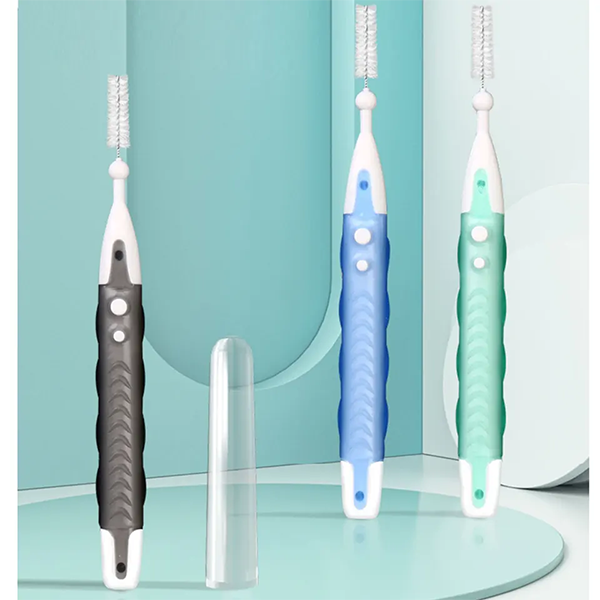 Custom Dupont Nylon Bristles Flexible Durable Interdental Brush Suppliers, OEM/Jiangsu Sanxiao Group Co., Ltd. is China Custom OEM/ODM Dupont Nylon Bristles Flexible Durable Interdental Brush Suppliers and Factory, T...View Product →
How to Brush Correctly When You Have Gum Disease
Even the best toothbrush will not help if you use the wrong technique. The key is to be thorough but gentle. Many people brush too hard, especially when their gums feel unclean. This can push the gums away and make recession worse. Instead, use light pressure and let the bristles do the work.
- Place the bristles at a 45-degree angle to the gumline.
- Use small, circular motions rather than sawing back and forth.
- Brush for two full minutes, spending about 30 seconds on each quadrant of your mouth.
- Clean the inner surfaces of the teeth, especially the lower front teeth, where tartar builds up quickly.
- Replace your toothbrush every three months, or sooner if the bristles start to fray. For more guidance, see how often you should change your toothbrush.
When to See a Dentist
Using the right toothbrush is a good start, but it cannot treat established gum disease. If you notice ongoing bleeding, persistent bad breath, receding gums, or loose teeth, schedule a dental appointment. Your dentist can remove hard deposits that a brush cannot handle and create a treatment plan that may include scaling, root planing, or other periodontal therapy.
Do not delay care. The earlier gum disease is caught, the easier it is to control. Home care products are part of the solution, but professional diagnosis and cleanings are essential for long-term gum health.
The best toothbrush for gum disease is one that you will use consistently and correctly. Choose a soft-bristled brush with a compact head, add an interdental tool, and brush gently twice a day. Pair that with regular professional cleanings, and you give your gums the best chance to heal. To compare well-designed options, explore the oral care product range.

We will provide a professional and reasonable quotation
as soon as possible for any customer inquiries.