English
 русский
 Español

Are You Using the Right Interdental Brush for Your Teeth?
Content
- 1 What Interdental Brushes Actually Do — and Why It Matters
- 2 Understanding Interdental Brush Sizes
- 3 Wire vs. Plastic Coated: Which Core Is Better?
- 4 How to Use Interdental Brushes Correctly
- 5 How Long Do Interdental Brushes Last — and When Should You Replace Them?
- 6 Interdental Brushes for Special Cases: Implants, Braces, and Bridges
- 7 Choosing the Right Interdental Brush: A Quick Summary
Toothbrushing alone removes plaque from only about 60% of tooth surfaces — the spaces between teeth remain largely untouched without additional tools. Interdental brushes are widely recognized by dental professionals as one of the most effective ways to clean those gaps, yet most people either skip them entirely or use the wrong size and technique. This guide cuts through the confusion to help you choose the right interdental brush, use it correctly, and understand when it outperforms floss.
What Interdental Brushes Actually Do — and Why It Matters
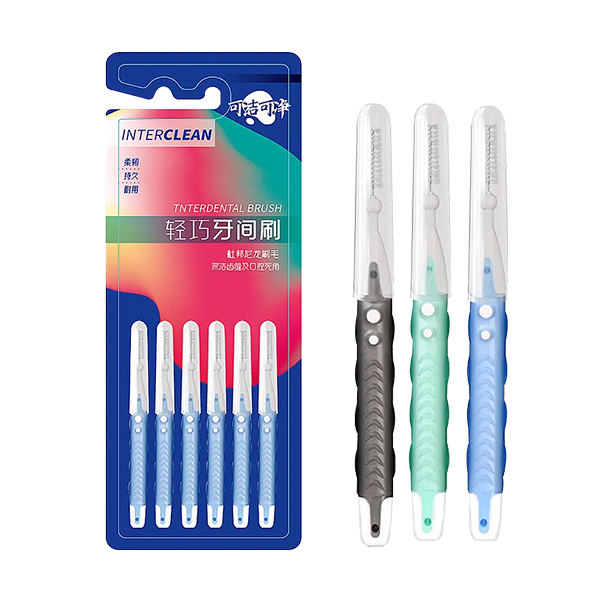
Interdental brushes are small, cylindrical or tapered brushes designed to pass between teeth and clean the proximal surfaces — the sides of teeth that face each other — as well as the gum line within those spaces. Unlike dental floss, which scrapes surfaces in a back-and-forth motion, interdental brushes physically scrub plaque from tooth surfaces and disrupt the bacterial biofilm that accumulates in interproximal areas.
This distinction matters clinically. A 2019 Cochrane review comparing interdental brushes to floss found that brushes were more effective at reducing both plaque and gingival bleeding in most participants. The mechanical cleaning action of a brush — bristles making contact with tooth surfaces on both sides simultaneously — provides broader coverage than floss in spaces where there is sufficient room for a brush to fit without forcing.
For people with gum recession, dental implants, bridgework, or orthodontic appliances, interdental brushes are often the only practical cleaning tool. Floss cannot effectively clean around implant abutments or under bridge pontics, and threading floss through braces is time-consuming and often skipped. A correctly sized interdental brush handles all of these situations with considerably less effort.
Understanding Interdental Brush Sizes
Size selection is the single most important factor in interdental brush effectiveness. A brush that is too small will pass through the gap without making meaningful contact with tooth surfaces; one that is too large will cause pain, damage gum tissue, and widen spaces over time. Most manufacturers use a color-coded system based on ISO standards, though wire diameter and bristle diameter can vary between brands even within the same color code.
| ISO Size | Color (typical) | Wire Diameter | Best For |
|---|---|---|---|
| ISO 0 | Pink | 0.4mm | Very tight contacts, lower front teeth |
| ISO 1 | Orange | 0.45mm | Tight spaces, front teeth |
| ISO 2 | Red | 0.5mm | Average spacing, most common starting size |
| ISO 3 | Blue | 0.6mm | Wider gaps, back molars |
| ISO 4 | Yellow | 0.7mm | Gum recession, larger interproximal spaces |
| ISO 5–7 | Green / Grey | 0.8–1.3mm | Significant recession, implants, bridges |
The correct fit means the brush passes through with slight resistance — enough that the bristles compress gently against both tooth surfaces. There should be no pain and no need to force the brush. Most people need more than one size: front teeth typically have tighter contacts than back molars, and right and left sides can differ. Your dentist or hygienist can identify the right sizes at your next appointment, or you can start with a mixed-size trial pack and assess by feel.
Wire vs. Plastic Coated: Which Core Is Better?
The central wire or core of an interdental brush is a detail many buyers overlook, but it significantly affects performance and safety. The two main options are metal wire (usually stainless steel or coated metal) and plastic or rubber cores.
Metal Wire Cores
Metal wire cores provide a firm, stable structure that maintains the brush's shape during use. This rigidity makes them effective at scrubbing but also means they must be used with care around implants, exposed root surfaces, and orthodontic brackets. Bare metal wire that protrudes when bristles wear down can scratch implant surfaces or damage softer root cementum. Look for brushes with a nylon or PTFE plastic coating over the wire — this provides a protective barrier that eliminates direct metal-to-tooth contact and is now standard in quality interdental brush lines.
Plastic and Rubber Cores
Wire-free interdental brushes with flexible rubber or plastic bristle arrays are a safer choice for implant patients and people with sensitive gums. They're also more comfortable for beginners who find metal-core brushes too rigid. The trade-off is cleaning efficacy — rubber bristles are softer and may not dislodge calculus or compacted plaque as effectively as nylon bristles on a wire core. For routine maintenance with good oral hygiene, rubber-core brushes are perfectly adequate; for patients with a history of heavy plaque buildup, wire-core with a coated tip remains the clinical preference.
How to Use Interdental Brushes Correctly
Even the right brush size produces poor results with incorrect technique. The following steps reflect standard guidance from dental hygiene practice:
- Angle the brush slightly toward the gum line rather than inserting it perfectly horizontally. This directs cleaning action toward the area where plaque accumulates at the gingival margin.
- Use a gentle in-and-out motion — two to three passes per space is sufficient. Avoid rotating or twisting the brush, which accelerates wire fatigue and can cause bristle loss.
- Do not force the brush if you feel significant resistance. Forcing a brush that is too large causes gum trauma and can gradually widen natural tooth contacts.
- Rinse the brush under water between spaces to remove dislodged plaque and food debris before moving to the next gap.
- Use interdental brushes before toothbrushing, not after. Cleaning interdentally first dislodges debris and bacteria into the mouth, which fluoride toothpaste can then reach during brushing — improving fluoride uptake in those spaces.
- Access back molars by slightly opening your mouth and working from the outside (cheek side). Angled or L-shaped handle designs make this significantly easier than straight handles.
Initial bleeding during the first week of interdental cleaning is normal and reflects existing gum inflammation, not injury from the brush. If bleeding persists beyond two weeks of consistent daily use, consult a dentist — it may indicate gingivitis or a sizing issue that needs professional assessment.
How Long Do Interdental Brushes Last — and When Should You Replace Them?
Most interdental brushes are designed for multiple uses rather than single use, but they do have a limited lifespan. Knowing when to replace them prevents both reduced effectiveness and accidental injury from a deteriorating brush.
A standard interdental brush used once daily typically lasts between one and two weeks before bristle loss or wire deformation becomes noticeable. Replace the brush when:
- Bristles are visibly splayed, thinned, or missing in sections
- The wire core has bent and no longer returns to its original shape
- The brush passes through spaces that previously offered slight resistance — this indicates bristle wear has reduced the effective diameter
- The handle cap or grip shows cracking that makes controlled use difficult
Between uses, rinse the brush thoroughly and allow it to air dry. Storing it in a closed case while still wet creates conditions for bacterial growth. Some brands offer ventilated travel caps that protect the brush head while allowing airflow — a practical detail worth looking for if you carry brushes in a bag or travel case.
Interdental Brushes for Special Cases: Implants, Braces, and Bridges
Standard interdental brush guidance applies well to natural dentition, but several situations call for specific product features or modified technique.
Dental Implants
Implant surfaces are susceptible to peri-implantitis — an inflammatory condition similar to gum disease that can lead to bone loss around the implant if plaque is not adequately removed. Use only wire-free or plastic-coated wire brushes around implants; bare metal wire can scratch the titanium surface or implant crown margins, creating rough areas that accelerate bacterial adhesion. A tapered brush profile often provides better access to the curved surfaces around implant abutments than a cylindrical brush.
Fixed Bridges
The pontic (false tooth) in a bridge sits against the gum and is notoriously difficult to clean underneath. An interdental brush inserted horizontally from the cheek side beneath the pontic — combined with a back-and-forth sweeping motion — reaches the tissue surface and the undersides of the retainer teeth. This is a task that floss threaders can also assist with, but for daily maintenance a brush is faster and more consistent.
Orthodontic Braces
Braces create multiple plaque traps — around brackets, under archwires, and between teeth — that standard toothbrushing cannot reach. Interdental brushes in ISO 1–2 sizes are effective for cleaning under the archwire and around bracket bases. Insert the brush at a 45-degree angle above or below the wire and work around each bracket with small circular motions. Combined with a orthodontic-head toothbrush and fluoride mouthwash, interdental brushes significantly reduce the decalcification (white spot lesions) commonly seen after brace removal.
Choosing the Right Interdental Brush: A Quick Summary
With dozens of brands and hundreds of size and style combinations available, the decision process can feel overwhelming. These core principles simplify it:
- Start with a mixed-size trial pack and identify the size that fits each area with light resistance — you may need two or three sizes for different parts of your mouth.
- Choose plastic-coated wire cores as a default; they combine effective cleaning with surface safety and are suitable for most users including those with implants.
- Opt for an angled or L-shaped handle if you struggle to reach back teeth — the difference in access is substantial.
- Use brushes before toothbrushing, once daily, and replace when bristles show visible wear — typically every one to two weeks.
- If you have a specific dental situation — implants, bridges, braces, or gum disease — ask your dentist or hygienist to recommend a size and style matched to your anatomy at your next visit.
Interdental brushes are a small investment with a measurable return: consistent use has been shown to reduce gingivitis markers within four weeks. The right brush, used correctly and replaced regularly, is one of the most evidence-supported additions you can make to a daily oral hygiene routine.

We will provide a professional and reasonable quotation
as soon as possible for any customer inquiries.