English
 русский
 Español

Are You Flossing Wrong? How to Use Floss Picks Correctly
Content
- 1 Why Proper Flossing Technique Actually Matters
- 2 Common Mistakes People Make with Floss Picks
- 3 The Correct Technique for Using a Floss Pick
- 4 Reaching the Back Teeth Without Skipping Them
- 5 How Floss Picks Compare to Traditional String Floss
- 6 Signs You May Be Flossing Incorrectly
- 7 Building a Consistent Flossing Habit
Why Proper Flossing Technique Actually Matters
Most people floss to remove visible food particles stuck between their teeth, but the real purpose runs much deeper. Flossing is designed to disrupt plaque buildup along the gumline and in the tight spaces between teeth where a toothbrush simply cannot reach. When done incorrectly, flossing can miss this plaque entirely, leaving bacteria to accumulate and eventually contribute to gum inflammation, cavities between teeth, and even gum recession over time. Using a floss pick without proper technique often gives people a false sense of security, since it feels like they're cleaning between their teeth even when the motion isn't actually removing the buildup that causes long-term dental problems. Understanding the correct technique transforms flossing from a quick habit into an effective part of your oral care routine.
Common Mistakes People Make with Floss Picks
Floss picks are popular because they're convenient and easier to maneuver than traditional string floss, but their design leads many people into habits that reduce their effectiveness. Recognizing these common errors is the first step toward fixing them.
- Snapping the floss straight down between teeth instead of curving it against each tooth surface
- Only passing the floss through once without cleaning both sides of the gap
- Skipping the back teeth because the pick feels harder to angle correctly
- Reusing the same section of a pick across multiple teeth, spreading bacteria rather than removing it
- Flossing too aggressively, which can cut or irritate the gums instead of gently clearing plaque
The Correct Technique for Using a Floss Pick
Using a floss pick effectively requires a slower, more deliberate motion than most people are used to. Start by gently guiding the floss between two teeth using a slight back-and-forth sawing motion rather than forcing it straight down, which helps avoid snapping it into the gum tissue. Once the floss reaches the gumline, curve it into a C-shape against the side of one tooth and slide it gently up and down two or three times to clear away plaque along that surface. Repeat this same curving motion against the neighboring tooth before moving the pick to the next gap. This means each space between two teeth actually requires cleaning two distinct surfaces, not just one quick pass through the middle.
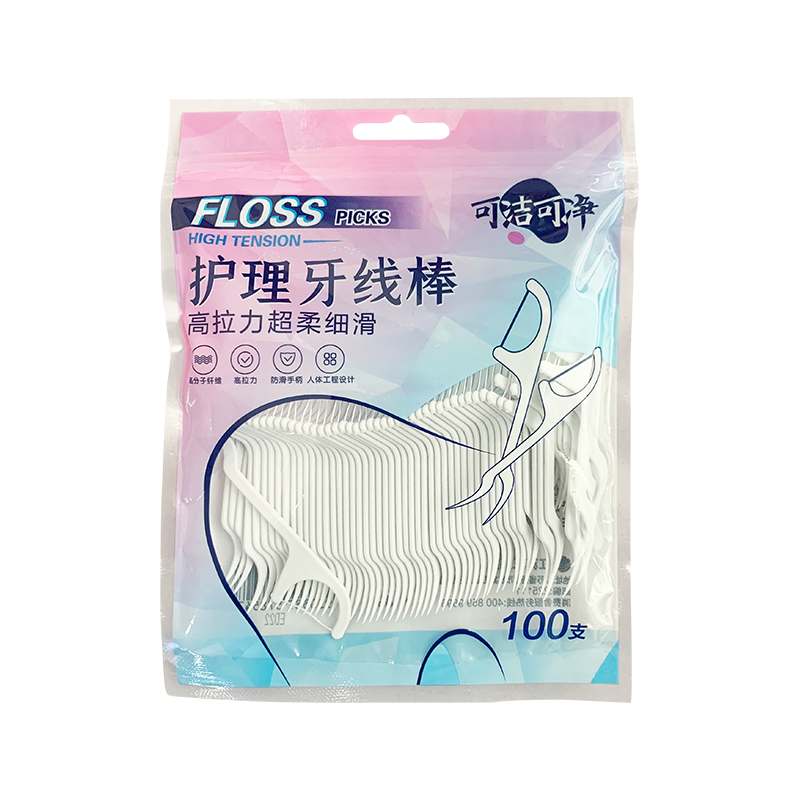
Step-by-Step Process
- Guide the floss pick gently between two teeth with a slight sawing motion
- Curve the floss into a C-shape against the first tooth's surface
- Slide the floss up and down two to three times along the gumline
- Curve the floss against the neighboring tooth and repeat the motion
- Move to the next gap and continue the same process for every tooth
Reaching the Back Teeth Without Skipping Them
The molars at the back of the mouth are often the most neglected during flossing simply because they're harder to reach and see. Tilt the floss pick handle slightly and turn your head to the side in the mirror to get a clearer angle on these back surfaces. It can help to open your mouth wider than feels natural and use your finger to gently pull your cheek out of the way, giving the pick more room to maneuver without hitting the inside of your cheek. If a standard floss pick feels too rigid to angle properly in the back, look for picks with a slim, flexible neck, since these are specifically designed to bend and reach molars more comfortably.
How Floss Picks Compare to Traditional String Floss
Both floss picks and traditional string floss can be effective when used correctly, but they each come with tradeoffs worth understanding before choosing which fits your routine best.
| Feature | Floss Picks | Traditional String Floss |
| Ease of Use | Easier for beginners and one-handed use | Requires more hand dexterity |
| Reach to Back Teeth | Can be limited by pick shape | Full control over angle and length |
| Fresh Section Per Tooth | Fixed section, cannot advance floss | Can wind to a clean section each time |
| Portability | Very convenient for travel or on-the-go use | Requires a dispenser, less portable |
Signs You May Be Flossing Incorrectly
Your mouth often gives clear signals when flossing technique needs adjustment. Bleeding gums during flossing are commonly mistaken as a sign to floss less often, but this is frequently an indication of gum inflammation caused by plaque that hasn't been properly cleared, and the bleeding typically decreases within a week or two of consistent, gentle flossing. Persistent bad breath despite regular brushing can also point to missed plaque between teeth that a toothbrush alone cannot reach. If floss consistently shreds or gets stuck in the same spot, this may indicate a rough filling edge or a cavity that needs a dentist's attention rather than a technique problem. Paying attention to these signals helps you catch both technique issues and potential dental problems early.
Building a Consistent Flossing Habit
Technique only matters if it becomes a consistent daily habit, and many people struggle more with consistency than with the mechanics of flossing itself. Flossing once a day, ideally before brushing at night, gives you the chance to clear away the day's plaque buildup before it has a chance to harden overnight. Keeping floss picks in a visible, easily accessible spot, such as next to your toothbrush or in a small container on the counter, removes the friction that often causes people to skip the step. Pairing flossing with an existing habit, like right after dinner or during a nightly skincare routine, can also help cement it as an automatic part of your day rather than an optional extra step.

We will provide a professional and reasonable quotation
as soon as possible for any customer inquiries.