English
 русский
 Español

Are Dental Floss Sticks as Effective as Traditional Floss?
Content
- 1 What Are Dental Floss Sticks and How Do They Work?
- 2 How to Use Dental Floss Sticks Correctly
- 3 Dental Floss Sticks vs. Traditional String Floss: A Practical Comparison
- 4 Types of Dental Floss Sticks Available
- 5 What to Look for When Buying Dental Floss Sticks
- 6 Who Benefits Most from Dental Floss Sticks
- 7 Common Mistakes to Avoid When Using Floss Sticks
What Are Dental Floss Sticks and How Do They Work?
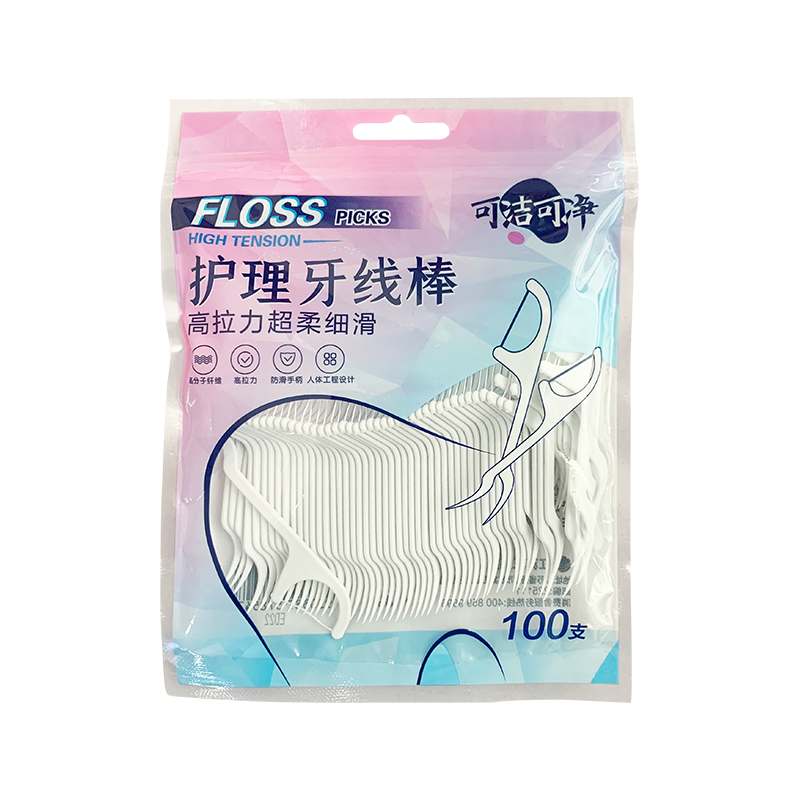
Dental floss sticks — also commonly called floss picks or flossers — are small, handheld oral hygiene tools that combine a short strand of dental floss pre-tensioned between two prongs with a handle for easy gripping and, in most designs, a pointed pick at the opposite end for dislodging food debris from the gum line. Unlike traditional string floss that requires users to wind lengths of floss around their fingers and manually maneuver it between each tooth, floss sticks present a fixed segment of floss in a ready-to-use format that requires only one hand to operate.
The floss strand stretched between the prongs functions identically to standard floss when used correctly — it is designed to slide into the gap between adjacent teeth and be gently moved in a C-shape around the base of each tooth, removing the biofilm and food particles that accumulate in the subgingival sulcus where toothbrush bristles cannot reach. The handle provides leverage and control, which is why dental floss sticks have become particularly popular among children learning to floss independently, older adults with limited manual dexterity, and anyone who finds traditional string flossing uncomfortable or technically difficult.
How to Use Dental Floss Sticks Correctly
The effectiveness of dental floss sticks depends almost entirely on technique. Many users simply snap the floss between teeth and move on, which removes some debris but misses the subgingival plaque that causes gum disease. Using floss sticks with proper technique achieves results comparable to well-executed string flossing and delivers meaningful protection against gingivitis and interproximal decay.
The Correct Step-by-Step Technique
- Hold the stick firmly between your thumb and forefinger with your index finger positioned close to the floss head for control — the closer your finger is to the floss, the more precisely you can guide it.
- Guide the floss gently between two teeth using a zigzag motion rather than snapping it straight down, which can cut into the gum tissue and cause bleeding or recession over time.
- Curve the floss into a C-shape around the side of one tooth and slide it gently beneath the gum line — approximately 1 to 2 mm below where the tooth meets the gum — then move it up and down two or three times against the tooth surface.
- Reposition the C-shape to curve around the adjacent tooth in the same gap and repeat the up-and-down motion against that tooth surface before moving to the next gap.
- Rinse the floss head under water between gaps to remove accumulated plaque and debris — reusing the same segment of floss without rinsing transfers bacteria from one area of the mouth to another.
- Use the pick end carefully along the gum line to dislodge visible food particles if needed, but avoid jabbing the pick into gum tissue, which can cause irritation and micro-tears that increase infection risk.
Work systematically around the mouth — starting at the back molars on one side and progressing tooth by tooth to the other side, then repeating for the lower arch. Most adults have 28 to 32 contact points between adjacent teeth that require cleaning. Rushing or skipping teeth defeats the purpose of flossing and leaves plaque in place to mineralize into tartar, which can only be removed by a dental professional.
Dental Floss Sticks vs. Traditional String Floss: A Practical Comparison
The debate between floss picks and traditional string floss is a common one in dental hygiene discussions. Both tools are capable of effective plaque removal when used correctly, but they differ in several practical dimensions that influence which is more appropriate for different users.
| Factor | Dental Floss Sticks | Traditional String Floss |
| Ease of use | High — single hand, no winding required | Moderate — requires finger coordination and winding |
| Access to back molars | Good — handle provides reach | Moderate — fingers can obstruct access |
| Fresh floss per gap | No — same segment used throughout | Yes — fresh section advanced for each gap |
| Suitability for children | Excellent — easy for kids to self-floss | Difficult — requires fine motor skill |
| Environmental impact | Higher — plastic handle waste per use | Lower — minimal packaging per session |
| Portability | Excellent — compact, no mess | Good — small dispenser, but requires more handling |
| Cost per use | Slightly higher | Lower — more uses per package |
The clinically significant difference between the two tools is that string floss allows the user to advance a fresh, clean section of floss for each tooth gap, whereas a floss stick uses the same short segment throughout the entire mouth. This means that with a floss stick, bacteria-laden plaque removed from one gap can potentially be reintroduced to subsequent gaps if the floss head is not rinsed between teeth. For users who rinse the floss head consistently and use correct technique, this limitation is largely mitigated in practice.
Types of Dental Floss Sticks Available
The dental floss stick category has expanded significantly beyond the basic single-use plastic pick, with variations now available to suit different user preferences, dental conditions, and sustainability priorities. Knowing the options helps buyers select the most appropriate product for their specific needs.
Standard Single-Use Floss Picks
The most widely available format, typically made from polypropylene or nylon with a nylon or PTFE floss strand. Standard picks are sold in bulk quantities of 50 to 300 per pack and represent the most economical option. Floss strand options include unwaxed nylon for tight contacts, waxed nylon for easier entry between teeth, and PTFE monofilament (marketed as Glide-type floss) for patients with very tight tooth contacts where conventional floss tends to shred. Many standard picks include a built-in gum stimulator or toothpick tip at the handle end.
Orthodontic Floss Picks
Specially designed for users with fixed orthodontic appliances — braces — orthodontic floss picks feature a stiff threading tip that allows the floss strand to be guided beneath the archwire and between brackets. Standard floss picks cannot access the spaces between the tooth and the wire without this threading mechanism, making orthodontic-specific picks an essential tool for maintaining gum health during orthodontic treatment, when plaque accumulation risk is significantly elevated.
Biodegradable and Eco-Friendly Floss Sticks
In response to growing concern about single-use plastic waste, several manufacturers now produce floss sticks with handles made from plant-based PLA bioplastic, bamboo, or compostable materials. The floss strand itself presents a more complex sustainability challenge — conventional nylon is not biodegradable, though some brands now offer silk or plant-fiber floss strands as alternatives. Eco-friendly floss sticks typically carry a higher unit price than standard plastic picks but address the waste concern of users committed to reducing their oral hygiene product environmental footprint.
Reusable Floss Stick Handles
A growing niche category addresses the single-use waste problem through a different approach: durable handles made from stainless steel, aluminum, or hard plastic that accept replaceable floss strand cartridges. The user threads a new section of floss onto the reusable prong frame from a standard spool or replaces a pre-loaded cartridge. This format combines the ergonomic advantage of a handle with the fresh-floss-per-use benefit of string floss and significantly reduces plastic waste compared to disposable picks.
What to Look for When Buying Dental Floss Sticks
With dozens of brands and product variations available, selecting the right dental floss stick involves evaluating several product characteristics against your specific dental situation and personal preferences. The following criteria are the most practically important:
- Floss strand type: Choose waxed nylon for most users — the wax coating allows easier entry between teeth and reduces shredding. PTFE monofilament picks are worth the higher cost for users with tight tooth contacts or dental restorations with rough edges that snag conventional floss. Unwaxed floss provides a slightly better grip on tooth surfaces and may remove marginally more plaque, but requires more technique to use without snapping.
- Floss strand tension: The floss should be taut enough to maintain its shape between the prongs under the pressure of use, but not so rigid that it cannot conform to the contours of the tooth surface. Floss that is too loosely strung bows excessively and reduces contact with the tooth, while overly rigid floss limits the C-shaping technique needed for subgingival cleaning.
- Handle ergonomics: Handles with a slight angle or curve between the floss head and the grip significantly improve access to the back molars, where straight-handled picks require awkward wrist positioning. Textured or rubberized grip areas prevent slipping in wet hands during use.
- Pick tip quality: If you intend to use the pick end, check that the tip is smooth and tapered rather than sharp-edged. A well-designed pick end removes debris from the gum line without scratching enamel or traumatizing soft tissue.
- Fluoride or mint coating: Some floss sticks feature a fluoride or antimicrobial coating on the floss strand, which deposits a small amount of fluoride between teeth during use. While the clinical benefit of this feature is modest compared to fluoride toothpaste, it provides a marginal additional benefit for users at higher cavity risk and adds a fresh taste that encourages consistent use.
- Packaging format: Individual pocket-sized dispensers containing 10 to 20 picks are ideal for on-the-go use after meals at work or when traveling. Bulk value packs of 150 to 300 picks are more economical for home bathroom use and reduce the per-unit cost significantly for daily users.
Who Benefits Most from Dental Floss Sticks
While dental floss sticks can be used effectively by virtually anyone, certain groups find them particularly advantageous over traditional string floss due to specific physical, developmental, or situational factors.
Children between the ages of 6 and 10 — once their permanent teeth begin to emerge with contacts that require flossing — benefit significantly from floss picks because the handle makes self-flossing achievable at an age when finger dexterity and mouth access are limited. Establishing a flossing habit early in childhood is one of the most impactful long-term oral health interventions, and floss sticks make that habit formation more achievable than string floss for most children.
Older adults experiencing reduced grip strength, arthritis, or tremor find that floss sticks dramatically reduce the physical difficulty of daily flossing. The ability to floss one-handed with a stable grip and without the need to maneuver fingers inside the mouth makes continued flossing adherence realistic for patients who would otherwise abandon the practice due to discomfort or inability.
People who floss away from home — at work after lunch, while traveling, or in social settings — benefit from the clean, compact, and hygienic format of individually wrapped or dispensed floss sticks compared to unwinding string floss from a dispenser in a non-private setting. The convenience factor of floss sticks for mid-day use contributes to more consistent flossing frequency overall, which is the most important determinant of long-term gum health outcomes.
Common Mistakes to Avoid When Using Floss Sticks
Even with the best product in hand, certain habitual errors significantly reduce the effectiveness of dental floss stick use and can cause unnecessary gum trauma. Being aware of these common mistakes helps users get the full benefit of their flossing routine from the first use.
- Snapping the floss between teeth: Forcing the floss down with a sharp snapping motion cuts into gum tissue, causing pain, bleeding, and over time contributing to gum recession. Always use a gentle zigzag or rocking motion to ease the floss through the contact point.
- Skipping the C-shape: Simply moving the floss up and down in a straight line cleans the contact point between teeth but misses the curved surface of each tooth root at the gum line, where the most damaging plaque accumulates. Always curve the floss around each tooth individually.
- Not rinsing the floss head between gaps: Using a visibly debris-laden floss head in the next gap redistributes bacteria throughout the mouth. Rinse the head under water after every two to three gaps at minimum.
- Stopping because of initial bleeding: New flossers commonly experience gum bleeding for the first week or two of consistent flossing. This reflects existing gum inflammation from accumulated plaque — not damage caused by flossing. Bleeding that continues beyond two weeks of daily correct technique warrants a dental appointment to assess gum health, but initial bleeding should not discourage continued use.
- Reusing single-use picks: While the handle remains structurally intact after one use, the floss strand becomes frayed, weakened, and contaminated with oral bacteria from the previous session. Single-use picks should be discarded after each complete flossing session.

We will provide a professional and reasonable quotation
as soon as possible for any customer inquiries.